
Apology
Perhaps the most well-known of all the dialogues of the first great Greek philosopher.
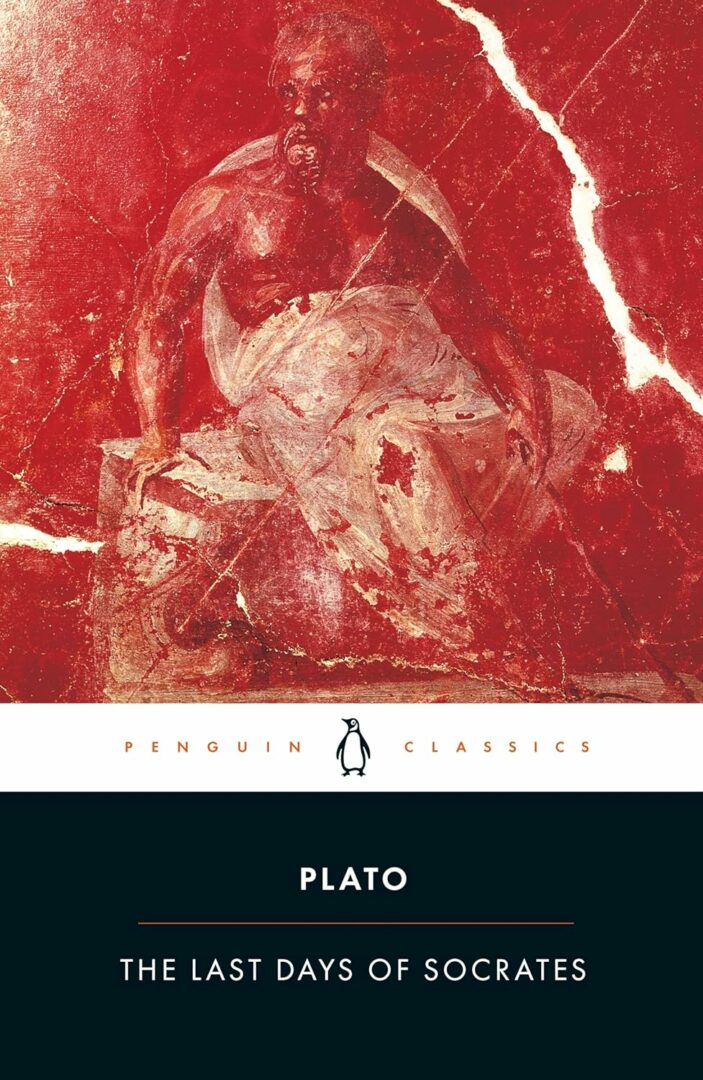
Socrates has been accused of corrupting the youth with bad ideas and bad religion. In this dialogue (written by his most famous student, Plato), Socrates defends himself in court.
He argues that his marketplace conversations were intended to illuminate the path of wisdom and living well. He explains why the gods consider him wiser than others, and he endeavors to help his countrymen realize they are not living as wisely as they believe.
Far from corrupting the youth, he urged his countrymen to live for moral rather than practical gain, to examine what is best for the soul, and to be more concerned about what is just rather than how to prolong their lives.
Socrates argues that the gods considered him the wisest because he realized he was not. And that human wisdom is not sufficient for living well. He angered his fellow citizens by revealing their lack of wisdom.
A high school student (10th grade +) can read this dialogue in one or two sittings. This dialogue can be read many times, enjoyably and helpfully.

Socrates was the first great Greek philosopher. He pursued wisdom, endeavored to answer life’s big questions, and showed others how to live wisely. His most famous pupil, Plato, recorded his final days in dialogues such as Euthyphro, Apology, and Crito.
Euthyphro
Socrates, Plato, and Aristotle (the three great Greek philosophers of antiquity) investigated life’s big questions: What is real? (Metaphysics) How do we know what we know? (Epistemology) And how should we live? (Ethics)
They believed in the objectivity of truth and sought to understand how to live the good life.
In The Dialogues, Plato, Socrates’ student, recorded Socrates’ thinking and beliefs. They are quite entertaining and thought-provoking, and they increase understanding of ideas through intensive questioning, which became known as Socratic questioning.
One dialogue is titled Euthyphro. In it, Socrates and his friend Euthyphro strike up a conversation (while on their way to court) about the nature of piety (i.e., holiness or the good). Socrates asked what it is and how it relates to justice.
After much back and forth, Socrates asked a famous question, known as Euthyphro’s dilemma: Do the gods love something because it is good, or is something good because the gods love it?
The question deals with the nature of God and what it means to live the good life.
I recommend the translation by Benjamin Jowett. (A high school student can read it in one hour. Skip the introduction.)
Finally, while thought-provoking, the dilemma is false. These Christian philosophers explain why:
Leadership Gold

“Leadership is influence,” says John Maxwell. Many people think leadership begins only after you graduate, get a good job, and earn a title like “manager.” But that’s not true. Leadership can start right now. If you are influencing someone, you are already leading.
This kind of leadership is possible in middle school and high school. When I was a high schooler, I grew as a leader through roles like class president, team captain in soccer and basketball, performer in school plays, and competitor in academic and talent events. But leadership wasn’t just about titles or awards. It also showed up in everyday life—how I acted in class, in the hallways, at home, and with friends. The way I treated and influenced others mattered just as much, if not more.
So how can a high school student grow as a leader with the help of a coach or mentor? One helpful resource is John Maxwell’s book Leadership Gold. This book shares 26 simple and practical principles about leadership, including:
- Leading by serving
- Growing intentionally
- Working well with others
You don’t have to wait until you’re older to start learning these lessons. I wish I had known them sooner, and I hope your student-leader can start using them today to reach their full potential.
The Silver Trumpet
The story provides a memorable image of evil’s corrupting influence on people, love, and relationships, and the need, reality, transforming power, and external nature of redemption.
Story elements include a prince, twin princesses, a dwarf, a castle, frogs, a silver trumpet, and chivalry.
The pattern of events, plot, and meaning make this story enjoyable for young and old alike.
Published in 1924 by one of C.S. Lewis’ literary friends.

Teen Summer Camp Opportunity
I interview Stephen Pierce, Director of Student Recruitment at Patrick Henry College. We discuss their very popular Teen Leadership Camps, which include Strategic Intelligence, Speech, Moot Court, Literature & History, Drama & Theater, Entrepreneurship, and more.
Summer Enrichment Opportunity for Teens
I will publish an interview on Thursday at 7 PM about summer camps for teens at Patrick Henry College. It’s a massive enrichment opportunity, one that I benefited from when I was a teen. The program director shares what parents can expect and what the student outcomes are.
The camps include Constitutional Law, Speech, Literature & History, Journalism & Digital Media, Drama & Theater, Leadership & Worldview, and more.
These high-quality Christian camps provide abundant spiritual, intellectual, and social encouragement, as well as opportunities for students to broaden their horizons and to be challenged to be all they can be now for the future.

Image taken by Patrick McKay
The Silver Chair

In the second-to-last book of the Narnia series, Aslan calls two children to Narnia and gives them a mission to find a lost prince. To guide them, Aslan reveals four signs that they must remember and follow at all costs. Glimfeather and another talking owl introduce them to a strange guide named Puddleglum, a frog-like creature, who is uncommonly humorous and brave.
They set out through the Northern lands, through a country of giants, where they meet a lady in the company of a black knight. She tells them of a place of respite. Tired from their journey, the children want a warm meal and a place to rest, but their lack of focus on the signs puts them in grave danger.
After a narrow escape, the party slips down an underground passage. Suddenly, earthmen of various sizes and shapes surround them and take them to the queen of the underworld. Meeting the black knight, their beliefs in Aslan and his signs are put to a terrifying test.
One of C.S. Lewis’ scarier Narnia tales, The Silver Chair, provides a picture of what it means to live by the truth. It also shows what deception looks and feels like. (A beautiful enchantress endeavors to mislead and trick those within her power.) Essential to the story’s meaning are two scenes (i.e., Aslan giving the four signs to the children, and the thorn driven into the Lion’s paw) that allude to the Bible and the atonement of Christ.
Lewis masterfully combines elements of fairy tales, romantic literature, journey stories, and Christian allegory to produce an experience that teaches and warns, and reveals hope and joy.
Book Club March 14th
The Light Princess

Losing her gravity, a princess floats in the air to the distress of her parents. She finds it great fun, laughing constantly, though she must be protected from floating away. Eventually, she discovers a lake, where she can swim freely and safely. One day, a prince finds her. Caring for her deeply, he does something kind that changes her life forever.
The Light Princess is a short, hilarious, witty, and, toward the end, serious book. The author tells a story about love and redemption that is both delightful and moving.
- « Previous Page
- 1
- 2
- 3
- 4
- …
- 11
- Next Page »