
One of the greatest and most unforgettable stories, a young boy named Pip strives to rise and win the love of the cold-hearted, beautiful Estella. Victimized by the haunting Miss Havisham and lifted by a benefactor, Pip shuns those who love him most, but becomes heroic when all seems to crumble around him.
Charles Dickens masterfully describes the characters, Victorian society, family life, London, and the penal system. Memorable scenes include great humor and, at times, horror, as well as descriptions of Pip’s thoughts and moral change. Dickens combines horror, crime, detective, adventure, coming-of-age, and romance, shaping many plotlines toward a deeply meaningful end.
Readers are greatly entertained. The story’s twists and turns give insight into human nature. Lessons about character and human happiness require reflection, guidance, and more than one reading. The consequences of virtue and vice are portrayed in humorous and frightening ways. Dickens clearly values and elevates forgiveness, family, and work ethic.
The book nears 500 pages, but is much shorter than some of Dickens’ other novels. The long buildup is worthwhile for the novel’s reading experience, impact, and lessons. The moral world and punch lines are congruent with, and in some ways exclusively, Christian.
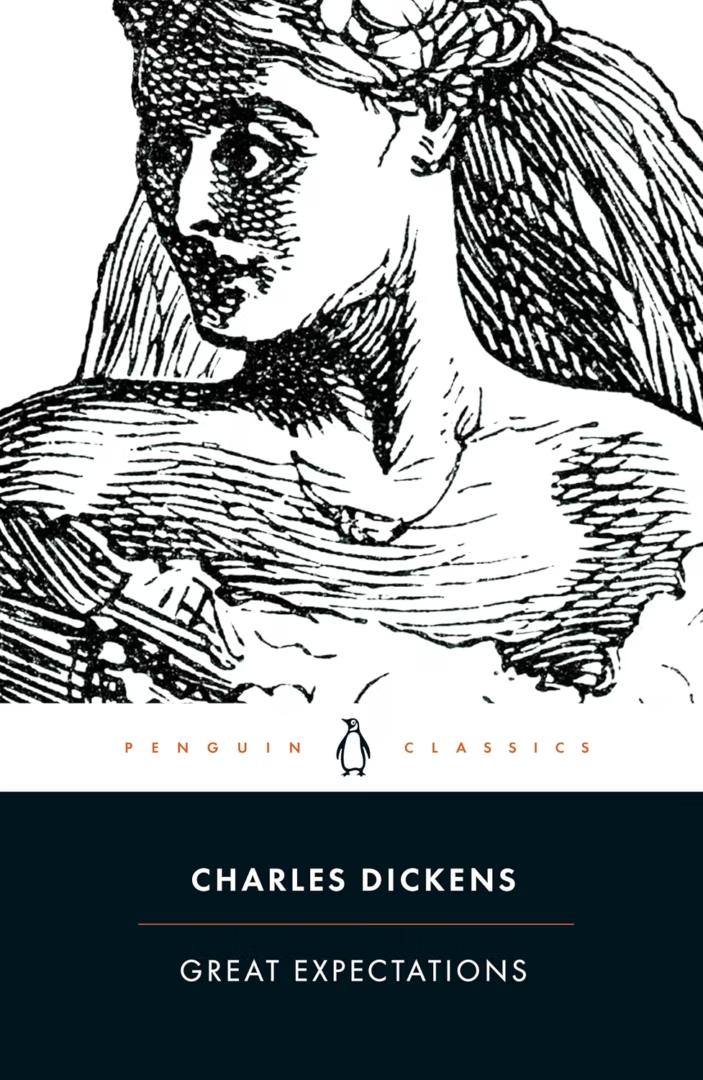
The Penguin Classics edition pictured above contains very helpful notes.
I recommend Leland Ryken’s short guide and commentary; it helped me understand the story and Dickens’ craft. You can read it alongside the book, though it contains a few spoilers.
Ryken highly recommends this edition’s introduction.