

The Last Days of Socrates
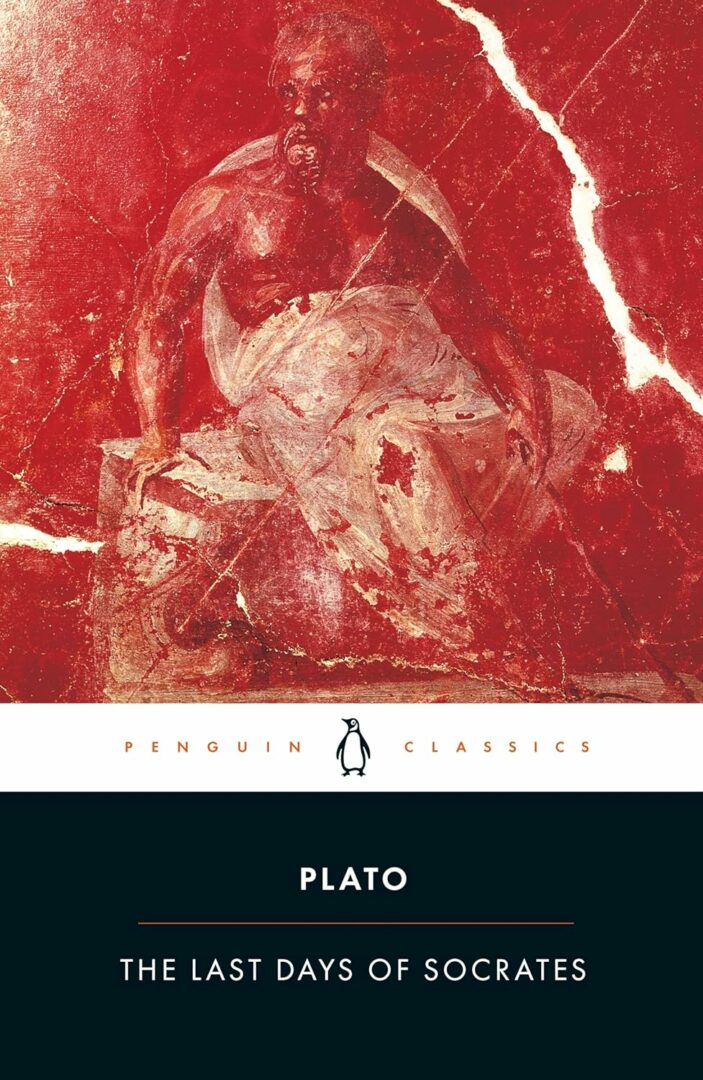
Socrates, the great ancient Greek philosopher who loved wisdom and strongly influenced Plato and Western Civilization, was accused of impiety and of corrupting the youth of Athens and was condemned to die.
Famed for his obsessive focus on wisdom, the good life, and the soul, he eschewed living merely for economic or material gain and believed that behaving wickedly is worse than dying.
At his trial, Socrates said: “But I suggest, gentlemen, that the difficulty is not so much to escape death; the real difficulty is to escape from wickedness, which is far more fleet of foot.”
Socrates believed human wisdom alone was insufficient for the good life, that wisdom requires being aware of one’s ignorance, and that the unexamined life was not worth living.
The Last Days of Socrates features four well-known dialogues attributed to Plato that take place during Socrates’ trial and death.
- Euthyphro: Socrates is on his way to court; he and Euthyphro discuss the nature of holiness or piety, which Socrates believes is a form of justice.
- Apology is Socrates’ trial defense before an Athenian jury. Certainly, the most famous and read of all the dialogues.
- Crito: A pupil and friend tries to persuade Socrates to escape from prison and execution. Socrates argues that escaping would be unjust, as it would overturn his city’s laws.
- Phaedo concerns Socrates about to die. Among friends, he seeks to prove the immortality of the soul.
These are not dry philosophical treatises; they are enjoyable, literary masterpieces that provoke serious thought about important questions.
Jesus The Great Philosopher
Jesus The Great Philosopher introduces Socrates, Plato, and Aristotle, and the big philosophical questions they explored. These range from metaphysics (reality) to epistemology (knowledge), ethics, and politics. He also shows how Jesus provided thick answers to these questions.
Jonathan T. Pennington contends that while Christianity should be viewed as a religion that addresses man’s relationship with God, it’s also “a philosophy of happiness” (205), providing real answers to life’s challenges and humanity’s quest for happiness, fulfillment, and peace.
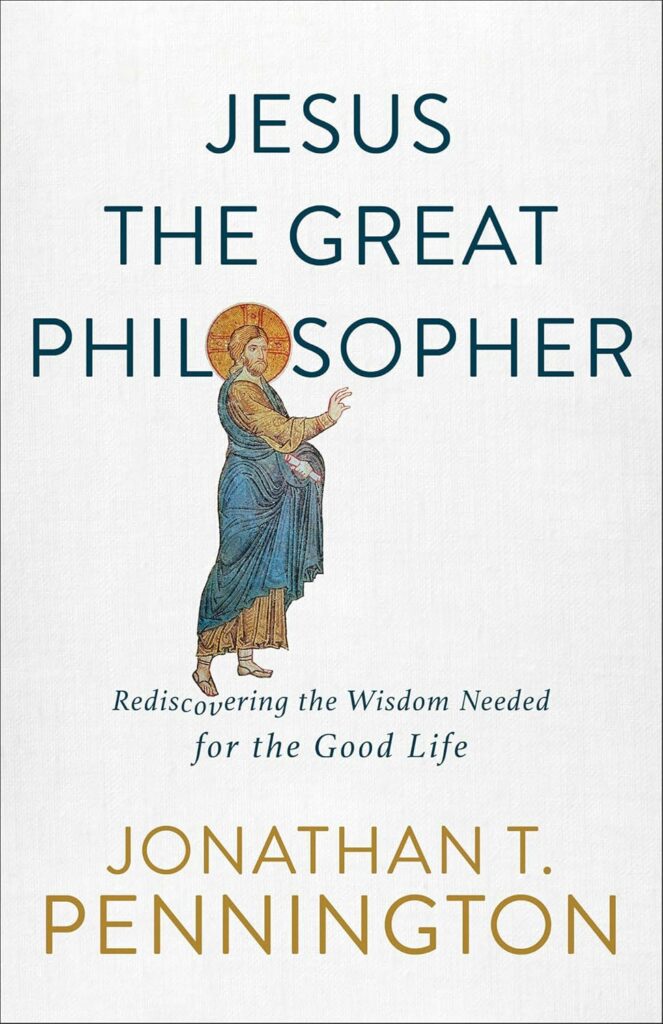
In particular, ancient art and the Bible reveal Jesus as the Messiah and also a philosopher of happiness. Pennington cites texts like John 10:10 and the Sermon on the Mount (Matthew 5-7) as evidence.
Moreover, the author examines ancient philosophical views about emotions and relationships and how Christianity provides renewal and restoration. The author also examines disciplines of reflection and prayer.
Pennington successfully illuminates the thick wisdom of Jesus’ teaching in an easy-to-read form, offering solid answers to questions classical philosophy sought to answer. The book is suitable for high school readers or anyone who wants to understand the philosophy of happiness and Jesus.
Here are short videos from Pennington about the book.