
Trekking long distance is rewarding but it takes advanced preparation. In this video, I share recommendations to help make your family’s trek successful and a happy one.
More videos are coming. Please subscribe to my YouTube channel for updates.
Daniel Dignan
Trekking long distance is rewarding but it takes advanced preparation. In this video, I share recommendations to help make your family’s trek successful and a happy one.
More videos are coming. Please subscribe to my YouTube channel for updates.
I recorded a video of some of the highlights of my recent trekking trip to Armenia. If you want an amazing adventure, it’s hard to beat the land that Noah.
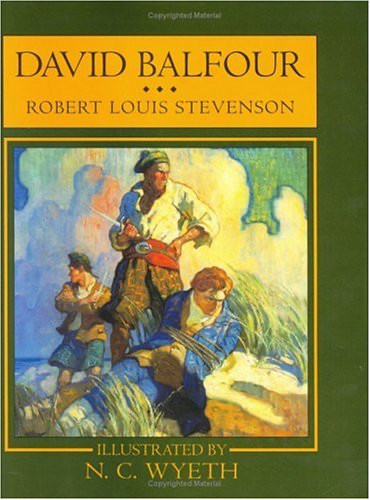
Kidnapped, Robert Louis Stevenson’s epic tale set in the Scottish highlands, is a delightful read about David Balfour, a young man who, while seeking his rightful inheritance, is tricked by his uncle and committed to slavery in the Carolinas.
However, Balfour’s fate is checked by a most unusual man—the vainglorious and heroic Alan Breck, who David notes as “a man I would rather call my friend than my enemy.” One of the most colorful characters in literature, Alan would rather die than fail in his duty or forfeit his honor.
Early in the story, in an unforgettable scene, David—having been kidnapped by a Jekyll-like ship captain, forced to work as the ship’s bartender, and enticed by the captain to betray Alan—warns Alan of treachery.
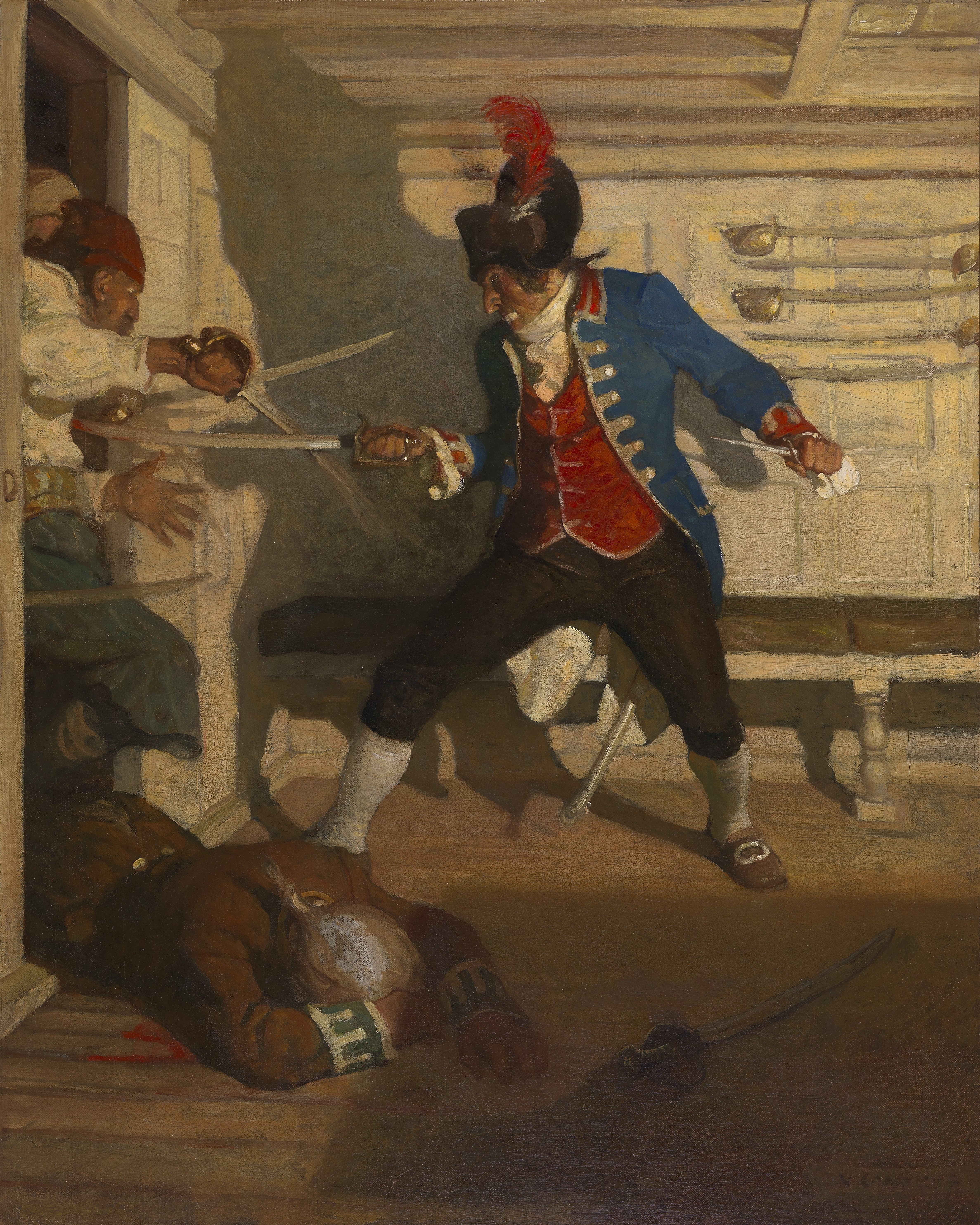
”¦scarce had Alan spoken, when the captain showed his face in the open door.
“Stand!” cried Alan, and pointed his sword at him. The captain stood, indeed; but he neither winced nor drew back a foot.
“A naked sword?” says he. “This is a strange return for hospitality.”“Do you see me?” said Alan. I come of kings; I bear a king’s name. My badge is the oak. Do you see my sword? It has slashed the heads of mair Whigmores than you have toes upon your feet. Call up your vermin to your back, sir, and fall on! The sooner the clash begins, the sooner ye’ll taste this steel throughout your vitals.
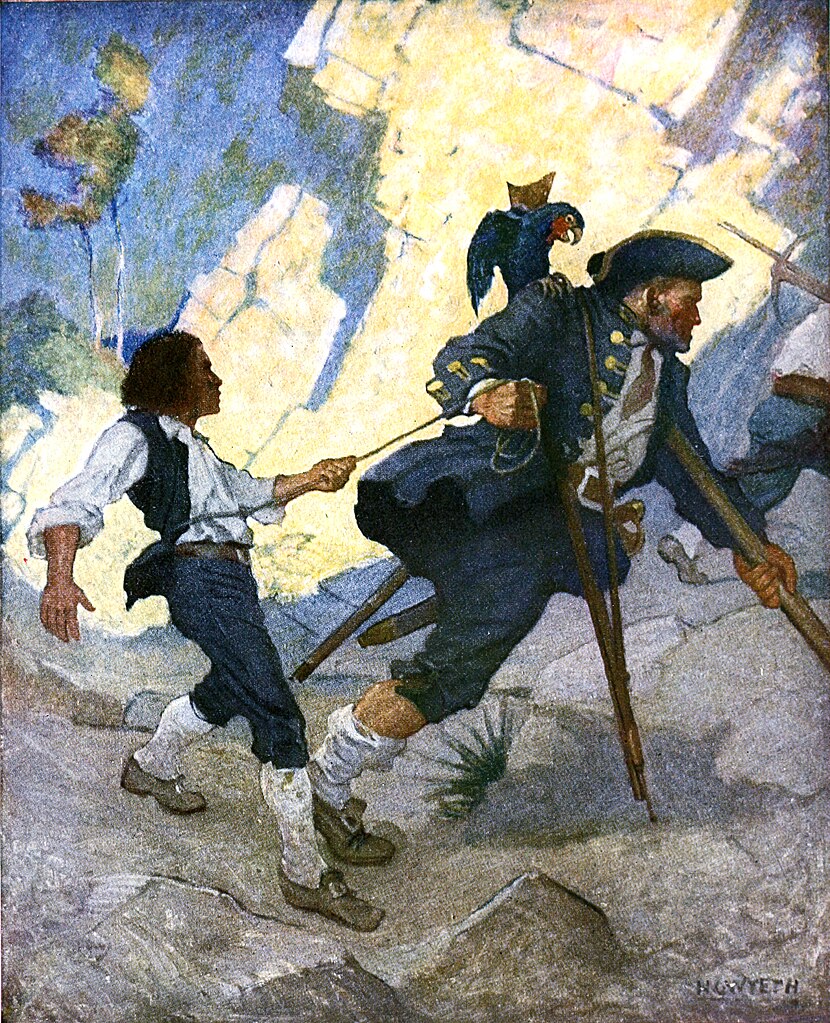
A fight ensued, two against all hands: Alan at the roundhouse door, David guarding the rear. The famous illustrator, N.C. Wyeth captured the deseparate moment well.

As the story progresses, their journey becomes increasingly difficult. Moreover, bad pride threatens their friendship and mission. David said: “So I went like a sick, silly and bad hearted schoolboy, feeding my anger against a fellow-man, when I would have been better on my knees, crying to God for mercy. And at each of Alan’s taunts, I hugged myself. “Ah!” thinks I to myself, “I have a better taunt in readiness; when I lie down and die, you will feel it like a buffet in your face; ah, what a revenge! ah, how you will regret your ingratitude and cruelty!”
A near death experience compels them to make amends and lay aside their anger.
The story’s incidents take place across the highlands and reveal old Scotland after England defeated the clans in a battle led by Charles Edward Stuart, known as Bonnie Prince Charlie. Stevenson, a Scotsman, gives readers an odyssey of an experience not unlike the great epic poem, reopening an old world of treachery, danger, adventure, and prowess.
Events like the ship sword fight, the murder of Roy Campbell, and the bagpipe dual are classic scenes worthy of reading. David Balfour is honest, brave, and conscientious, and Alan is heroic, charming, and indomitable. Both strive to fulfill their duties amid perilous circumstances.
Finally, the Walt Disney 1960 movie is wonderful (though some of the complexity of the plot and thinking of David Balfour is lost); it was one of my favorite childhood films.
This version of the book looks good.
This one has a lot of illustrations.
I read this paperback edition; it has grey versions of the classic N.C. Wyeth illustrations.
Robert Louis Stevenson published this most famous book in 1886, about three years after Treasure Island. Almost immediately a sensation, the story explores the perils of human nature.
The great Russian writer and Soviet Union gulag survivor Aleksandr Solzhenitsyn’s famous quote is illustrated in Stevenson’s book:
“If only it were all so simple! If only there were evil people somewhere insidiously committing evil deeds, and it were necessary only to separate them from the rest of us and destroy them. But the line dividing good and evil cuts through the heart of every human being. And who is willing to destroy a piece of his own heart?” (Gulag Archipelago)
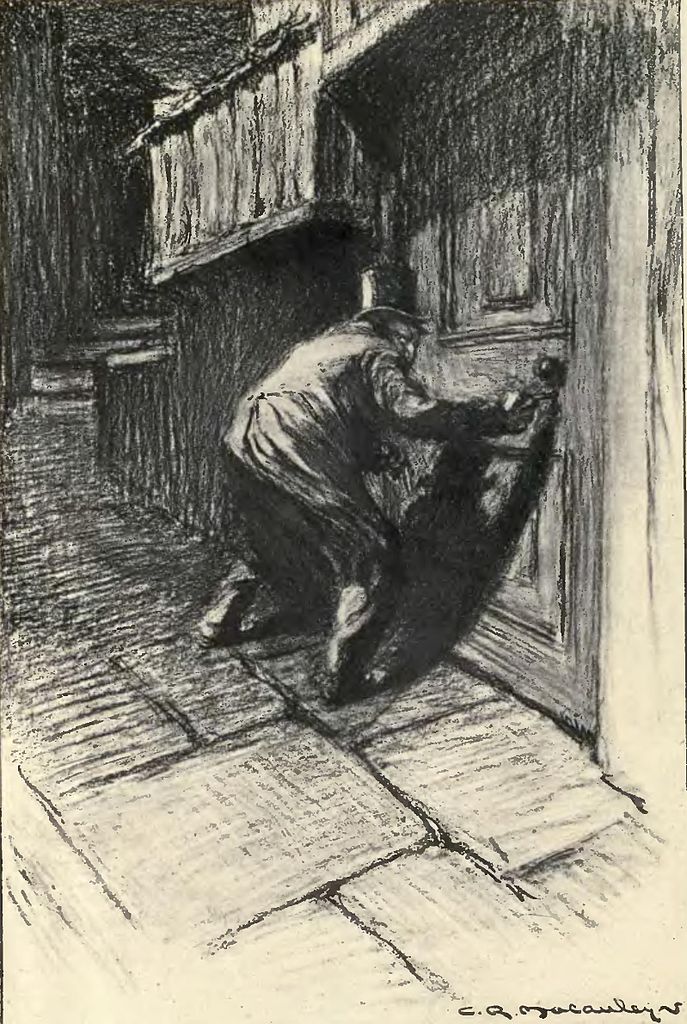
The book is about a lawyer who seeks to understand a mystery about his friend, Dr. Jekyll, a respected scientist who does not seem to be well, keeps to himself, and has willed his estate to an evil man named Mr. Hyde.

Known as one of the first horror books, it is shocking, and it is a warning to us all.
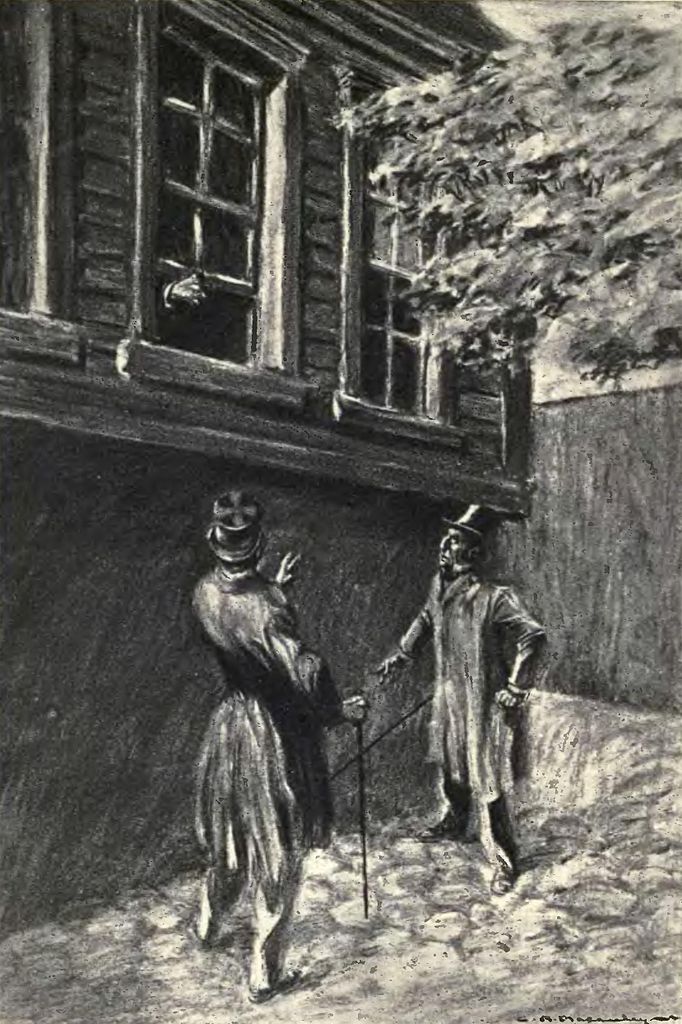
The court was very cool and a little damp, and full of premature twilight, although the sky, high up overhead, was still bright with sunset. The middle one of the three windows was half-way open; and sitting close beside it, taking the air with an infinite sadness of mien, like some disconsolate prisoner, Utterson saw Dr. Jekyll.
“What! Jekyll!” he cried. “I trust you are better.”
“I am very low, Utterson,” replied the doctor drearily, “very low. It will not last long, thank God.”
“You stay too much indoors,” said the lawyer. “You should be out, whipping up the circulation like Mr. Enfield and me. (This is my cousin—Mr. Enfield—Dr. Jekyll.) Come now; get your hat and take a quick turn with us.”
“You are very good,” sighed the other. “I should like to very much; but no, no, no, it is quite impossible; I dare not. But indeed, Utterson, I am very glad to see you; this is really a great pleasure; I would ask you and Mr. Enfield up, but the place is really not fit.”
“Why, then,” said the lawyer, good-naturedly, “the best thing we can do is to stay down here and speak with you from where we are.”

“That is just what I was about to venture to propose,” returned the doctor with a smile. But the words were hardly uttered, before the smile was struck out of his face and succeeded by an expression of such abject terror and despair, as froze the very blood of the two gentlemen below. They saw it but for a glimpse for the window was instantly thrust down; but that glimpse had been sufficient, and they turned and left the court without a word. In silence, too, they traversed the by-street; and it was not until they had come into a neighbouring thoroughfare, where even upon a Sunday there were still some stirrings of life, that Mr. Utterson at last turned and looked at his companion. They were both pale; and there was an answering horror in their eyes.
“God forgive us, God forgive us,” said Mr. Utterson.
But Mr. Enfield only nodded his head very seriously, and walked on once more in silence.
Jekyll thought he could rid himself of Hyde, then he thought Hyde could be managed, but he had no idea how bad he was.
Stevenson does the reader a service by helping him or her adopt the old Socratic maxim–know thyself–which was intended to make one truly wise.
As an aid to learning, I recommend Timothy Keller’s message which puts the book in context. (Keller was a best-selling author, and pastor.)
A free version of the book can be downloaded on Project Gutenberg.
Robert Louis Stevenson’s classic adventure book is a thrilling read. Known for Dr. Jekyll and Mr. Hyde and Kidnapped, Stevenson is one of the best fiction writers ever.
Jim Hawkins finds a treasure map and sets sail with his friends to find the treasure. However, a group of pirates led by Long John Silver are on the hunt for it, too. Jim’s courage saves his friends’ lives and forces the pirate captain to change course.

The story’s climax occurs when Jim confronts the pirate captain with the truth. His courage saves his life, his friends’ lives, and the pirate captain’s.
The most memorable events of the book are the ship captain’s warning, the fight at the fortress, Jim’s taking the ship, and the climax.
Five striking conversations between the main characters—one between the captain and the main characters and another between the captain and Long John Silver at the fort—are masterclasses in leadership. The captain is a noble and serious leader from whom readers can learn.
The most important theme- and why I recommend the book- is courage. Jim and the pirate captain, Long John Silver, both have it. However, their courage arises from different loves. Jim wants to do what is right, and he loves his friends. Captain Silver loves the treasure and himself more than anything else.
The object of their love contrasts nicely in this story.
I review more of the book here:
I recommend the N.C. Wyeth illustrated edition.
I also recommend the 1934 movie version:
I have not seen the Walt Disney movie version (1950); interestingly, it was Walt Disney’s first live-action film.
Many have read Robinson Crusoe, but not as many have read or heard of the sequel. Like the first book, it is full of life lessons and just as thrilling. The reader follows Robinson Crusoe’s travels back to the island and across the world by sea and land, ultimately through China and Russia.
Early in the book, the most striking part is the starving ship. (The effects of starvation are described in detail.) Then, toward the middle, Crusoe is told about the cannibal wars that took place while he was gone and how the inhabitants found wives.
The reader is made to see the difference between the industrious islanders and those who were lazy and treacherous.
After leaving the island, Crusoe has several adventures. The reader witnesses his courage before, during, and after a massacre in Madagascar and during his treacherous journey through Tartar and Russian land.
In the book’s final part, he learns a valuable lesson during a conversation with an exiled Russian prince about contentment.
I read this print-on-demand version. (There is a lot of text on each page, so a Kindle version might be more readable for middle school kids.)
If you’re looking for a fiction book for your middle or high school student to read, I suggest Robinson Crusoe. It is one of the most read novels ever; it inspired adventure books like Swiss Family Robinson and movies like Cast Away.
Robinson Crusoe shipwrecks near an island and struggles to survive; he builds a fort, grows crops, and hews a boat using crude tools. The time and effort he spends doing these things is mind-boggling.
The reader feels as though he is on the island with Crusoe. I often wondered if I could do what he did. Would I survive?
I recommend the book because it is full of life lessons and wisdom, like the importance of parental advice, duty, contentment, thankfulness, and diligence. Moreover, the book is an unforgettable experience. My father read it to my brother and me when we were kids. I have never forgotten the scene of Crusoe laboring to build his house. His agony and persistence are emblazoned on my mind.
Crusoe’s pain, sufferings, and terrors have a transforming effect. The book builds to a page-turning conclusion.
I recommend purchasing an N. C. Wyeth illustrated edition.