

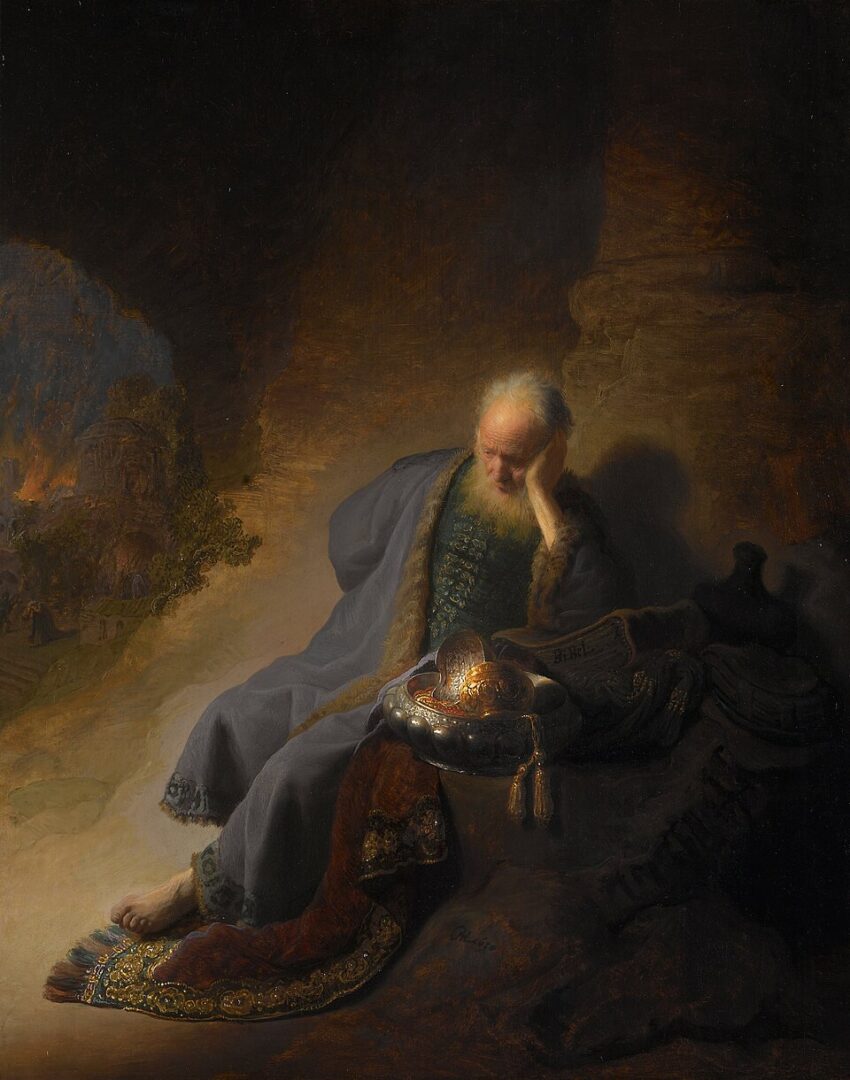
The unthinkable happened. Nebuchadnezzar’s Babylonian Empire broke through Jerusalem’s walls, captured the king, and razed the city. Seventy years later, Cyrus the Great of Persia toppled Babylon. Jeremiah, a major book in the Old Testament tells this terrifying story.
For years, God through his prophet Jeremiah warned Jerusalem to stop their rebellion, but they refused, and continued to worship idols, sacrificing their children on pagan shrines. God’s warnings are ignored.
Like a Christopher Nolan film, scenes that point to Jerusalem’s coming destruction fly in and out of view. Nearby nations are defeated, kings rise and fall; Jeremiah is imprisoned; famine, overconfidence, and terror surge.
Jerusalem is destroyed, and things get worse. Their governor is assassinated, the people refused to end idol worship, and brazenly tell Jeremiah “We will not listen to your message from the LORD! We will do whatever we want…” (Jeremiah 44:15-16, New Living Translation). A epic tragedy unfolds, though not without hope.
God promises a just and righteous king and a new covenant (23:5-6; 31:31-34) to reconcile a people to him. The New Testament gospels reveal Jesus of Nazareth as this king and the new covenant maker between God and man.
Jeremiah is a terrifying read, but it along with Isaiah point to God’s mercy in the new covenant toward Israel and the nations: “They will bind themselves to the LORD with an eternal covenant that will never be forgotten.” (50:5)
Lastly, Jeremiah reveals the consequences of trusting in false gods, the blessings of trusting in God’s righteous king, and the deceitfulness of the human heart, which falls continually for idols that disappoint. (17:5-10).
Leave a reply. Keep it clean.