

Rules of Civility & Decent Behavior
I reread George Washington’s Rules of Civility & Decent Behavior, which a young Washington copied for personal use. According to Wikipedia, the instructions date back to the 16th century. Most of the maxims, except for two or three, apply today.
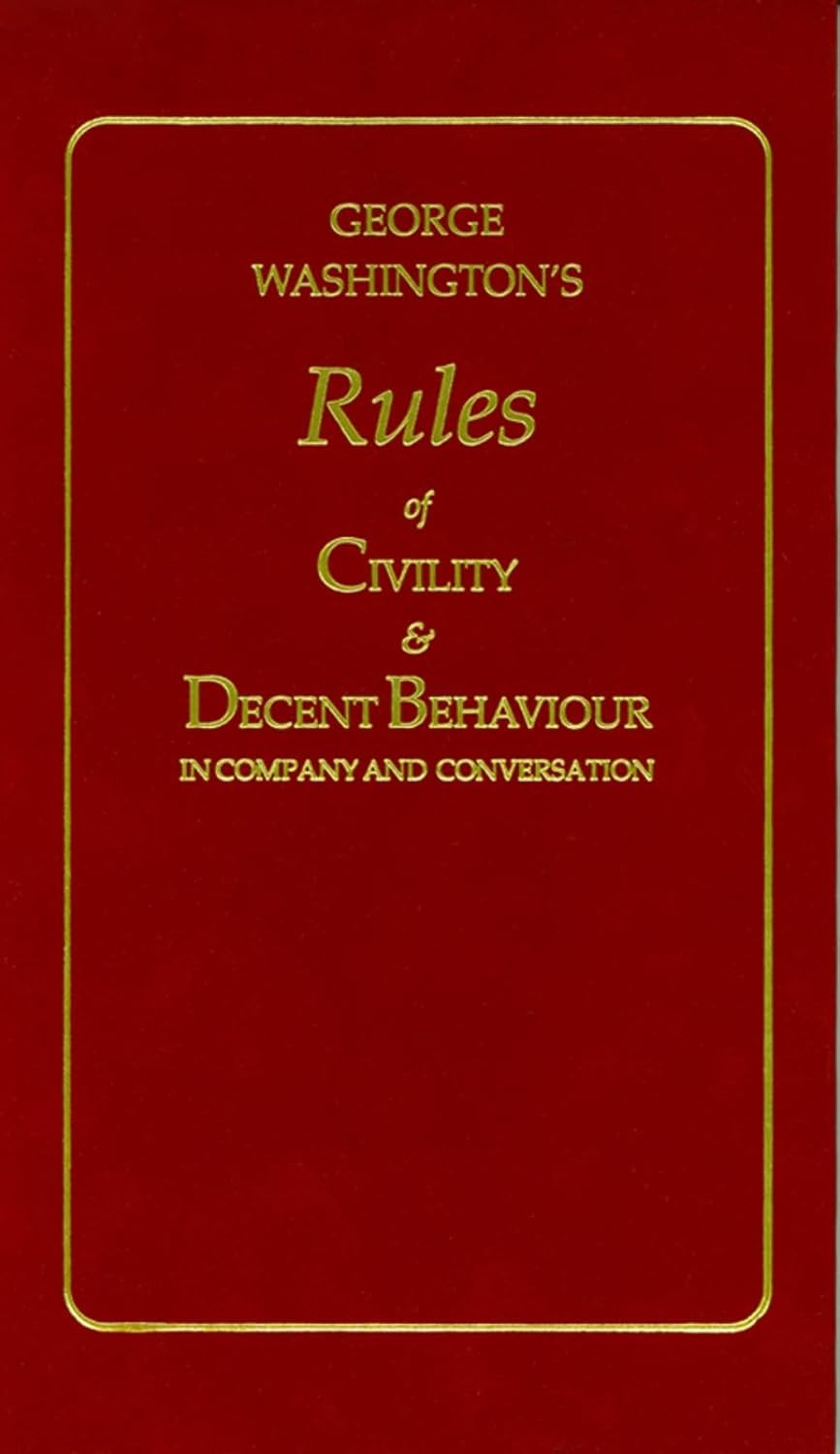
Some are quite clearly true: “In the presence of others sing not to yourself with a humming noise, nor drum with your fingers or feet.”
Some are humorous: “Do not laugh too much or too loud in public.”
Others are consequential, and for those who desire to lead. “Let your countenance be pleasant, but in serious matters somewhat grave.” “Let thy carriage be such as becomes a man: grave, settled, and attentive to that which is spoken. Contradict not at every turn what others say.” And “Think before you speak; pronounce not imperfectly nor bring out your words too hastily, but orderly & distinctly.”
Toward the end, the maxims help make others comfortable in your presence. This has the added benefit of giving one confidence in social settings. “Be not forward but friendly and courteous; be the first to salute, hear, and answer; & be not pensive when it’s time to converse.”
The most critical maxims deal with justice toward others. “Detract not from others; neither be excessive in commanding.” “Strive not with superiors in argument, but always submit your judgment to others with modesty.”
While behavior like this has become a lost art, it is of timeless importance. The behavior requires acting with kindness and grace. I recommend the book to high school students. The maxims can be read in a single sitting. Their brevity and proverb-like construction make them memorable and enjoyable.
National Naval Aviation Museum
A few months ago I visited the National Naval Aviation Museum in Pensacola, Florida. On the level of Washington D.C.’s National Air and Space Museum, it does not disappoint. Aviation collections span the history of air and military flight operations. Artifacts include World War I era planes, helicopters, spacecraft, Marine One, and jet aircraft.
The museum is overwhelming. Plan on at least 2-3 hours to walk through the entire museum. To make the experience more focused and educational, study the exhibit page beforehand. The purpose and missions of particular aircraft can help high school students appreciate the history and technology.
The museum offers several opportunities:
- Located within Naval Air Station Pensacola–home of the Blue Angels–visitors have opportunities to watch practices.
- The museum has flight simulators.
- Homeschool and STEM opportunities are offered, though I have not personally experienced these events.
It helps to go with someone who knows military aircraft. A couple staff members were knowledgeable about the exhibits. Military personnel were also stationed their supporting museum operations.
One book in the gift shop caught my attention: An Autobiography by Gen. James H. “Jimmy” Doolittle, I Could Never Bo So Lucky Again.


A Marine helicopter

Museum at a glance:
Drama and Theater Camps for Kids
I recently attended my second production of Logos Theater at Washington, D.C.’s Museum of the Bible. The production, costuming, and staging of The Lion, the Witch and the Wardrobe were well done. I especially enjoyed seeing the props change quickly between scenes and the actors move from room to room as the setting changed.
Logos Theater does more than provide first-class theater. They give elementary, middle, and high school students immersive opportunities to learn acting, filmmaking, drama, and theater production in summer camps, co-ops, and traveling drama seminars. Moreover, they offer college-level acting classes and credit.
Acting was never my forte, but in college, I enrolled in several public speaking courses, including an acting course, to get out of my comfort zone. I have never forgotten my acting professor telling the class that we had better get our heads examined if we thought we could make it as professional actors. I think he said it in love, and all of us got the point. Nonetheless, we enjoyed the experience and became braver in public.
Even if your kid doesn’t want to become a professional actor, I recommend the experience. Theater can help kids develop self-awareness and friendships and open their artistic horizons. It’s also a lot of fun—no business is like show business!
Another benefit to Logos Theater is that it introduces students to classic and best-selling books like Narnia and Pilgrim’s Progress.
Top 10 Colleges Ranked for Opportunities
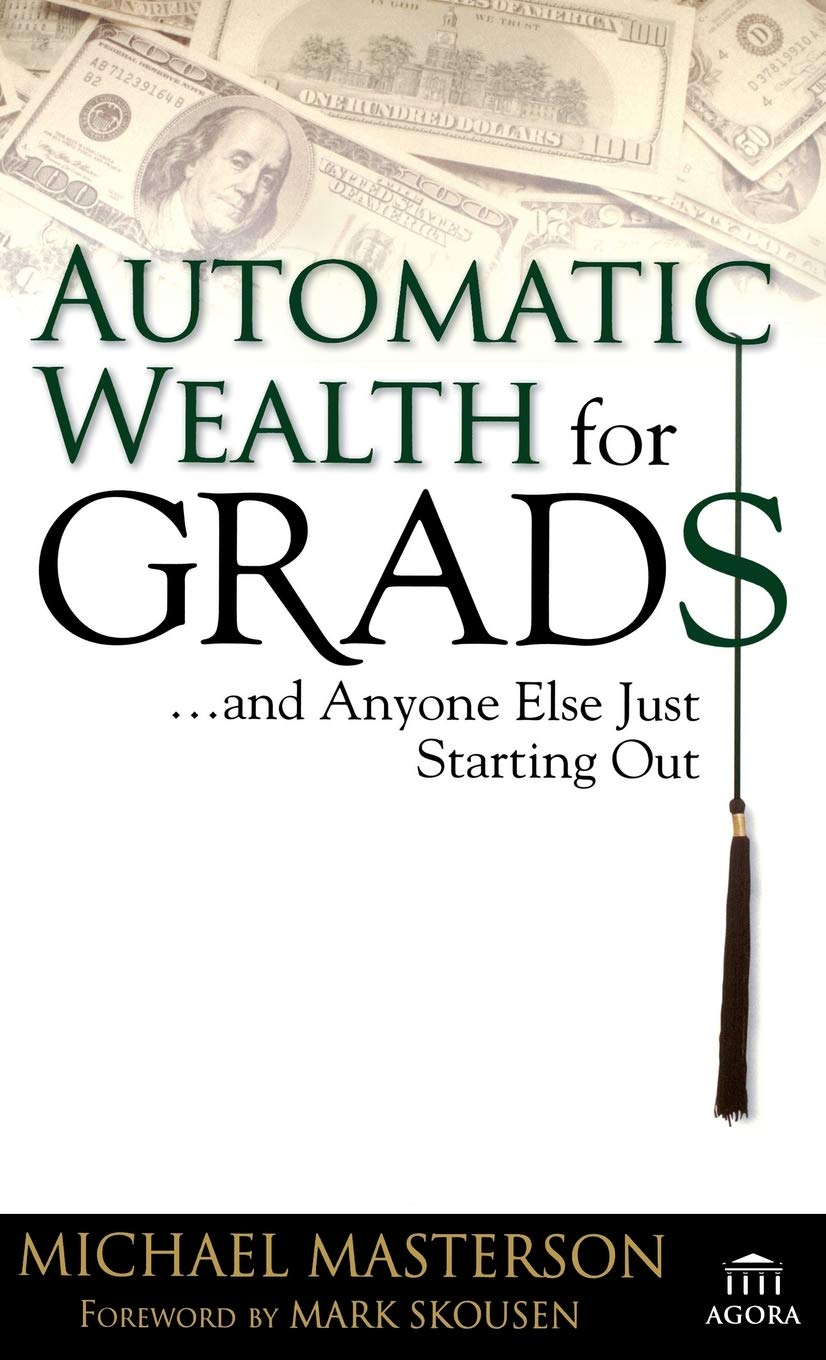
Automatic Wealth for Grads…and Anyone Else Just Starting Out
Fair Use
This book is a practical guide for earning a living, perfect for getting started in life. It is filled with wisdom from an experienced and successful businessman and author on topics ranging from investing to selecting a career path, securing a job, earning a high income, and starting a business.
I have read the book multiple times and always find it beneficial. It can assist high school students in learning how to earn a high income and progress in their careers.
The author, Michael Masterson, helps young people develop a future perspective, determining how much money they need to afford their goals and to retire. He encourages investing in the stock market to maximize the compounding effect of interest.
Masterson summarizes primary career path categories, such as retail and wholesale, helping students understand what to expect, and recommends learning marketing, a skill that can be applied to any endeavor. The most valuable parts of the book are the chapters on how to get a job and earn a high income. He explains a step-by-step method based on direct marketing practices—an approach that offers significant benefits to those who employ it.
The chapter on earning a high income is based on the habits and behaviors that a successful person employs, such as paying attention to problems and solutions, and learning a valuable skill that the business highly values.
Nothing about this book is get-rich-quick. It’s a steady approach from a man who became an indispensable employee and went on to start numerous profitable businesses.
Toward the end of the book, Masterson offers real estate investing advice and tips on living like a billionaire. A lot is possible with a modest income.
I highly recommend the book. It offers a career advancement strategy that many young people never encounter; overall, it serves as a blueprint for wealth, a primer for starting a business, and a guide for managing resources wisely.
Common Sense Economics
A short primer on economics for teenagers who want to learn the ingredients of strong economies. The reader will learn what makes nations prosper. The book will also help your teen learn how to become prosperous. (The economists share principles of personal finance.)
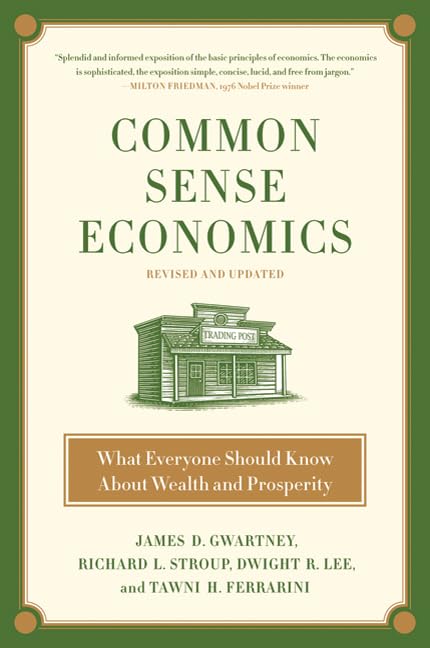
Significantly, the book explains the architecture of an economy, including its essential building blocks: the legal system, markets, and government regulations. The reader begins to understand why private property, contracts, and just (and limited) governments are critical to the wealth of nations and people.
Lastly, the book will help your child think more intelligently about economics and identify good versus bad economic policy. It’s also an opportunity for parents to help their children absorb personal wealth-building practices, which are explained at the end of the book.
“Profit is a reward for transforming resources into something of greater value.” (18)
“Trade depends on property rights, and a legal system must protect property rights if an economy is to prosper.” (38)
“Exchange is productive; it helps us get more from the available resources. Regulatory policies that force traders to pass through various political roadblocks are almost always counterproductive. A country cannot realize its full potential unless restrictions that limit trade and increase the cost of doing business are kept to a minimum. The market is the best regulator.” (51)
“The deficits are a natural outgrowth of unrestrained democratic politics. If unconstrained by constitutional rules or strong convictions, politicians will use deficits to partially conceal the cost of their programs from voters.” (93)
“Finding the occupational or business activity in which you have a comparative advantage and specializing in it will help you earn more money than otherwise….” (127)
Drawing Dinosaurs Vocationally and Advice for Young Artists
Aram Papazyan, an Armenian citizen and dinosaur artist–one of the best in the world–shares how he became interested in dinosaurs and honed his artistic skill.
Using simple tools, roller ball ink pens and markers, he patiently and diligently developed advanced techniques that make his dinosaur drawings unique, beautiful, and accurate. His keen knowledge of paleontology and fossils adds life and authenticity to his art.

He shares tips and advice for young artists, like the importance of patience and diligence, drawing what you love, and drawing challenging topics to make what you love drawing better.
His career and vocation began when his grandfather, an architect of Yerevan, noticed his skill and encouraged him to draw. Overall, self-taught, Aram pursued formal art education that pushed him out of his comfort zone to higher levels of artistic competence.
In the interview, Aram shares the difference between AI-generated art and real art, what he hopes to accomplish, and advice for young people interested in art as a profession.
You can follow Aram and see his amazing drawings at the following locations:
- Artstation : https://www.artstation.com/aram_rex (https://www.artstation.com/aram_rex)
- Instagram : https://www.instagram.com/arampapazyan.art/
- Youtube : https://m.youtube.com/c/ArtbyAP
- Facebook : https://m.facebook.com/ArtbyAramPapazyan/
- Patreon : www.patreon.com/ArtbyAP
How to Be a High School Superstar
This book can help your teenager develop an interest and discover opportunities. Top students across America have used the methods. Cal Newport shares their stories.
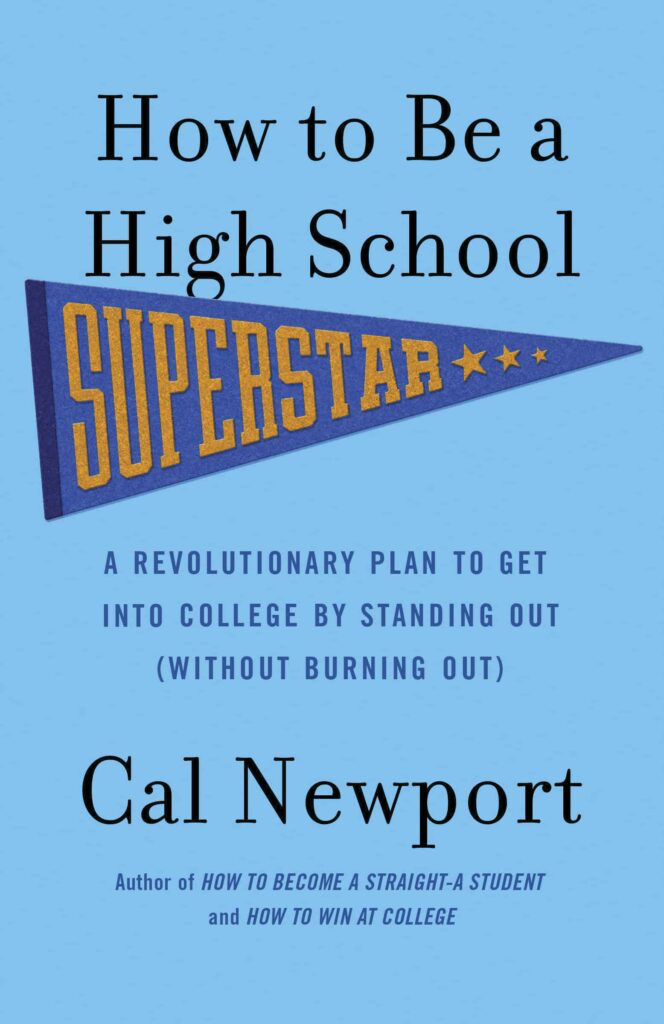
The main idea is that one ought to develop an interest that leads to skill development and productivity in an unusual yet valuable area of knowledge and service. The book functions as a guide to help teens access top colleges and universities, but its actual value lies in its career development and vocational aspects.
Newport emphasizes that developing an interest requires ample time for constructive leisure. This is because the interest cannot be contrived; it must be genuine. The interest must also drive one to serve people in ways that are valued. In other words, one must go beyond interests in ping-pong or extracurricular activities that anyone can do.
The book has three parts: unscheduling, focus, and innovation.
Overscheduling is a common problem, according to Newport. Many bright students do too much of what ultimately does not matter, such as taking challenging courses designed to impress college administrators. Underscheduling requires avoiding what does not matter and completing homework quickly so that evenings and weekends are free for the necessary trial and error to develop an interest. Students need time for reading, experimentation, volunteering, developing relationships, and working.
To complete schoolwork quickly, students must learn how to study effectively. Newport dedicates a portion of the book to examining the study habits of top students.
Next, regarding focus, Newport explains how to identify meaningful extracurricular activities. Not only should teens immerse themselves in the activities, but they should also investigate how others became effective. (This can be done by reading biographies.)
Finally, he explains how to innovate and turn an interest into something inexplicable and impressive. This can be achieved over time by volunteering and serving a particular community, gaining trust, and gradually taking on larger and more complicated projects as one gains experience, character, and knowledge.
All of this is explained in detail with many examples.
He shares how one high school student started a company and a successful entrepreneurship blog, leading to many opportunities. Another student became a teacher’s assistant and eventually transformed student reading programs. Another wrote a successful book, leading to speaking opportunities and significant relationships that helped a student become a sought-after expert and commentator.
In closing, this is the best career advancement book I’ve ever read. It could help your teen develop a plan of action and identify a calling years earlier than most.
I have read the book twice and found it personally helpful. Parents should read the book first; it could help them in their endeavors and in guiding their teenager.
How to Become a Straight-A Student
If your teenager needs to develop stronger study habits, I recommend Cal Newport’s How to Become a Straight-A Student. The author explains how top-college students earn high grades while studying less than their peers.
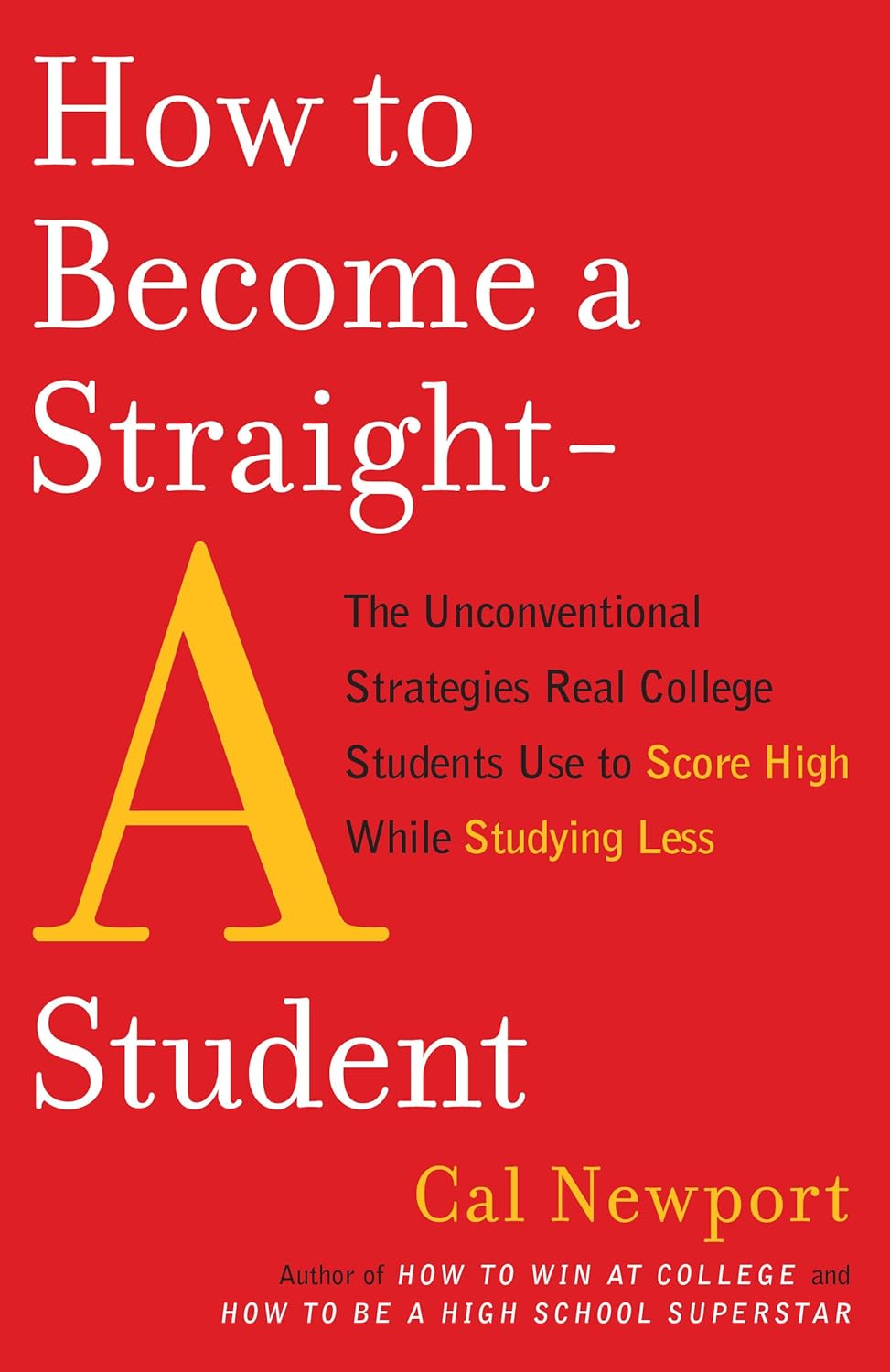
Topics include time management, note-taking, exam preparation, and research paper writing. The book is jam-packed with strategies, techniques, and tips from elite students and the author’s own academic experience.
Although college and university students are the target audience, middle and high school students could benefit from adopting the practices before facing the rigors of higher education. Moreover, those entering the workforce could also benefit because they need study skills for their careers.
The book is divided into three parts: basic study habits, quiz and exam preparation, and paper writing. The first part focuses on time management, limiting procrastination, and study tips. The exam preparation section shows how to take notes and study for tests, both technical and non-technical ones. The final section reveals how to research, write, and edit a paper — the author’s approach works for term papers, but it is also suitable for writing short nonfiction books.
The most helpful parts are his strategies for time management, note-taking, test prep, and the research phase of paper writing. For note-taking, he teaches students to focus on the lecturer’s question, evidence, and conclusion. For test prep, Newport explains how prep ought to begin on day one of class. For paper writing, the most helpful section is the research section. He shows how to plan it out and find resources. He also emphasizes the need to separate the research, writing, and editing stages. (There is much more.)
I like how the book helps curb procrastination and encourages planning one’s activities, leaving room for interruptions and leisure. If followed, the book’s strategies and methods can lower stress and anxiety, and as the author contends, increase opportunities.
Takeaways:
- Plan your school semester out in advance.
- Plan each week out in advance.
- Schedule time periods for each day’s known activities.
- Jot tasks that come to mind throughout the day in a planner.
- Reschedule tasks that were not completed the previous day, and schedule tasks that were jotted down.
- When studying for a test, recall the main ideas and concepts, and explain them out loud.
Warning: the book contains a few inappropriate references like “debauchery” and “party like a demon” (38).