
Fill the Stage

Daniel Dignan

Fill The Stage

Helping students live well

new / index / about

YouTube


terms / privacy

Subscribe via Email

Washington’s First Annual Address to Congress

August 31, 2026 by Daniel Dignan Leave a Comment

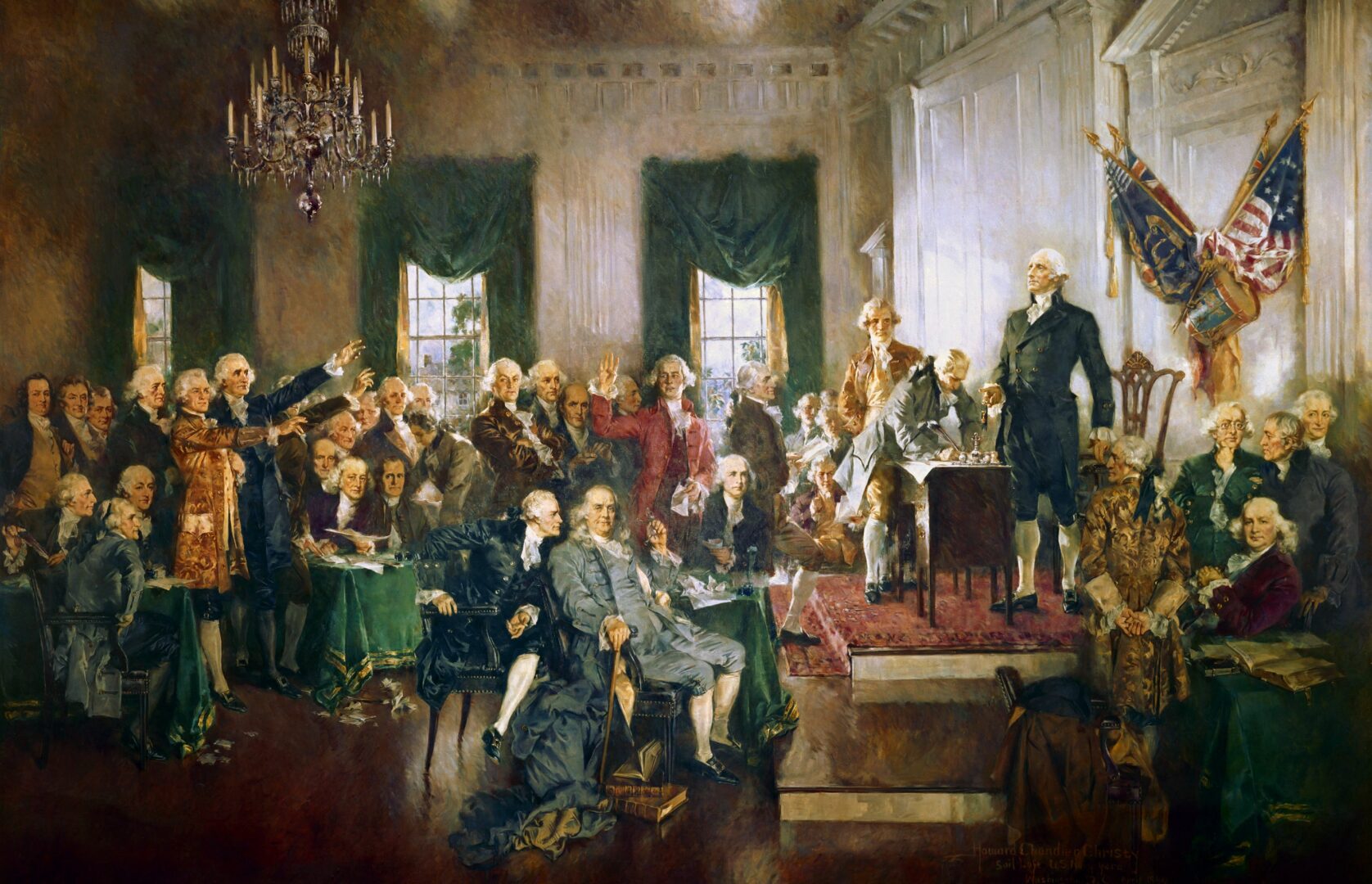
Scene at the Signing of the Constitution of the United States by Christy

After decades of colonial rule under Parliament and the British Crown, the thirteen states ratified the Articles of Confederation during the American War for Independence, which served as America’s first constitution. Ultimately, the Articles were insufficient to provide for unity and the necessary executive power to lead the nation.

Aware of the Articles’ limitations yet cautious of centralized power, America’s Founding Fathers debated and wrote a Constitution that established executive authority. After ratification by 9 states, the US Constitution became the supreme law of the United States in 1788. Shortly after, in February 1789, the states elected George Washington as the first president.

Washington knew that his words and actions would guide future presidential interaction with Congress. Thus, he carefully crafted his First Annual Address to Congress, delivered in January of 1790, showing due respect for Congress’ constitutional authority while also rising to the occasion as chief executive to recommend legislation for the country’s welfare.

By reading Washington’s address, one can see his respect for Congress, his priorities, and his leadership. He prudently and directly addressed particular necessities under debate, such as the need for a standing army, immigration policy, trade standards, and the promotion of literature and science education.

This article provides an overview of his method. This page contains his address. Here is a picture of his hand-written address.
Filed Under: Civic Responsibility Tagged With: George Washington, US Constitution

Washington’s First Inaugural Address

August 27, 2026 by Daniel Dignan Leave a Comment

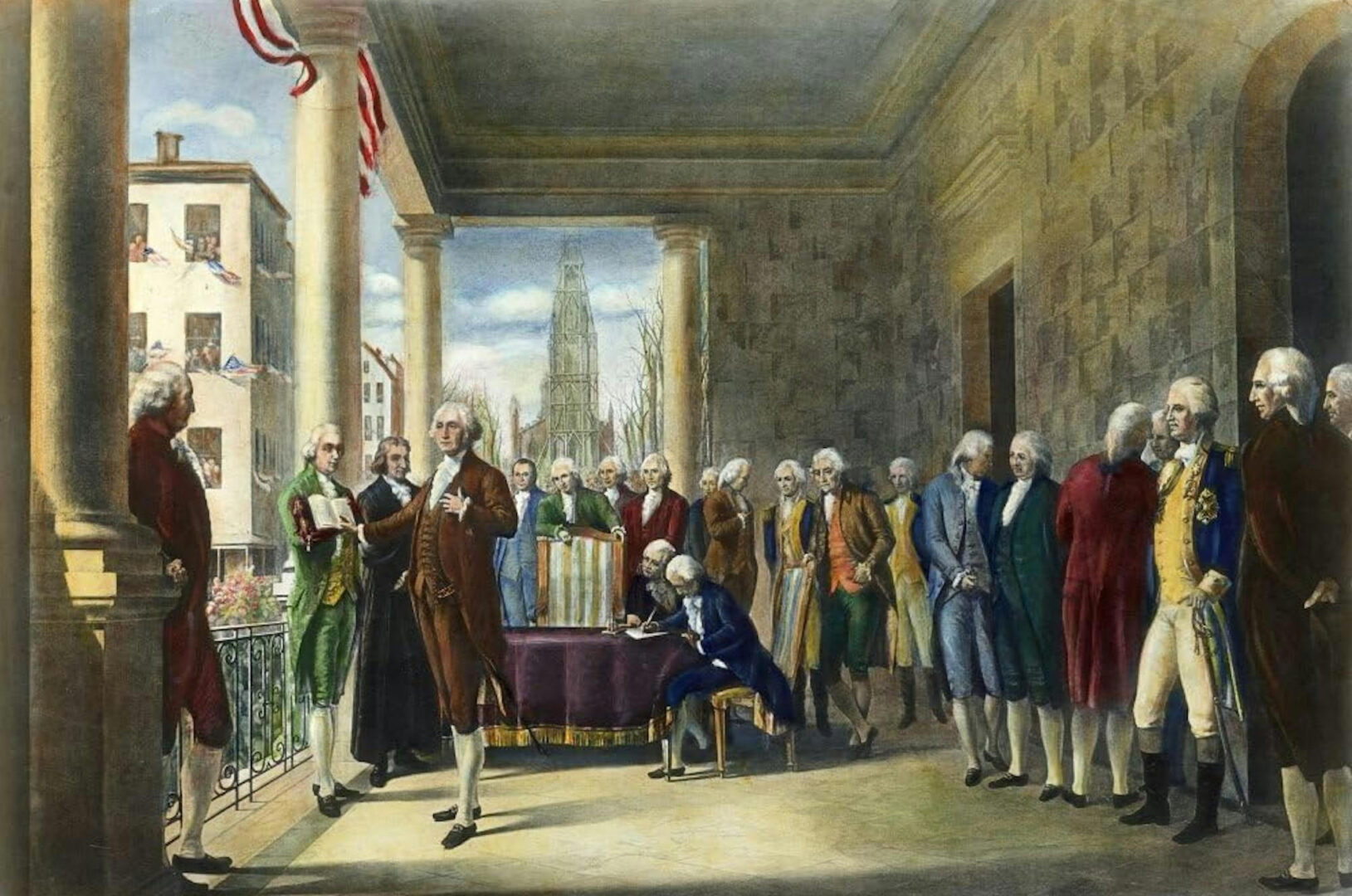
President George Washington’s first official address to the United States is fascinating for its subject and focus. Of particular note is Washington’s reference to Providence, or God’s care, guidance, and management of the young nation’s affairs.

“…it would be peculiarly improper to omit in this first official Act, my fervent supplications to that Almighty Being who rules over the Universe, who presides in the Councils of Nations, and whose providential aids can supply every human defect, that his benediction may consecrate to the liberties and happiness of the People of the United States, a Government instituted by themselves for these essential purposes: and may enable every instrument employed in its administration, to execute with success, the functions allotted to his charge.”

“No People can be bound to acknowledge and adore the invisible hand, which conducts the Affairs of men more than the People of the United States. Every step, by which they have advanced to the character of an independent nation, seems to have been distinguished by some token of providential agency. And in the important revolution just accomplished in the system of their United Government, the tranquil deliberations, and voluntary consent of so many distinct communities, from which the event has resulted, cannot be compared with the means by which most Governments have been established, without some return of pious gratitude along with an humble anticipation of the future blessings which the past seem to presage. These reflections, arising out of the present crisis, have forced themselves too strongly on my mind to be suppressed.“

The address is brief and worth reading.

Lastly, this video reveals the extent to which America’s founders recognized Providence in America’s founding and rise, and where things stand today.

Filed Under: Civic Responsibility Tagged With: First Inaugural Address, George Washington

George Washington’s Newburgh Address

August 22, 2026 by Daniel Dignan Leave a Comment

At the end of the American War for Independence, Continental soldiers and officers nearly mutinied against General George Washington and Congress. For eight years, Congress had been unable to adequately provide provisions and pay, and the men feared they would never be paid. However, if the military rebelled, Washington knew it would risk their victory, tarnish their country’s reputation, and subvert their hard-won liberty under military tyranny. So Washington announced what James Thomas Flexner (his great biographer) considered to be the most important meeting ever called in American history.

In 1783, near the Continental military headquarters in Newburgh, New York, Washington delivered an address to a room full of his officers. He communicated the danger and consequences of mutiny, the need to maintain dignity and honor, and encouraged them to trust that their country and leaders would repay their sacrifice.

Then, in conclusion, Washington did and said something that shocked his officers, turning them away from certain doom and making them repent of their rebellion.

Read Washington’s Newburgh Address here and learn what happened. (It’s a five-to-eight-minute read.)

Filed Under: Civic Responsibility Tagged With: George Washington, Newburgh Address

George Washington’s Farewell Address

August 20, 2026 by Daniel Dignan Leave a Comment

Essential to the founding and rise of the United States, George Washington became known as the “Father of His Country.” Toward the end of his presidency in 1796, Washington published a farewell address, offering his gratitude and counsel to the people he served. It’s considered one of the greatest addresses in American history and is still read aloud in Congress.

President Washington warned of political factions and foreign entanglements. He encouraged religion and morality, calling them “indispensable supports” of “political prosperity” and “pillars of human happiness.” And he cautioned against the notion that morality could be enjoyed without religion.

The address is worthy of several reads.

House of Representatives reading:

Senate reading:

Filed Under: Civic Responsibility Tagged With: Farewell Address, George Washington

George Washington’s Speeches

August 13, 2026 by Daniel Dignan Leave a Comment

George Washington’s best speeches are a must-read for students interested in identifying their duty to their neighbors and country.

Hillsdale College provides a short summary of five of Washington’s greatest speeches.

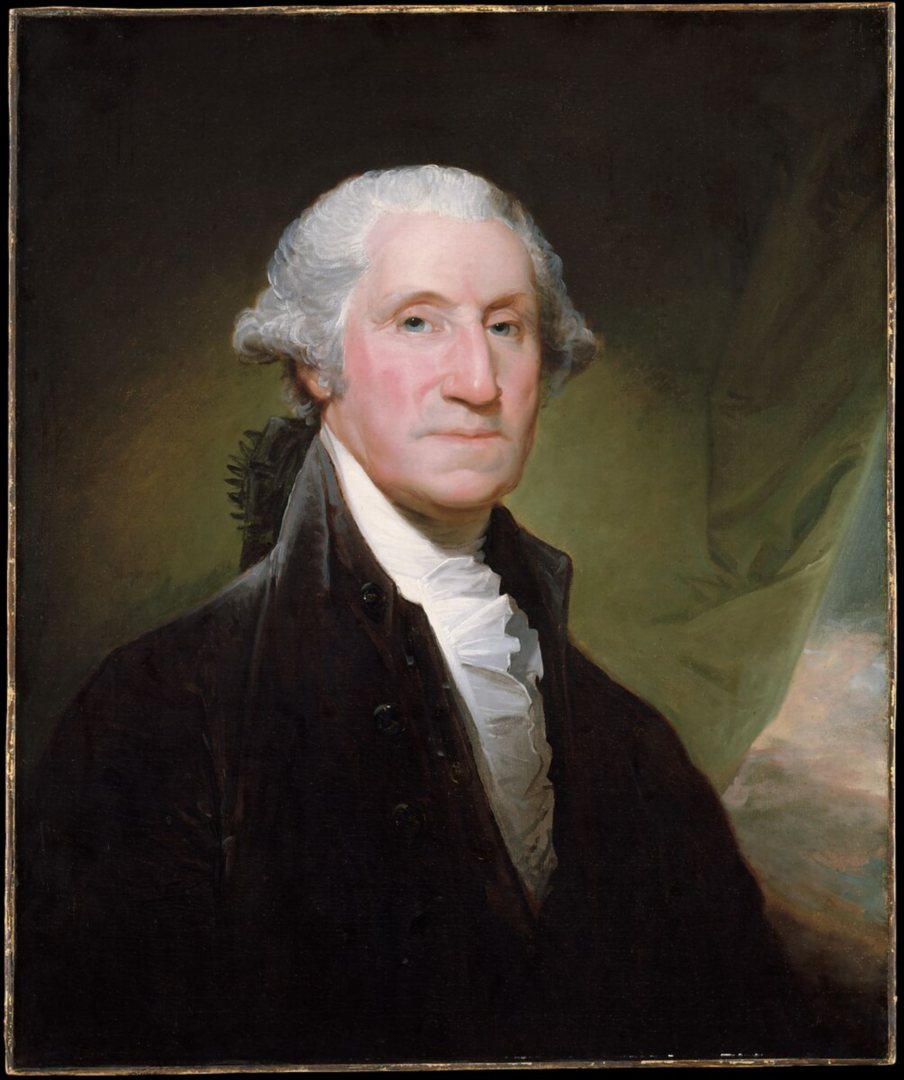
George Washington, 1795, by Gilbert Stuart

Filed Under: Civic Responsibility Tagged With: George Washington, speeches

Young Washington

July 9, 2026 by Daniel Dignan Leave a Comment

Over the weekend, I watched Young Washington in a local theater. I really enjoyed it. The movie largely followed the definitive biography by James Thomas Flexner on George Washington’s early years and exploits.

Recommend for high school students: young Washington’s quest for character, self-education, leadership roles, and courage under fire is compellingly displayed.

Young Washington had many exploits, including surveying dangerous wilderness, undertaking a long, treacherous diplomatic and spy mission for England’s King, and leading soldiers in war at Fort Necessity and during the French and Indian War, where he saved many lives during a defensive retreat. All by the age of 22.

Biographer James Thomas Flexner endeavored to set aside all presuppositions and contemporary views about Washington’s greatness and to let primary sources inform his writing, analysis, and conclusions.

Five books later — considered by one presidential biography reviewer to be the gold standard of presidential biographies — Flexner judged Washington to be truly great.

Washington’s countrymen, both common and elite, were in awe of his character and abilities. During America’s War for Independence, when told that Washington planned to return home and not seek political office, King George III said, “If he does that, he will be the greatest man in the world.”

Using Flexner’s account, here’s the story of a 21-year-old Washington’s hazardous diplomatic mission through the Ohio River Valley. (Young Washington, the movie, shows Washington’s standoff with the French, but does not quite capture the difficulty of the journey there and back to Virginia; it also skips a near-fatal encounter with an Indian guide.)

Filed Under: Personal Growth Tagged With: George Washington, James Thomas Flexner, The Forge of Experience, Young Washington

The British Are Coming

November 29, 2025 by Daniel Dignan Leave a Comment

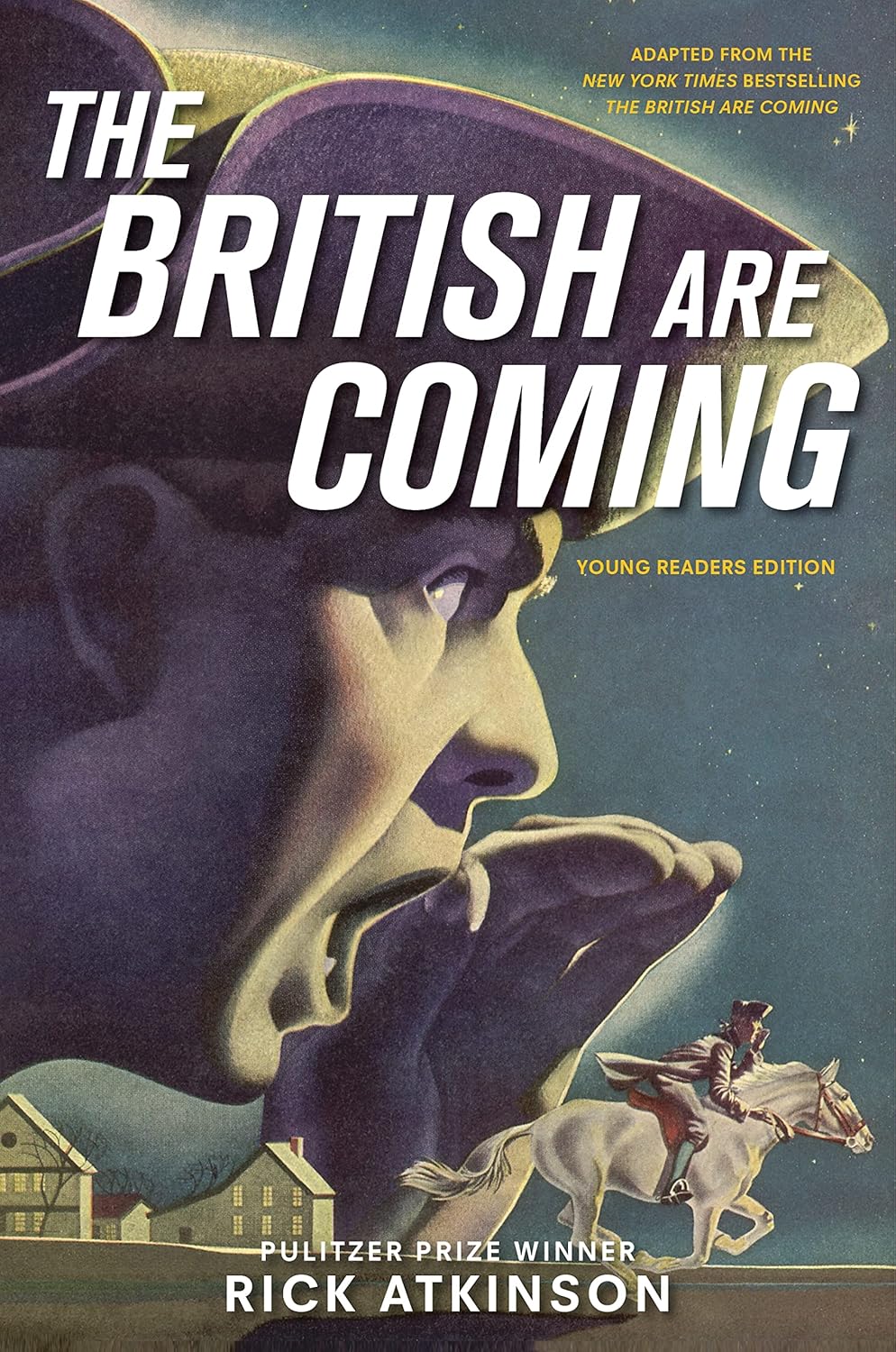
America’s 250th birthday is fast approaching, making this an excellent opportunity for students to learn about America’s founding. Rick Atkinson’s The British Are Coming: Young Readers Edition is a fast-paced and engaging read. It’s adapted from the author’s three-volume series on America’s Revolutionary War.

Not only does Mr. Atkinson bring to life fascinating details about General George Washington and Revolutionary War battles, but he also tells a moving story. A former Washington Post senior editor, Mr. Atkinson has become a premier military historian, winning a Pulitzer Prize for An Army At Dawn, one of the books in his celebrated World War II trilogy.

The book covers some of the events that led to America’s War for Independence, the first two years of the war (1775-1777), and the first campaigns in Massachusetts, Canada, New York, and New Jersey. Events include the midnight ride of Paul Revere, the first shots in Concord and Lexington, the Battle of Bunker Hill, the Battle of Long Island, and the Battle of Trenton, which includes the famous crossing of the Delaware River on Christmas Day.

Readers learn something about the views of both sides through firsthand accounts and correspondence of King George III and others. They gain awareness of both the brutal and civil aspects of the war, including an early attempt to end it in a meeting between Benjamin Franklin and British Admiral Lord Richard Howe.

Overall, the author underlines the price of freedom, the suffering and sacrifice of civilians, and the fact that many young men died.

The book might spur students to read more history about America and the West: a worthwhile outcome.

Finally, the battles described in the book are enlivened by numerous pictures and excellent maps that depict geography, towns, troop movements, and maneuvers, adding much to this educational experience.

Filed Under: Personal Growth Tagged With: George Washington, Revolutionary War, Rick Atkinson

Rules of Civility & Decent Behavior

May 3, 2025 by Daniel Dignan Leave a Comment

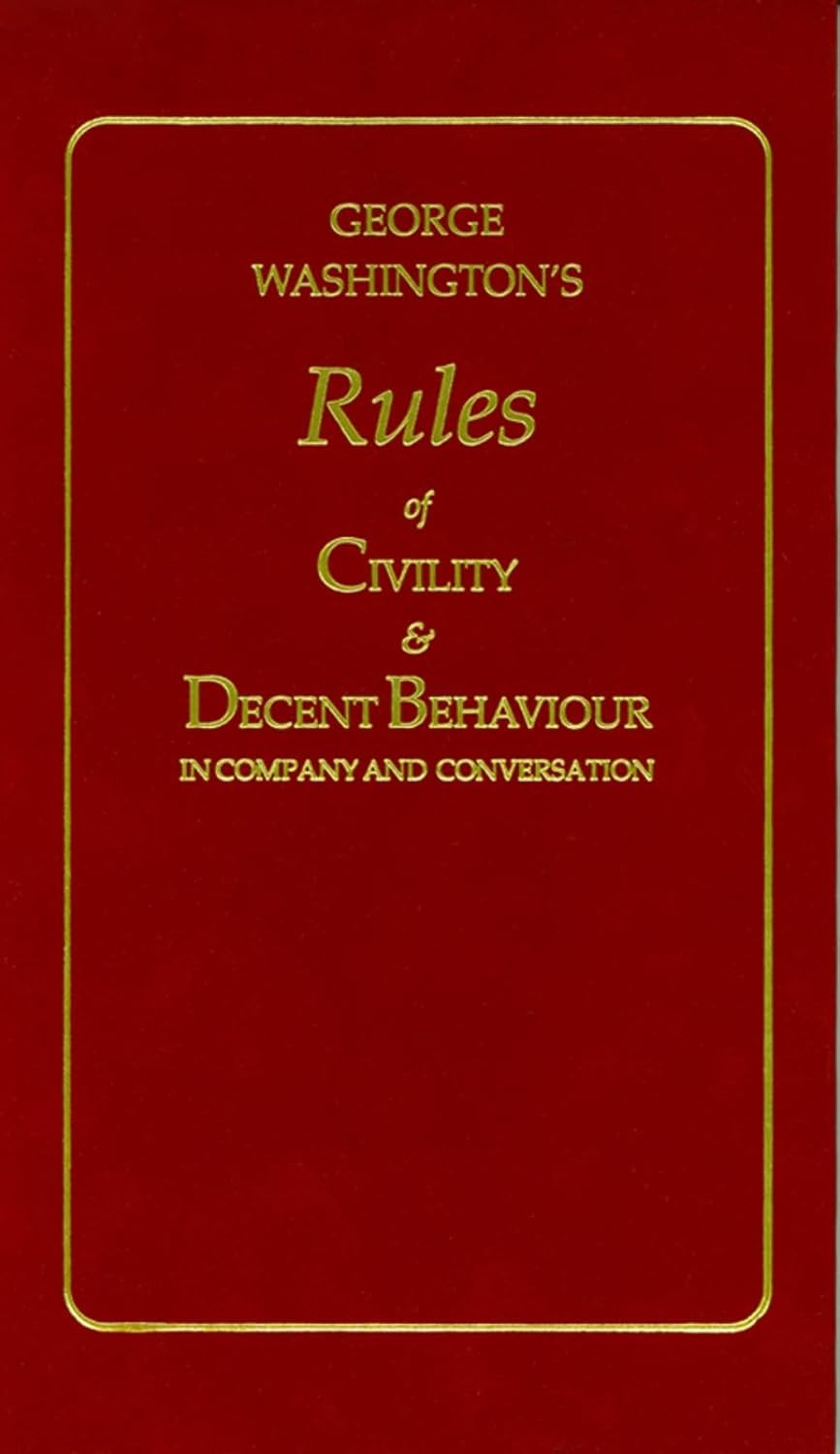
I reread George Washington’s Rules of Civility & Decent Behavior, which a young Washington copied for personal use. According to Wikipedia, the instructions date back to the 16th century. Most of the maxims, except for two or three, apply today.


Some are quite clearly true: “In the presence of others sing not to yourself with a humming noise, nor drum with your fingers or feet.”

Some are humorous: “Do not laugh too much or too loud in public.”

Others are consequential, and for those who desire to lead. “Let your countenance be pleasant, but in serious matters somewhat grave.” “Let thy carriage be such as becomes a man: grave, settled, and attentive to that which is spoken. Contradict not at every turn what others say.” And “Think before you speak; pronounce not imperfectly nor bring out your words too hastily, but orderly & distinctly.”

Toward the end, the maxims help make others comfortable in your presence. This has the added benefit of giving one confidence in social settings. “Be not forward but friendly and courteous; be the first to salute, hear, and answer; & be not pensive when it’s time to converse.”

The most critical maxims deal with justice toward others. “Detract not from others; neither be excessive in commanding.” “Strive not with superiors in argument, but always submit your judgment to others with modesty.”

While behavior like this has become a lost art, it is of timeless importance. The behavior requires acting with kindness and grace. I recommend the book to high school students. The maxims can be read in a single sitting. Their brevity and proverb-like construction make them memorable and enjoyable.

Filed Under: Earning a Living, Personal Growth Tagged With: Decent Behavior, George Washington, Rules of Civility

George Washington’s Epic Forest Adventure

June 28, 2024 by Daniel Dignan Leave a Comment

George Washington’s behavior and achievements in the American War for Independence are legendary and heroic. Yet, his early life is not as well-known, though his energy, activity, bravery, and leadership were striking. James Thomas Flexner tells the story of a 21-year-old Washington leading six men through the wilderness on behalf of the King of England. This trek put George Washington on the map.

Functioning as an emissary and spy for the king, Washington embarked on a cold, dangerous, and grueling journey through forests and paths (known only to indians and explorers) from eastern Virginia to the Ohio Valley, south of Lake Erie. The result of his mission would be a world war, remarkable military leadership, and the command of the Virginia Regiment charged with the protection of the settlers and families of the Shenandoah Valley.

It all began when George Washington strongly pursued military responsibility and leadership. His “visible intelligence and energy” (52) marked him, as did his woodland experience as a surveyor, as one dependable for a unique and essential mission.

Here I tell the story that you can read about in Flexer’s wonderful book, in chapter 6: Forest Adventure:

Filed Under: Personal Growth Tagged With: George Washington, James Thomas Flexner, Ohio Valley, The Forge of Experience

George Washington: The Forge of Experience

June 25, 2024 by Daniel Dignan Leave a Comment

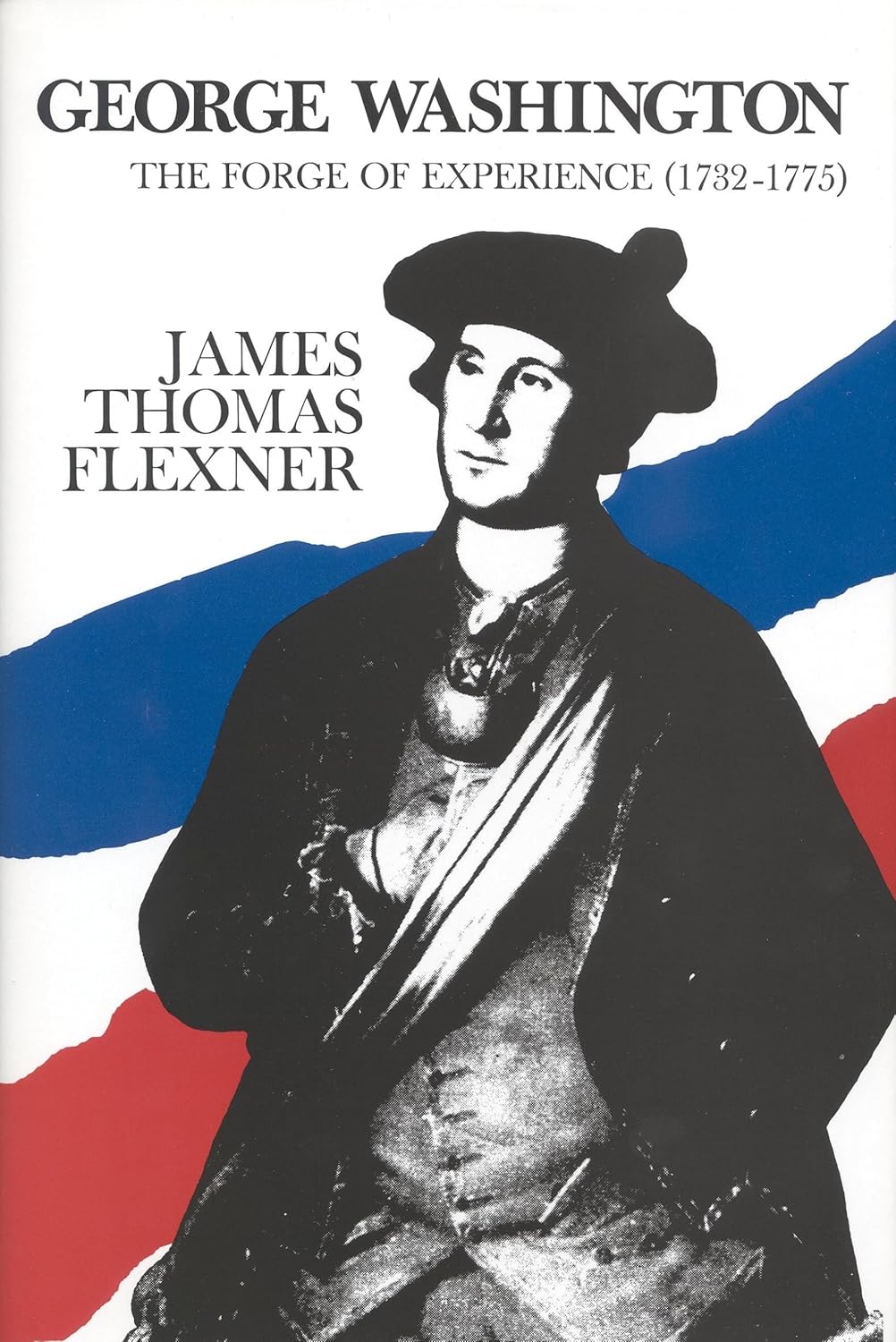
Reading biographies can help a young person develop character and become a better leader. Even a single biography can make a huge difference. George Washington is a great place to start.

It has been said that Washington is the most unknown well-known person in American history. Very few people know much about his life or what made him one of the most significant leaders of all time and a universally loved figure. Washington’s character, leadership, bravery, work ethic, and consideration for others made him indispensable. Generations of people have benefited from his life.

I have enjoyed learning about the early life experiences of Washington, in particular, his hardships as a young man in his early twenties, leading men in wilderness adventures.

Here, I review a top biography of his early life:

Filed Under: Personal Growth Tagged With: George Washington, James Thomas Flexner, The Forge of Experience