

Fill the Stage

Daniel Dignan

Fill The Stage

Helping students live well

new / index / about

YouTube


terms / privacy

Subscribe via Email

Washington’s First Annual Address to Congress

August 31, 2026 by Daniel Dignan Leave a Comment

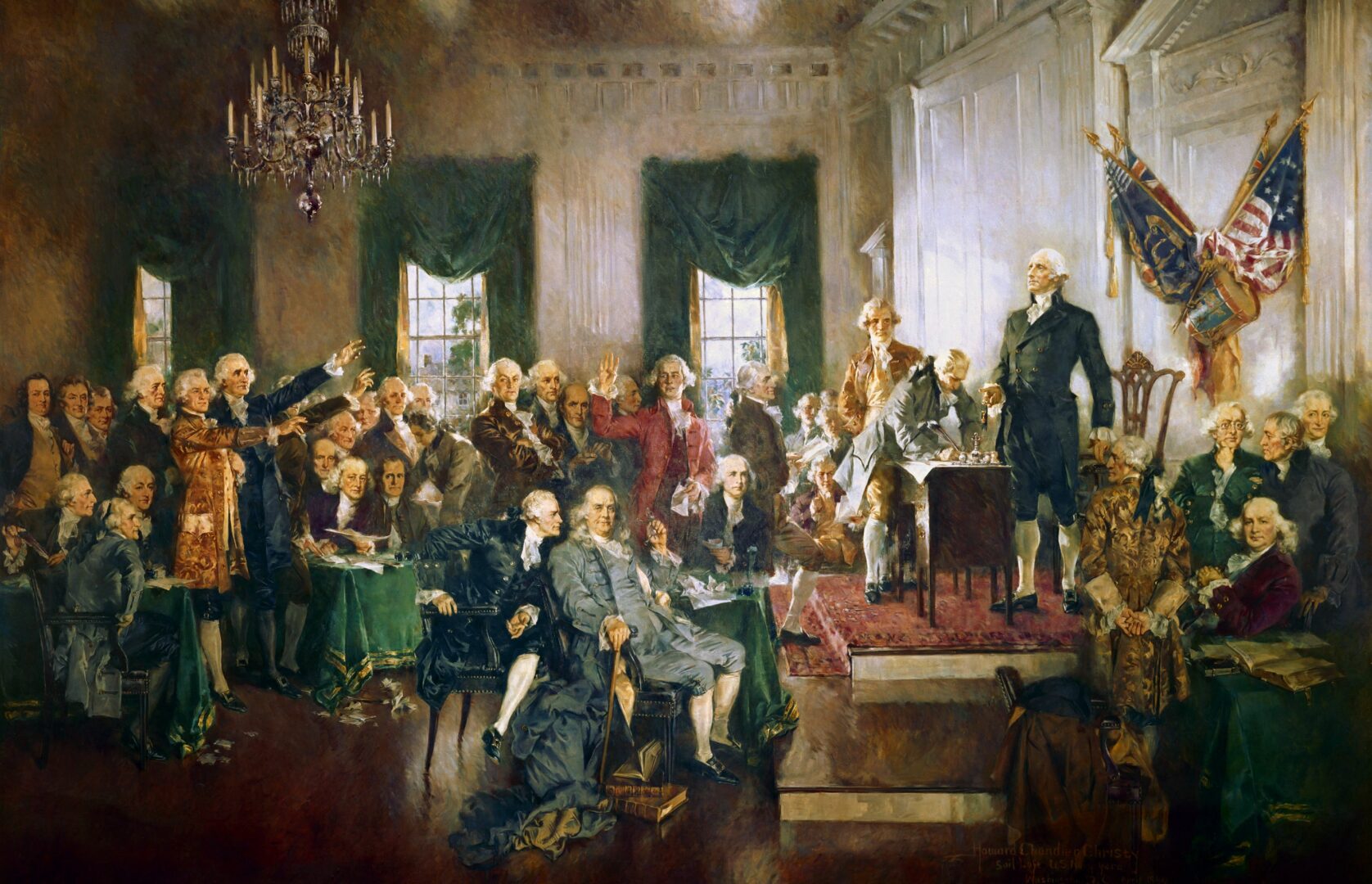
Scene at the Signing of the Constitution of the United States by Christy

After decades of colonial rule under Parliament and the British Crown, the thirteen states ratified the Articles of Confederation during the American War for Independence, which served as America’s first constitution. Ultimately, the Articles were insufficient to provide for unity and the necessary executive power to lead the nation.

Aware of the Articles’ limitations yet cautious of centralized power, America’s Founding Fathers debated and wrote a Constitution that established executive authority. After ratification by 9 states, the US Constitution became the supreme law of the United States in 1788. Shortly after, in February 1789, the states elected George Washington as the first president.

Washington knew that his words and actions would guide future presidential interaction with Congress. Thus, he carefully crafted his First Annual Address to Congress, delivered in January of 1790, showing due respect for Congress’ constitutional authority while also rising to the occasion as chief executive to recommend legislation for the country’s welfare.

By reading Washington’s address, one can see his respect for Congress, his priorities, and his leadership. He prudently and directly addressed particular necessities under debate, such as the need for a standing army, immigration policy, trade standards, and the promotion of literature and science education.

This article provides an overview of his method. This page contains his address. Here is a picture of his hand-written address.
Filed Under: Civic Responsibility Tagged With: George Washington, US Constitution

Constitution of the United States

November 17, 2024 by Daniel Dignan Leave a Comment

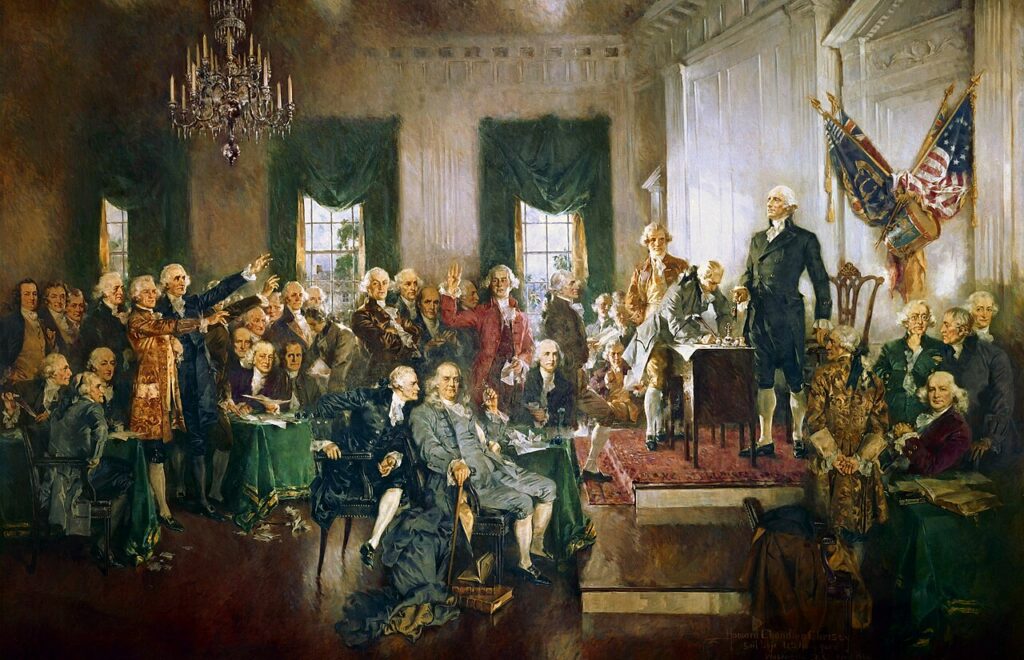
Scene at the Signing of the Constitution of the United States on September 17, 1787 by Howard Chandler Christy

The brief period between election day and the inauguration of a United States president is a grand opportunity to familiarize kids with the US Constitution. America’s supreme law is brief, beautifully written, and (as written constitutions go) unrivaled in longevity and wisdom.

In 1787, American founders like George Washington and Benjamin Franklin met in Philadelphia’s Independence Hall to improve America’s government, which the unsuccessful Articles of Confederation had established. The result was a constitution and, eventually, a Bill of Rights that harmonized the dual need for effective government and the protection of pre-political rights.

The triumph of the Constitution is its limitation on concentrated power through checks and balances and its support of the energies of the people in ways that protect natural rights, including:

  1. Separation of Powers: Legislative, Executive, and Judicial
  2. Division of national and state governments: Federalism
  3. Election of representatives to Congress: Republicanism
  4. Protection of minorities from majorities: Electoral College
  5. Safeguarding of smaller states from larger ones: Senate

These are a few of the methods used to make the energies and self-interests of the American people promote the flourishing of all. Just as important, the American system prescribed by the Constitution makes public virtue a necessity and provides room for its cultivation by distributing power and government.

One enormous benefit of acquainting kids with the US Constitution is that they will gain insight into the thinking that made America a land of hope. To help the study, I recommend the introductory essays on the Constitution’s meaning and formation in The Heritage Guide to the Constitution–they are short and enlightening.

Filed Under: Civic Responsibility Tagged With: Constitution of the United States, The Heritage Guide to the Constitution, US Constitution