
Fill the Stage

Daniel Dignan

Fill The Stage

Welcome to Fill The Stage. This site offers enrichment resources for students. New here? Click the start page.

start / index / about

YouTube

high school 

middle school


terms / privacy

Subscribe via Email

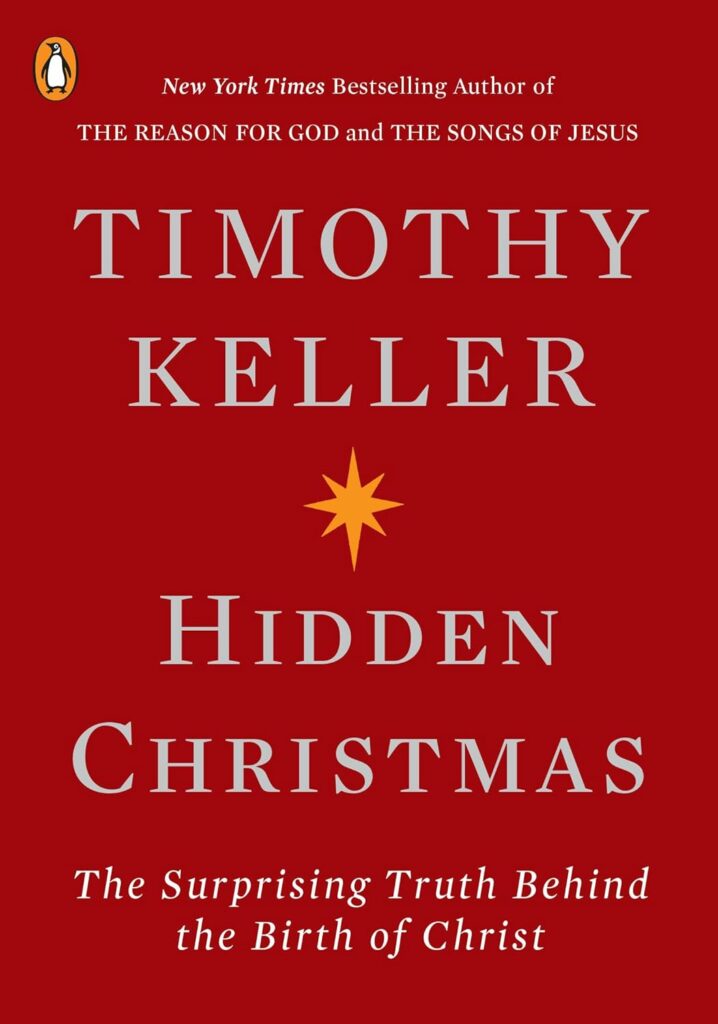
Hidden Christmas

December 14, 2024 by Daniel Dignan Leave a Comment

A Charlie Brown Christmas is one of my yearly favorites. In the story, Charlie Brown is down and unsure why. He can’t seem to get in the Christmas spirit. Eventually, Linus shares the meaning of Christmas by reciting the familiar passage about the angels appearing to shepherds and announcing the birth of Christ, the incarnation of the God-man.

Christmas is a time of gift-giving and family, yet many miss the surprising truth behind the holiday. Timothy Keller, the late New York Times bestselling author and pastor, carefully explains the meaning of the classic biblical texts that are part of American Christmas lore.

As a pastor in Virginia, Pennsylvania, and New York City, he spent decades studying the meaning of the Christmas story, distilling it into a short book.

I recommend the book to high school students. Understanding the Christmas story is crucial for comprehending the Bible, and even history and Western Civilization.

Keller reveals why the stories of Mary (the mother of Jesus), Joseph, the shepherds, King Herod, and Simeon matter today. The Christmas story reveals that hostility and fear have been overcome and that lasting peace and joy can be received and enjoyed.

Hidden Christmas is a short book and a meaningful Christmas gift.
Filed Under: Personal Growth Tagged With: Christmas story, Hidden Christmas, the christmas story, Timothy Keller

Observing a Funeral and Taking Stock of Life

December 6, 2024 by Daniel Dignan Leave a Comment

A colleague of mine died the day before Thanksgiving. I am grateful that my last conversation was friendly and meaningful, but I wish I could have had one more talk. The funeral was sad and hopeful.

He lived a full life: a pilot during the Vietnam War, a Navy officer, an industry man, a pastor, a husband, a father, a grandfather, and a great-grandfather. He studied the Bible extensively and worked to help others understand it.

The officiant read from a Bible text that has given millions of people hope for thousands of years and is often read at military funerals.

I wouldn’t say I like going to funerals, but they are hidden opportunities.

  1. A funeral is an opportunity for the family and friends of the deceased to learn how their loved one impacted others
  2. A funeral is an opportunity to take stock of one’s own life.

James Hagerty, an obituary writer for the Wall Street Journal, described the questions he sought to answer when writing a death notice. He would investigate what the deceased tried to do, why, and how it worked out. These questions are worth thinking about before one dies.

High school kids should write a life plan using the obituary questions above. A plan includes some idea of what one is trying to do. For this, a good place to start is your funeral. What do you want others to say about you when you die? What do you want to be known for?

These questions help one live a useful and productive life.

Finally, I recommend allowing a funeral to catalyze inquiry into religious matters, such as finding lasting order, peace, beauty, and happiness. (For serious thoughts about this, read a chapter a day of the Gospel of John, the fourth book in the New Testament.)

Attending a funeral can be instrumental for a high school kid, helping him or her think seriously about what to do.

Filed Under: Personal Growth Tagged With: funeral

Handel’s Messiah

November 30, 2024 by Daniel Dignan Leave a Comment

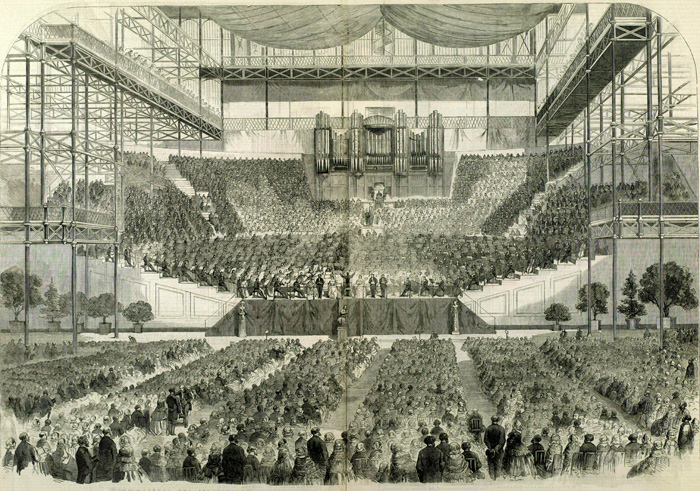
Thousands attend the Washington National Cathedral and the Kennedy Center’s performances of Handel’s Messiah every December in Washington, DC. First performed in Dublin, Ireland, in 1741, the Messiah is one of the world’s most excellent and recognized musical performances. Technically an oratorio, it was written by Charles Jennens and set to music by George Frideric Handel, a compositional genius.

Most known for the Hallelujah Chorus and the beautiful Scripture texts of the Old and New Testaments, the theme is the Messiah’s (Anointed One, or Christ) life, death, and resurrection. I have listened about a dozen times and always walk away profoundly moved.

Handel’s Messiah allows young listeners to become more familiar with one of the Bible’s primary themes and the Bible’s story. While attending an in-person performance is a good idea, you can watch the Washington National Cathedral’s December 8th live stream performance for free. You can also purchase a recording; I recommend the 1985 performance by the Chicago Symphony Orchestra and Chorus.

If you attend or listen to a performance, let me know on my Facebook page or at info@movingship.com.

Filed Under: Personal Growth Tagged With: George Frideric Handel, Handel's Messiah, Messiah

The Iliad

November 23, 2024 by Daniel Dignan Leave a Comment

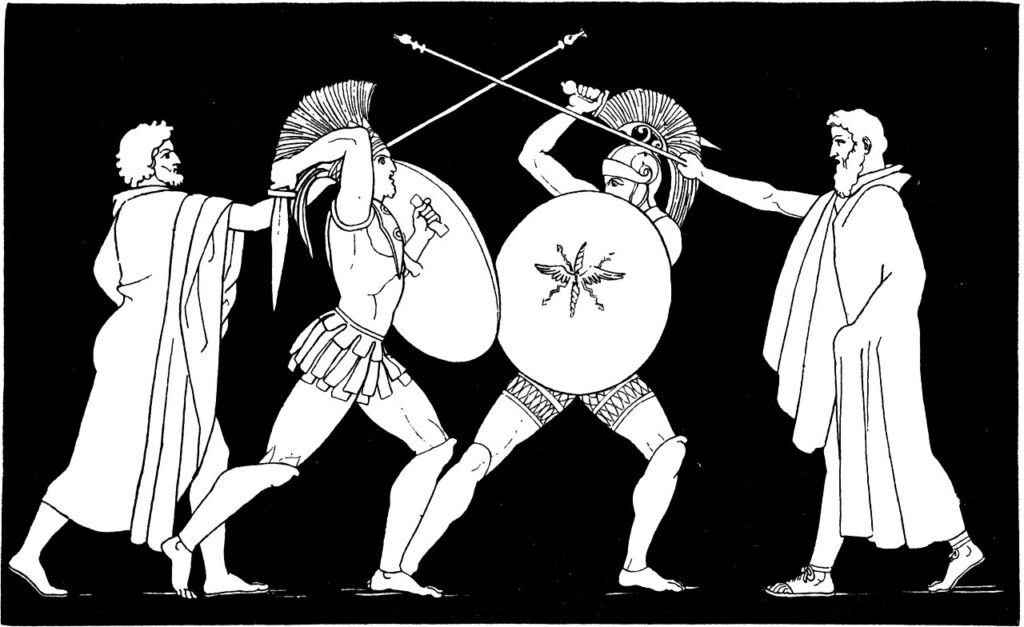
A second reading of the Iliad in six months, this time in poetic form, deepened my appreciation of its majesty, significance, and point. The Iliad is Homer’s sweeping epic about the Trojan War, particularly the wrath of Achilles, the Greek hero and greatest warrior.

Many heroes play a role, the foremost of whom are Achilles and Hector, heroes of the Greek and Trojan armies. They are supported by the mighty Diomedes, Ajax, Odysseus, and Trojan Aeneas. Many fight for glory, each other, and, in Hector’s case, his city and family.

The war unfolds on a plain between the Greek ships and the city of Troy in modern-day Turkey. The heroes are fearsome. Diomedes is so mighty that he is surrounded by a “crowd of champions” (126), and he leads from the front (185), putting his life on the line. Ajax is a towering warrior general; he fights with a mighty shield and spear. In one scene, he protects the ships and fights against seemingly impossible odds, knowing all might be lost. One is made to feel the difficulty and his overwhelming bravery and leadership:

“…a blast of weapons pounded Ajax, so he could not stand firm. He was forced back by Trojan fighters and the will of Zeus. His shining helmet, pummeled by the blows, clanged horribly around his battered skull. The blades kept hammering the ornate plates. His left arm wearied of the constant effort of holding up his flashing shield. But still the Trojans could not knock down his defense, hard though they pressed him with their constant strikes. His breath was labored and a flood of sweat drenched his whole body, and he could not rest. Danger was everywhere, pain piled on pain.” (382-383)

While thrilling, the fighting scenes are not the epic’s most critical parts. The scenes surrounding the war display the consequences of vice and virtue. The king wronged Achilles, leading to the loss of many lives. Achilles’ pride and wrath are partly to blame. The entire war began with adultery and the theft of someone’s wife. One sees the importance of diplomacy, friendship, experience, skill, competence, communication, charisma, and exercising one’s talents amid need and in the fray.

As I reread the Iliad, I grew concerned that I was missing the point—the forest for the trees. Is Homer trying to tell us something applicable and essential for all time, vital for living a good life, and perhaps even an extraordinary one?

I was thrilled to hear about this First Things podcast. The speaker’s interpretation fits the story and its conclusion. He says the poem is a love epic and that Homer wants us to ponder the necessity of forgiveness and loving one’s enemies. That is indeed a vital point.

A high school student can easily read 15 pages a day and finish the epic reasonably quickly. He or she should pay attention to the dull parts, the difficulties endured, the self-sacrifices made, the love shown, and the epic’s end.

Filed Under: Personal Growth Tagged With: Achilles, Hector, Homer, Iliad, The Iliad

US Special Operations – Interview

November 9, 2024 by Daniel Dignan Leave a Comment

Chuck Holton is a war correspondent and Army Ranger. He shares what an Army Ranger is, what training is like, and how to prepare for training and combat.

He also shares how military service benefited his career and character. Toward the end of the interview, he shares advice to young men considering special operations.

Please let me know what you think and subscribe!

Filed Under: Personal Growth Tagged With: Army Rangers, Chuck Holton, Special Operations

The Small Woman

October 12, 2024 by Daniel Dignan Leave a Comment

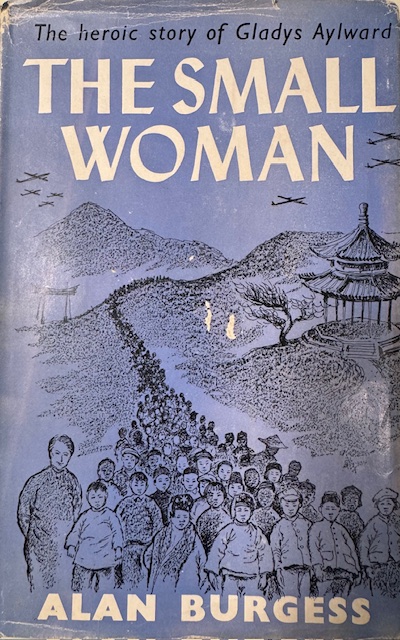
In 1930, a young woman named Gladys Aylward boarded a train in England bound for China. She carried her clothes and food in two suitcases. Due to a war, the journey ended in Russia. She slept out in the Siberian cold and was eventually smuggled to Japan, where she made her way to China.

Gladys was called to be a missionary. She learned Chinese and started an inn with an older missionary woman in a small north-central town called Yangcheng. She began feeding, housing, and telling Bible stories to mule caravaners. At first, the townspeople distrusted her and threw mud at her, but over time, she gained respect.

One day, the town’s Mandarin (the philosopher-leader) asked her to work for him as the local foot inspector. She traveled from village to village, overseeing the end of female foot-binding.

All of a sudden, a prison riot broke out: prisoners were being killed. The town’s leadership asked her to put it down. Extremely frightened, she walked into the prison and witnessed horrors: a man with an axe was chasing and hacking fellow prisoners. The man approached her; terrified, she demanded that he hand over the axe.

Gladys experienced many difficulties and adventures. She traveled all around the area, establishing Christian communities.

Her most significant test came when the Japanese invaded northern China, bombing and pillaging towns and villages. When her town was bombed, she became the leader, nurse, and caregiver to many. She lived in the mountains and caves, caring for refugees. However, it became clear that she had to leave, with prisoners and nearly 100 orphans who considered Gladys their mother.

Her southwestern journey to the province of Sian achieved legendary status and is the book’s climax.

The author of Gladys Aylward’s biography, Alan Burgess, said she “is one of the most remarkable women of our generation.” Her heroic life and accomplishments began with a prayer that God would use her.

The book was published in 1957, and the following year, a movie starring Ingrid Bergman debuted. I like the film, though there are some critical differences, and I highly recommend reading the book before watching it.

This book is worthwhile for teenagers and adults. Her life is a testament to the fact that one can thrive in the midst of difficulty and that hardship is the pathway to an adventurous and great life.

Filed Under: Personal Growth Tagged With: Alan Burgess, Gladys Aylward, The Small Woman

The Lion, the Witch and the Wardrobe

September 2, 2024 by Daniel Dignan Leave a Comment

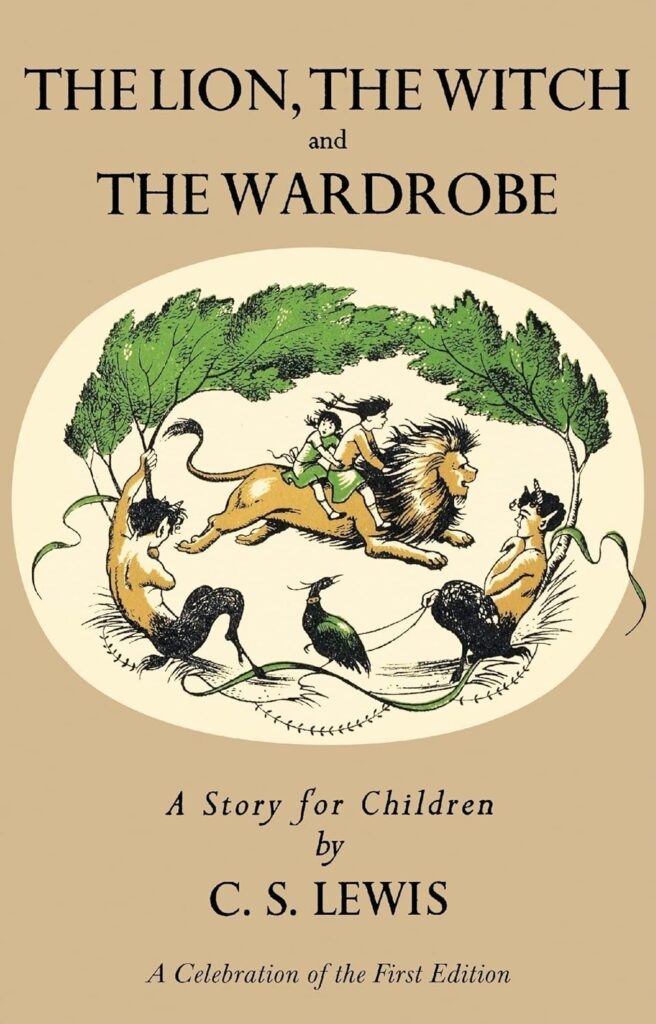
The most famous of Narnia’s stories begins when four children are evacuated from London during the war to the countryside. They arrive at a large house with many rooms owned by a mysterious professor. Soon after, they are drawn into a world of talking animals and mythical creatures. And they are in danger.

Connected to The Magician’s Nephew and the other stories that comprise C.S. Lewis’s The Chronicles of Narnia, this story has served as the entry point into the land of Narnia for millions of children and adults. It is the most significant of all the stories, though all are intensely enjoyable classics with essential lessons.

In this story, Narnia is “Always winter and never Christmas” and is ruled by a White Witch, who turns creatures into stone with a wave of her wand. Several famous scenes stick with you, like the temptation scene and the stone table.

The main characters, the children —Peter, Susan, Edmund, and Lucy —struggle to overcome uncertainties and dangers. And they find that they need Aslan, the great lion’s help. However, they are unsure if he is safe, but they find him to be greater than imagined.

Lewis is a master storyteller; the book is not only great for young people, but it also improves with subsequent readings. 

I recommend The Complete Chronicles of Narnia, which features the illustrations of Pauline Baynes. You can purchase a single volume here.

Filed Under: Personal Growth Tagged With: C.S. Lewis, Narnia, The Chronicles of Narnia, The Lion, the Witch and the Wardrobe

The Iliad, Achilles, Hector, and What the Best Men Do Well

August 10, 2024 by Daniel Dignan Leave a Comment

I interview JP Shafer about the Iliad—the Greek epic poem about the Trojan War and one of greatest books of all time. We discuss the story, highlights, themes, characters, what the best men do well, and why one should put the poem’s lessons into practice.

You can read the Iliad in prose or poetry. I recommend Emily Wilson’s poetic translation.

Filed Under: Personal Growth Tagged With: Achilles, Hector, The Iliad, The Trojan War

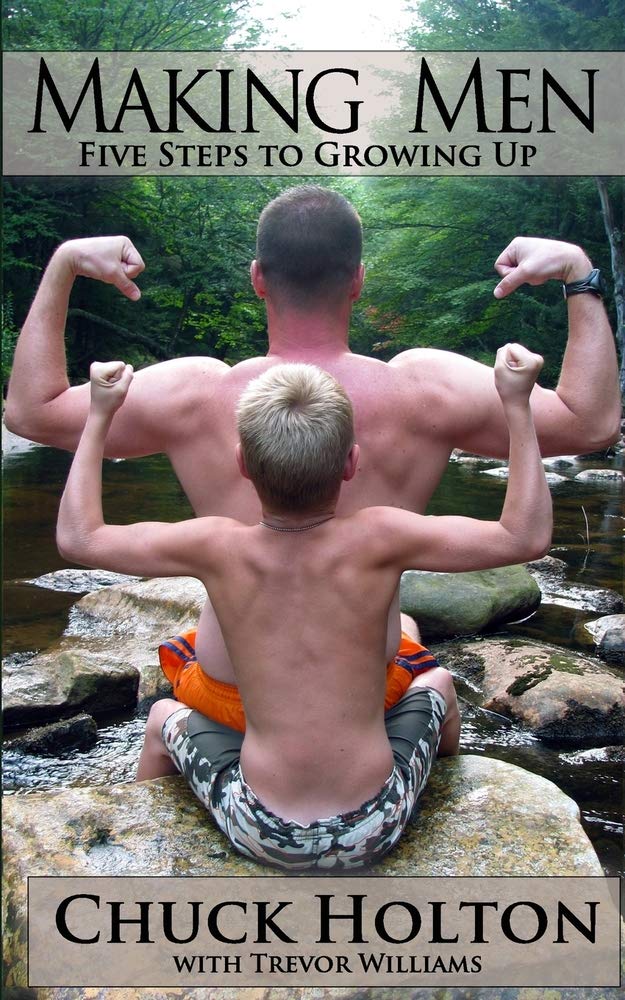
Making Men: Five Steps To Growing Up

July 29, 2024 by Daniel Dignan Leave a Comment

Chuck Holton, an Army Ranger and war correspondent, endeavors to help young men live happier, more fulfilling lives by embracing hardship and responsibility. His book explains what growing up and becoming a man looks like.

The book is structured around five qualities of manhood. Chuck describes each quality and weaves his story through the book, showing how he learned of and adopted them.

The qualities are submission, honor, assessment and improvement, perish and provide, and engagement. Chuck makes a critical point: Real men sacrifice for the good of others by embracing difficulty and hardship. This selfless leadership leads to a healthy family, an adventurous life, and personal fulfillment.

According to Chuck, submission is the foundation of manhood. A man must submit to God and proper authority. This means submitting to the Ultimate Being and orienting one’s life according to his design and commands, revealed in nature and the Bible.

Chuck explains that to live honorably, one must value things rightly. Chuck writes: “Understanding honor requires nothing more than learning what is most important and living appropriately based on that knowledge.” (66). This requires desiring what is true and good, serious thinking, prioritization, and a willingness to take action.

Chuck’s third quality, assess and improve, is likened to a farmer walking down a field, evaluating the quality of his crops and rooting out weeds. Chuck believes in the importance of assessing one’s life, including career, religious beliefs, and physical health, to make needed changes.

The following quality, perish and provide, is the heart of manhood and leadership. A man considers the needs of others as more important than his own. He is devoted to his wife, kids, and colleagues and fulfills his duties. Importantly, this quality of sacrificial service is the key to a fulfilled life. Chuck writes, “The more hardship a man is willing to embrace, the more fulfilling his life will become….” (138).

Lastly, Chuck explains that a man must engage and execute. This is the opposite of passivity. Knowing what one ought to do is not enough. One must act. Action, the key to an adventurous and fulfilling life, is the capstone quality that separates men from boys.

The book is accessible and practical, with many interesting stories that emphasize and illustrate the qualities of manhood. It would benefit high school, college, and middle school students. Girls and young women interested in marriage can also benefit from learning what to look for in a husband.

Filed Under: Personal Growth Tagged With: Chuck Holton, Five Steps to Growing Up, Making Men

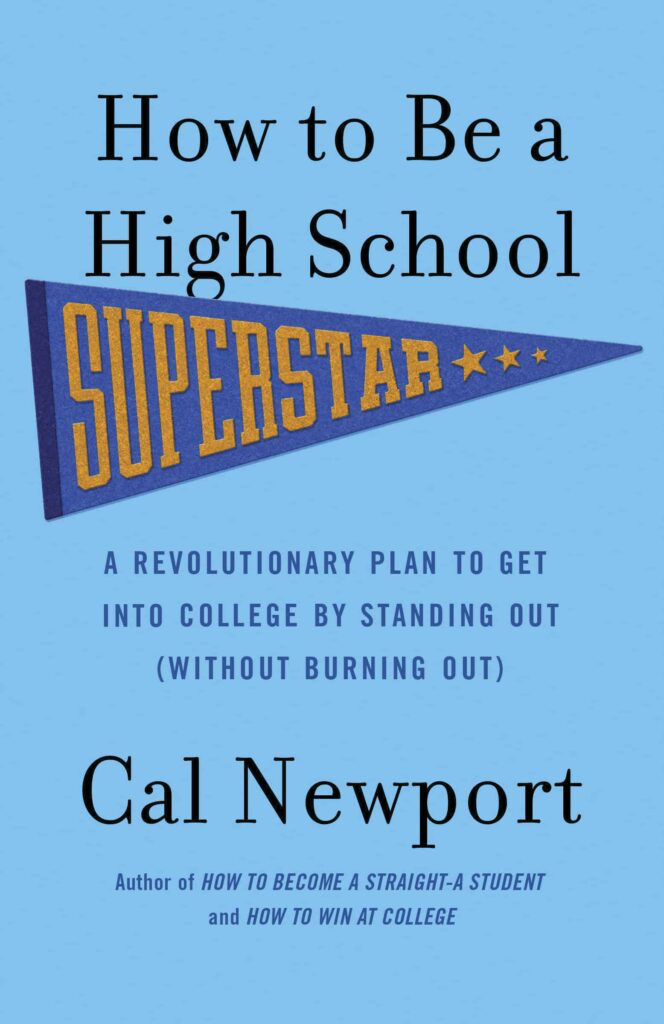
How to Be a High School Superstar

July 21, 2024 by Daniel Dignan Leave a Comment

This book can help your teenager develop an interest and discover opportunities. Top students across America have used the methods. Cal Newport shares their stories.

The main idea is that one ought to develop an interest that leads to skill development and productivity in an unusual yet valuable area of knowledge and service. The book functions as a guide to help teens access top colleges and universities, but its actual value lies in its career development and vocational aspects.

Newport emphasizes that developing an interest requires ample time for constructive leisure. This is because the interest cannot be contrived; it must be genuine. The interest must also drive one to serve people in ways that are valued. In other words, one must go beyond interests in ping-pong or extracurricular activities that anyone can do.

The book has three parts: unscheduling, focus, and innovation.

Overscheduling is a common problem, according to Newport. Many bright students do too much of what ultimately does not matter, such as taking challenging courses designed to impress college administrators. Underscheduling requires avoiding what does not matter and completing homework quickly so that evenings and weekends are free for the necessary trial and error to develop an interest. Students need time for reading, experimentation, volunteering, developing relationships, and working.

To complete schoolwork quickly, students must learn how to study effectively. Newport dedicates a portion of the book to examining the study habits of top students.

Next, regarding focus, Newport explains how to identify meaningful extracurricular activities. Not only should teens immerse themselves in the activities, but they should also investigate how others became effective. (This can be done by reading biographies.)

Finally, he explains how to innovate and turn an interest into something inexplicable and impressive. This can be achieved over time by volunteering and serving a particular community, gaining trust, and gradually taking on larger and more complicated projects as one gains experience, character, and knowledge.

All of this is explained in detail with many examples.

He shares how one high school student started a company and a successful entrepreneurship blog, leading to many opportunities. Another student became a teacher’s assistant and eventually transformed student reading programs. Another wrote a successful book, leading to speaking opportunities and significant relationships that helped a student become a sought-after expert and commentator.

In closing, this is the best career advancement book I’ve ever read. It could help your teen develop a plan of action and identify a calling years earlier than most.

I have read the book twice and found it personally helpful. Parents should read the book first; it could help them in their endeavors and in guiding their teenager.

How to Be a High School Superstar

Filed Under: Earning a Living, Personal Growth Tagged With: Cal Newport, calling, How to Be a High School Superstar

  • « Previous Page
  • 1
  • …
  • 6
  • 7
  • 8
  • 9
  • 10
  • Next Page »