
Fill the Stage

Daniel Dignan

Fill The Stage

“Character is Destiny”

start / index / about
YouTube

high school 

middle school


terms / privacy

Subscribe via Email

Called to Lead

July 27, 2025 by Daniel Dignan Leave a Comment

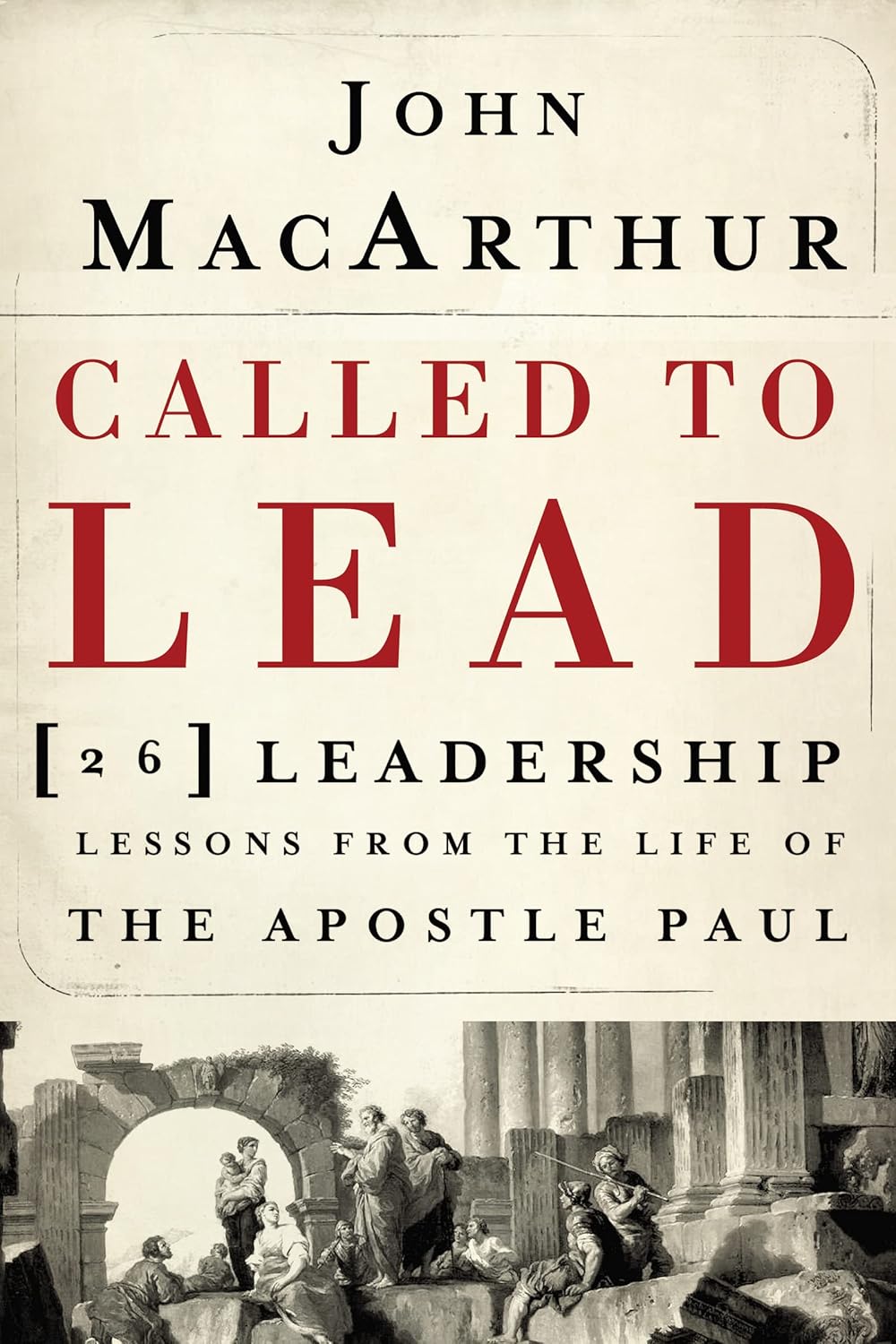
John MacArthur, the late pastor of Grace Community Church and chancellor of the Master’s University in California, wrote an excellent book on leadership principles drawn from the lives of St. Paul and Nehemiah.

Paul planted churches across the Roman Empire, wrote much of the New Testament, and is largely responsible for the rise of Christianity in the first century. Nehemiah served as King Artaxerxes’ cupbearer in the 5th century BC. He was a Jewish exile from Israel who received permission to rebuild his city, Jerusalem, which the Babylonians had destroyed in 586.
Fair Use

Called to Lead transports readers to the time and place of Paul and Nehemiah and identifies what’s implied in the Bible about their leadership. The first lesson of leadership is trustworthiness. MacArthur explains how Paul gained trust and influence.

Students will not only gain insight into leadership but also deepen their understanding of the Bible’s meaning and message.
Filed Under: Civic Responsibility, Personal Growth Tagged With: Apostle Paul, Artaxerxes, John MacArthur, Nehemiah, Saint Paul

Saint Paul in Thessaloniki

July 13, 2025 by Daniel Dignan Leave a Comment

After Philippi, Paul and Silas journeyed south to Thessaloniki (Acts 17:1-10, ESV). Located in the middle of Greece, and on the northwestern part of the Aegean Sea, Thessaloniki was (and is today) significant commercially and culturally. Named after Alexander the Great’s sister, it functioned as an independent city during Paul’s day, but would later become a Roman province.

Thessaloniki was highly valued among empires, changing hands several times. After Roman rule, Byzantium, the Bulgars, the Ottomans, and, starting in 1912, the Greeks ruled the city (Paul).

Paul’s preaching transformed the city, and the church he founded became influential. Though an angry mob forced him to leave, his New Testament letters to the church (1 and 2 Thessalonians) reveal that the church would go on to positively affect all of Greece (1 Thessalonians 1:6-9), and eventually, through the letters, the entire world.

One of the most famous passages in the letters regards the second coming of Christ (a future event), and Paul’s encouragement to Christians to be ready for that day. (1 Thessalonians 4:13-18, 5:1-11).

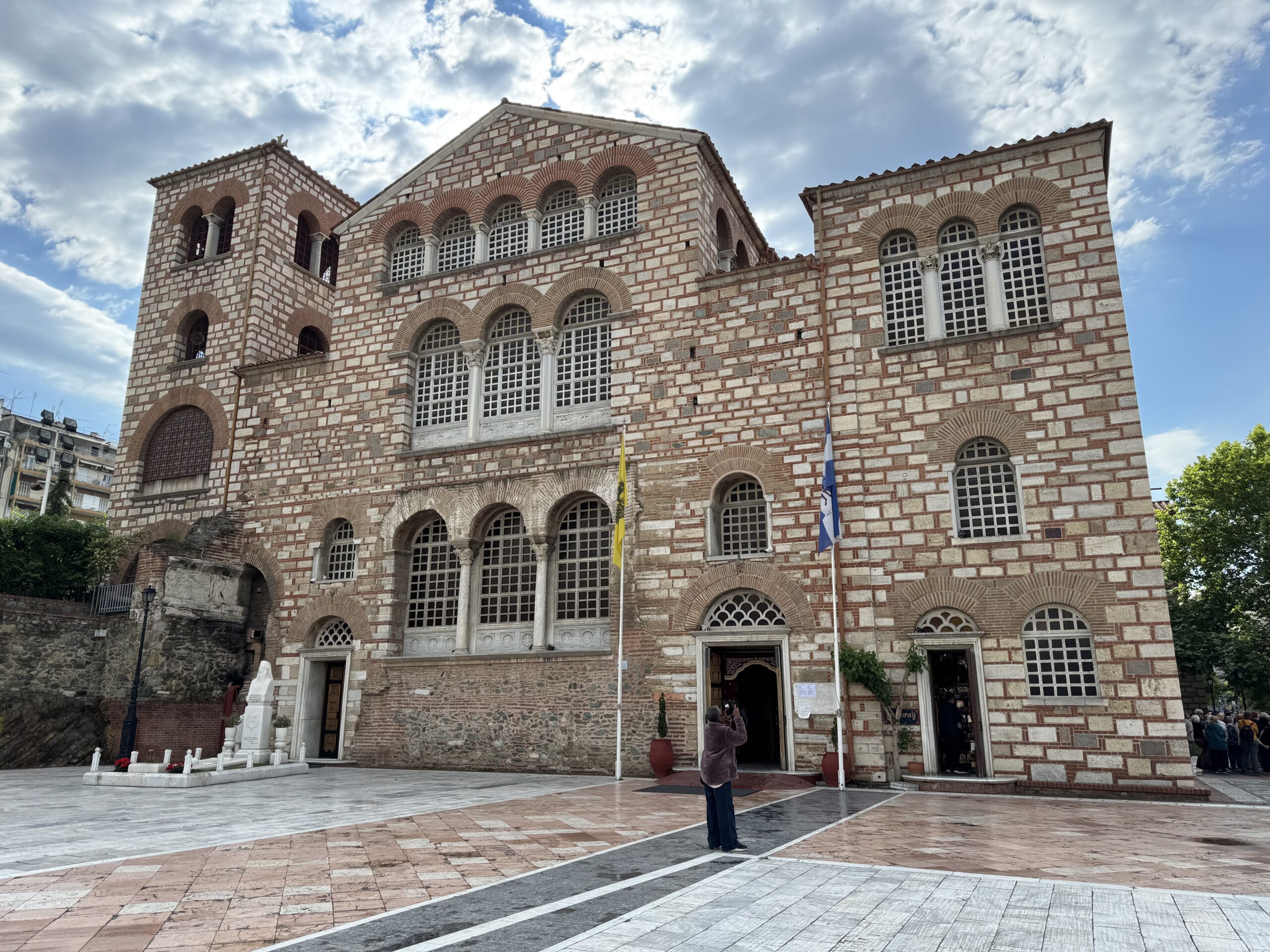
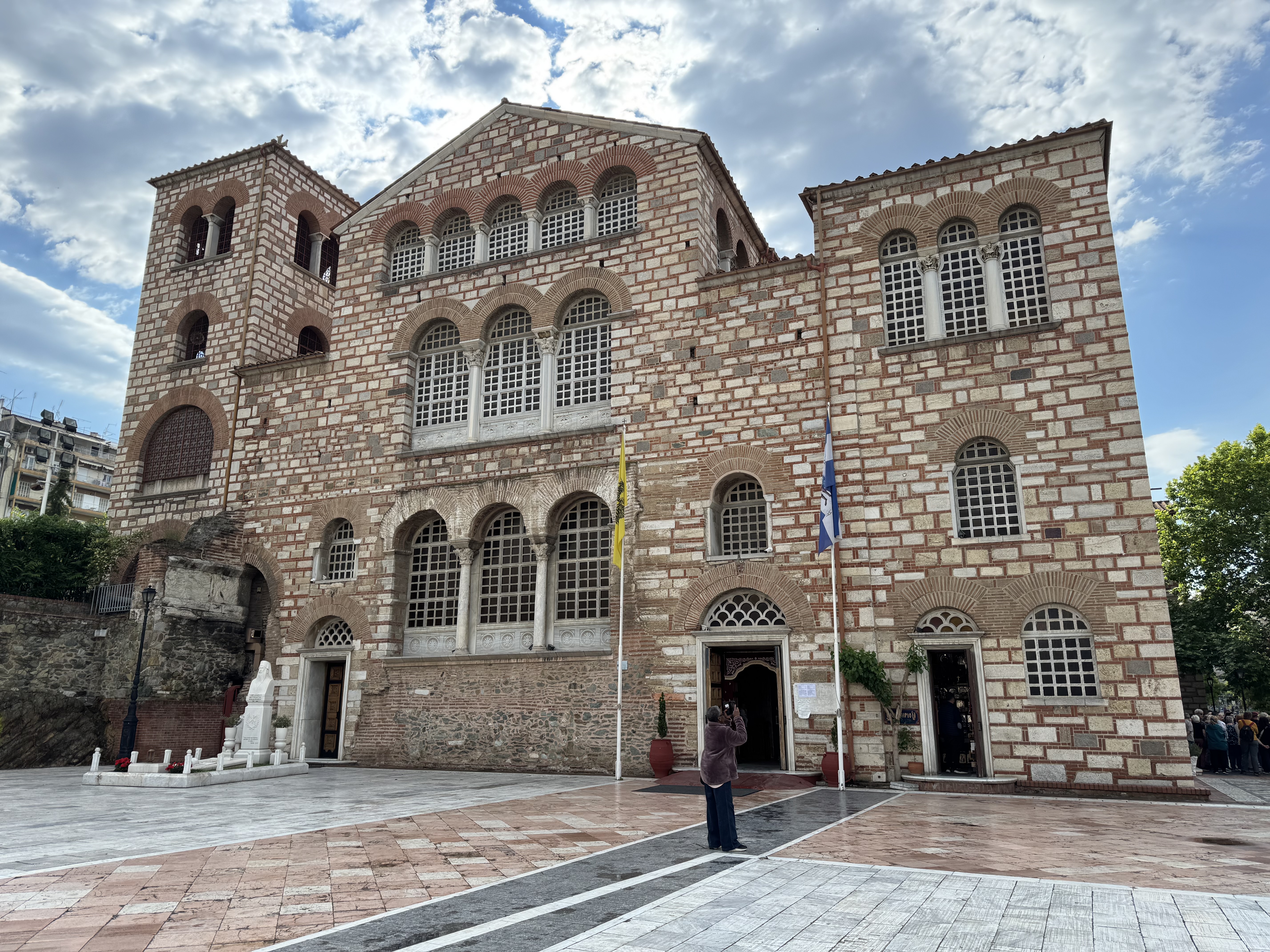
If you ever travel to Thessaloniki, be sure to notice the Roman forum, the medieval walls, and the ancient churches, particularly the fifth-century Basilica of St. Demetrius.

Basilica of St. Demetrius

Filed Under: Personal Growth Tagged With: Apostle Paul, Saint Paul, Thessaloniki

Saint Paul in Philippi

June 18, 2025 by Daniel Dignan Leave a Comment

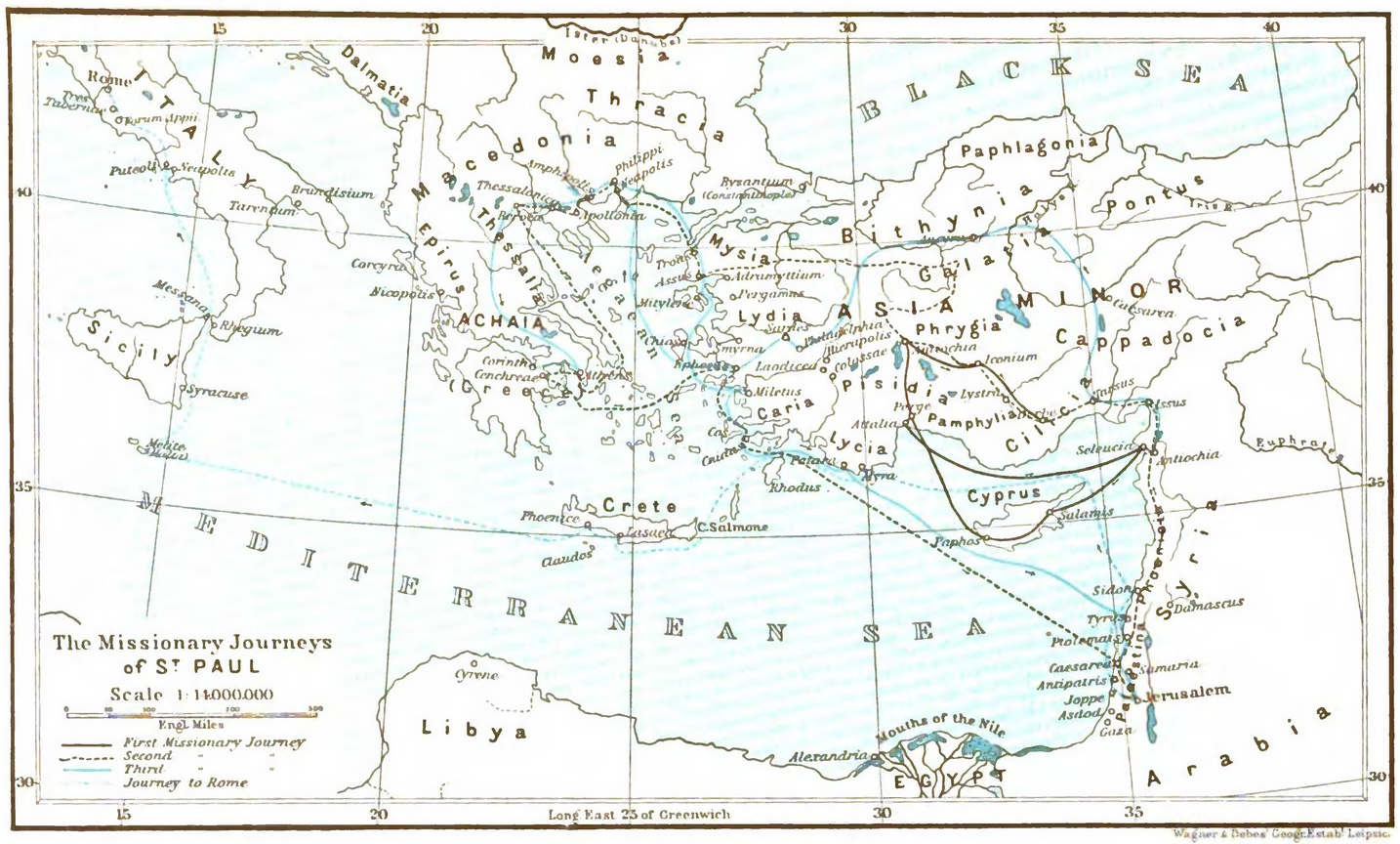
During Paul’s first missionary journey, he and Barnabas traveled through Cyprus and south-central Asia Minor (modern-day Turkey). Many Jews and Gentiles responded to their message, but others rejected it and persuaded many to turn against Paul. In one city, an angry mob stoned him. Nonetheless, churches were established, and Christian leaders were appointed to carry on the work. (Acts 13 and 14.)

After a major Church Council (Acts 15), Paul began his second journey, traveling west through Asia Minor and returning to the churches he had founded. While in Lystra, Paul and his friend Silas met a young man named Timothy, who became Paul’s protege (Acts 16).

Together they journeyed northwest, where they were prevented from entering Northern Asia Minor (Bithynia). In Troas, of the famed Trojan War, unsure where to go, Paul had a vision:

And a vision appeared to Paul in the night: a man of Macedonia was standing there, urging him and saying, “Come over to Macedonia and help us.” And when Paul had seen the vision, immediately we sought to go on into Macedonia, concluding that God had called us to preach the gospel to them. (Acts 16:9-10, ESV)

They sailed across the northern Aegean Sea, reaching Philippi, in Northern Greece. Philippi was a Roman city named after Philip II of Macedon, the father of Alexander the Great. It is the site of the consequential Battle of Philippi, where Octavian (eventually Caesar Augustus) defeated Brutus. In Paul’s day, the city included a Roman forum, commercial buildings, and a theater. Mountains nearby were mined for gold. And the town had become a retirement destination for Roman soldiers.

The ruins can be seen today. The video below shows the city center.

Nearby, Paul and his team met a woman named Lydia, who sold purple clothing to wealthy leaders. She became the first convert to Christianity in Europe, and her house the site of the first church (Acts 16:11-15).

Soon after, Paul confronted a demon-possessed slave and was imprisoned, where a most extraordinary thing happened:

As we were going to the place of prayer, we were met by a slave girl who had a spirit of divination and brought her owners much gain by fortune-telling. She followed Paul and us, crying out, “These men are servants of the Most High God, who proclaim to you the way of salvation.” And this she kept doing for many days. Paul, having become greatly annoyed, turned and said to the spirit, “I command you in the name of Jesus Christ to come out of her.” And it came out that very hour.

But when her owners saw that their hope of gain was gone, they seized Paul and Silas and dragged them into the marketplace before the rulers. And when they had brought them to the magistrates, they said, “These men are Jews, and they are disturbing our city. They advocate customs that are not lawful for us as Romans to accept or practice.” The crowd joined in attacking them, and the magistrates tore the garments off them and gave orders to beat them with rods. And when they had inflicted many blows upon them, they threw them into prison, ordering the jailer to keep them safely. Having received this order, he put them into the inner prison and fastened their feet in the stocks.

About midnight Paul and Silas were praying and singing hymns to God, and the prisoners were listening to them, and suddenly there was a great earthquake, so that the foundations of the prison were shaken. And immediately all the doors were opened, and everyone’s bonds were unfastened. When the jailer woke and saw that the prison doors were open, he drew his sword and was about to kill himself, supposing that the prisoners had escaped. But Paul cried with a loud voice, “Do not harm yourself, for we are all here.” And the jailer called for lights and rushed in, and trembling with fear he fell down before Paul and Silas. Then he brought them out and said, “Sirs, what must I do to be saved?” And they said, “Believe in the Lord Jesus, and you will be saved, you and your household.” And they spoke the word of the Lord to him and to all who were in his house. And he took them the same hour of the night and washed their wounds; and he was baptized at once, he and all his family. Then he brought them up into his house and set food before them. And he rejoiced along with his entire household that he had believed in God.

But when it was day, the magistrates sent the police, saying, “Let those men go.” And the jailer reported these words to Paul, saying, “The magistrates have sent to let you go. Therefore come out now and go in peace.” But Paul said to them, “They have beaten us publicly, uncondemned, men who are Roman citizens, and have thrown us into prison; and do they now throw us out secretly? No! Let them come themselves and take us out.” The police reported these words to the magistrates, and they were afraid when they heard that they were Roman citizens. So they came and apologized to them. And they took them out and asked them to leave the city. So they went out of the prison and visited Lydia. And when they had seen the brothers, they encouraged them and departed. (Acts 16:16-40, ESV)

Paul’s message was consequential and comprises much of the New Testament of the Bible. He spoke of God’s future judgement, the debt humans owe to God, Christ’s atonement for sin on the cross, and forgiveness and imputation of righteousness by faith in Christ. We are told that some believed it, while others rejected it (Acts 14). In Philippi, after being beaten and put in stocks, Paul’s unusual behavior and the earthquake caught the jailer’s attention, and he and his family became followers of Christ.

When the city officials let Paul go, he did not leave quietly. His rights as a Roman citizen had been violated, and he had been publicly humiliated. He compelled the city leaders to acknowledge this. Roman and Christian convictions of the importance, privileges, and responsibilities of citizenship would go on to impact the modern world.

Filed Under: Personal Growth Tagged With: Philippi, Saint Paul

Saint Paul’s Heavenly Vision

June 8, 2025 by Daniel Dignan Leave a Comment

Paul, originally Saul of Tarsus (a city in Asia Minor, now modern-day Turkey), is responsible for half of the books in the New Testament (NT) of the Bible. A titanic figure in his day, trained to be a Jewish religious leader by one of the most respected rabbis, a contemporary of Jesus Christ, he became early Christianity’s most aggressive persecutor: “But Saul was ravaging the church, and entering house after house, he dragged off men and women and committed them to prison.” (Acts 8:3, ESV)

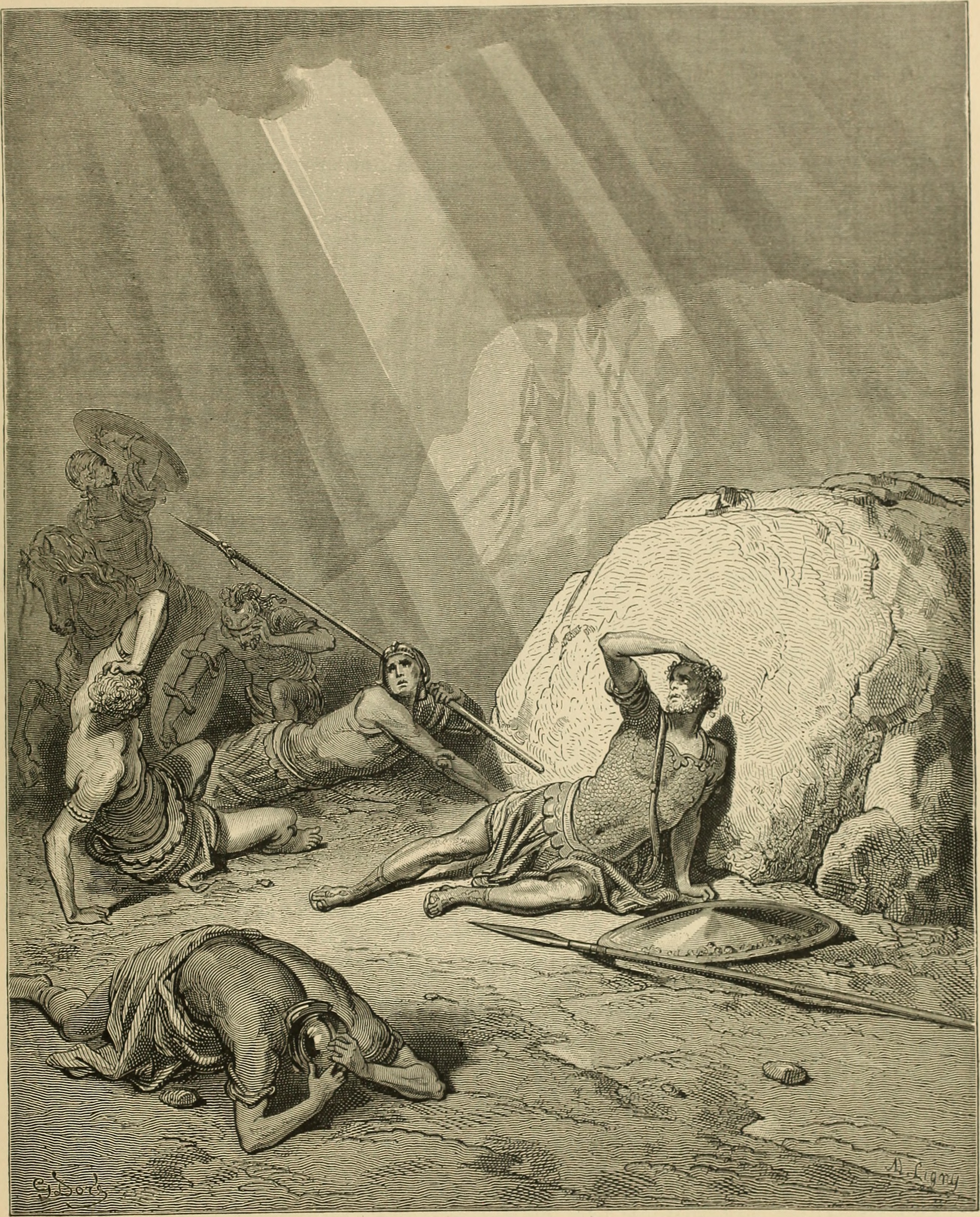
Yet in the middle of his efforts to stamp out Christianity, on the road to Damascus, he was dramatically and forever changed by a vision of Jesus Christ.

But Saul, still breathing threats and murder against the disciples of the Lord, went to the high priest and asked him for letters to the synagogues at Damascus, so that if he found any belonging to the Way, men or women, he might bring them bound to Jerusalem. Now as he went on his way, he approached Damascus, and suddenly a light from heaven shone around him. And falling to the ground, he heard a voice saying to him, “Saul, Saul, why are you persecuting me?” And he said, “Who are you, Lord?” And he said, “I am Jesus, whom you are persecuting. But rise and enter the city, and you will be told what you are to do.” The men who were traveling with him stood speechless, hearing the voice but seeing no one. Saul rose from the ground, and although his eyes were opened, he saw nothing. So they led him by the hand and brought him into Damascus. And for three days he was without sight, and neither ate nor drank. (Acts 9:1-9, ESV)

This tectonic event led to the spread of Christianity worldwide, particularly in Europe. Paul would undertake three missionary journeys, possibly four, preaching the gospel of Jesus Christ, planting churches in key cities, and writing letters to the churches that became crucial to the New Testament’s message. This was documented by Luke, Paul’s physician, in the New Testament’s Acts of the Apostles.

Paul describes his early life and conversion in two places: Acts 22 and 26. On the first occasion, his audience was an angry mob that wanted to kill him. The second was before King Agrippa in Caesarea. Paul had become the most consequential person in the world. One whom kings, and eventually Caesar, were compelled to hear.

In Paul’s vision on the Damascus road, Jesus Christ told Paul the following:

But rise and stand upon your feet, for I have appeared to you for this purpose, to appoint you as a servant and witness to the things in which you have seen me and to those in which I will appear to you, delivering you from your people and from the Gentiles—to whom I am sending you to open their eyes, so that they may turn from darkness to light and from the power of Satan to God, that they may receive forgiveness of sins and a place among those who are sanctified by faith in me.’ (Acts 26:16-18, ESV)

This divine purpose continues to affect the world to this day and began to arise in Paul’s missionary journeys.

Filed Under: Personal Growth Tagged With: Acts of the Apostles, Saint Paul

Saint Paul

May 28, 2025 by Daniel Dignan Leave a Comment

It’s impossible to exaggerate the influence of the Apostle Paul in the world, and particularly in the West. Only Jesus Christ has had a greater influence, and behind Paul, one would have to say that Aristotle or Plato are close to Paul’s impact, yet trail it. That is quite the company.

After Christ’s death and resurrection, Paul spread Christianity throughout the world. He founded churches in Asia and Europe, writing letters to these churches which have been read ever since in the Bible’s New Testament. The most famous is his letter to the church in Rome, titled Romans. In it, he explains the good news that Christ revealed.

In a nutshell, Paul declared:

“…for all have sinned and fall short of the glory of God…” “For the wages of sin is death, but the free gift of God is eternal life in Christ Jesus our Lord.” “…But God shows his love for us in that while we were yet sinners, Christ died for us.” “because, if you confess with your mouth that Jesus is Lord and believe in your heart that God raised him from the dead, you will be saved. For with the heart one believes and is justified, and with the mouth one confesses and is saved.” (3:23; 6:23; 5:8; 10:9,10 – English Standard Version)

Paul’s life, leadership, and letters have not only changed the lives of millions, perhaps billions, of people, helping them find happiness, but they have also served as a bulwark of the West’s historical commitment to human dignity and freedom. They are increasingly making their mark on Eastern cultures, the Middle East, and the Global South.

Paul’s letters include Romans, 1 and 2 Corinthians, Galatians, Ephesians, Philippians, Colossians, and 1 and 2 Thessalonians. The cities and, in some cases, the ruins of the ancient cities mentioned in these letters can be seen today. I recently visited several of these locations, and over the next several weeks, I will share highlights.

Basilica of Saint Paul Outside the Walls

Paul’s letters, carefully studied, are enjoyable, fascinating, terrifying, and life-changing. I recommend adding them to a reading plan for your high school and even middle school students.

In conclusion, numerous books have been written about Paul’s teachings and life. Some are intended for scholars, while others are for a popular audience. One of my favorite books is Called to Lead: 26 Leadership Lessons from the Life of the Apostle Paul.

Filed Under: Personal Growth Tagged With: Apostle Paul, Saint Paul