

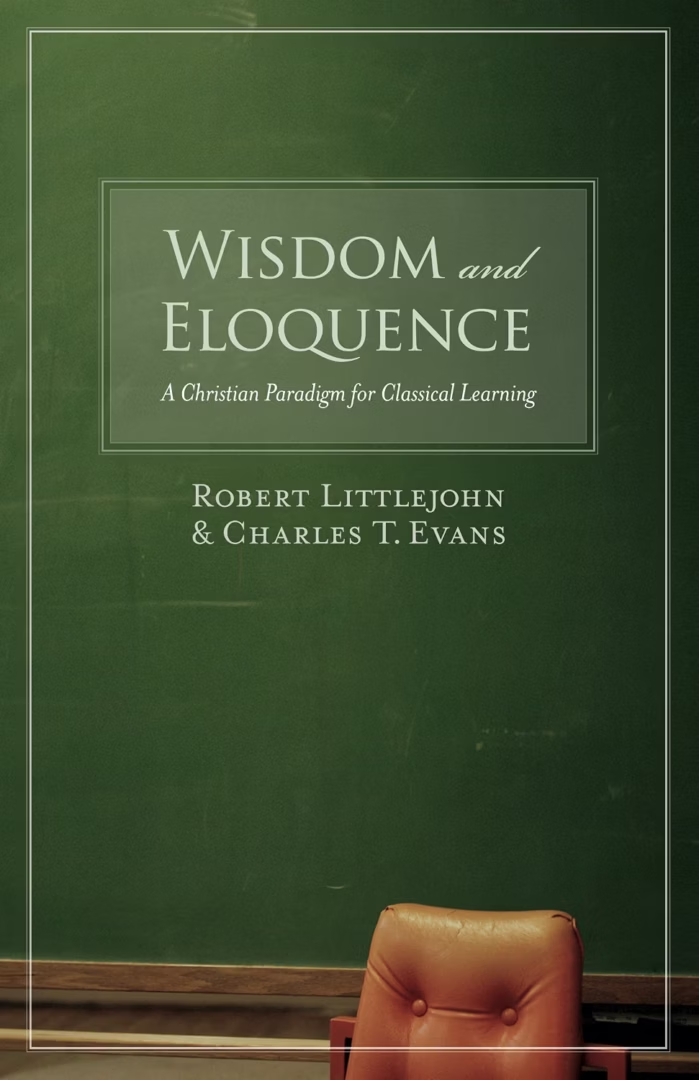
This wonderful book helps Christian educators and parents understand the original purpose of liberal arts education and how it ought to be practiced in light of classical and Christian teaching for the good of students and society.
Education, in the classical sense, sought to prepare individuals for lifelong and “self-directed learning” (p. 29). Greek and Roman educators sought to produce wise, eloquent future leaders who would benefit the city and society.
The authors are classical educators; their thesis is that the trivium (i.e., grammar, logic, and rhetoric), the primary building blocks of classical education, must be taught from day one and throughout a child’s education. This includes the quadrivium, or the mathematical arts.
They also recommend that teachers and homeschooling parents educate their students by keeping the end in mind. This means setting out what a student should know and be able to do by grade 12 and working backward.
The book summarizes what the parts of the trivium (language arts) and the quadrivium (mathematical arts) entail and require. It summarizes classical subjects and curriculum, though not in step-by-step detail.
Appendix B, “The Liberal Arts Tradition in the Public Square: A Historical Apologetic for the Liberal Arts,” was outstanding. It offers a brief history of classical education, focusing on the ancient debate regarding the use and value of rhetoric versus philosophy. Most importantly, it explores Augustine of Hippo’s thoughts on rhetoric for Christian education and ministry. In short, truth and wisdom surpass eloquence, though practical eloquence is essential for helping Christians grow.
Leave a reply. Keep it clean.