
Fill the Stage

Daniel Dignan

Fill The Stage

Welcome to Fill The Stage. This site helps students live well. New? Click start page.

start / index / about

YouTube

high school 

middle school


terms / privacy

Subscribe via Email

Mayflower Compact

August 3, 2024 by Daniel Dignan Leave a Comment

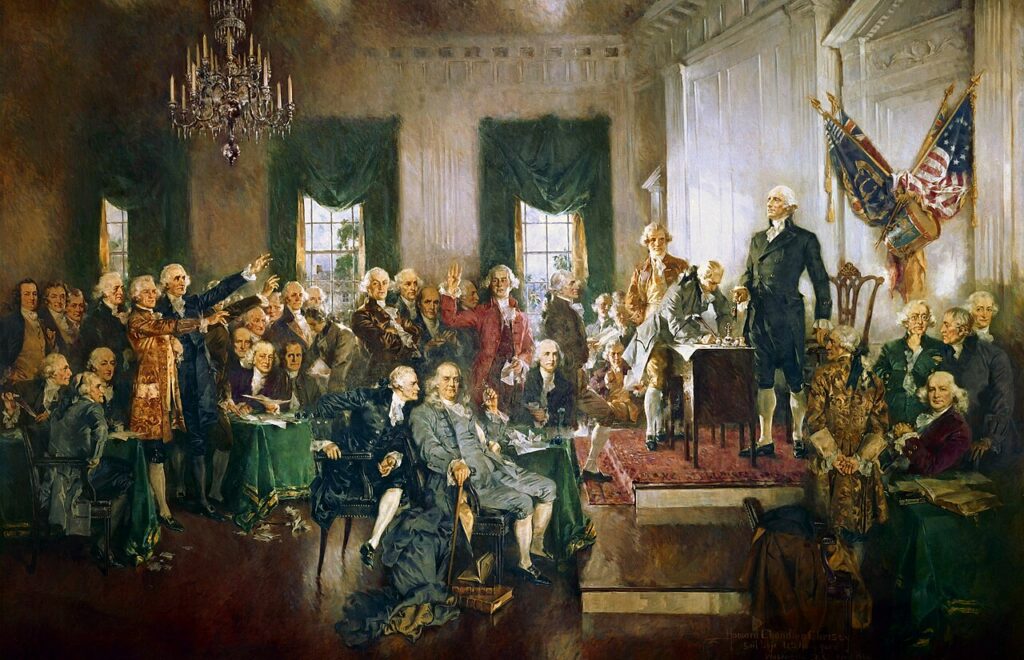
File:The Mayflower Compact 1620 cph.3g07155.jpg
Signing the Mayflower Compact 1620 by Jean Leon Gerome Ferris

The Mayflower Compact is one of the world’s most important documents. It marked the Pilgrams’ endeavor to order themselves for liberty and prosperity in the Plymouth Colony in Massachusetts.

The Pilgrams sought freedom and a new life in a new world, and they knew they needed government to promote a flourishing community.

This short document reveals why they left home and were willing to face the unknown. It states, unequivacally, their commitment to their king, faith, each other, and a self-ruling community.

The language is old, but it is noble, profound, and worth comtemplation. It is langauge of a particular time and place, and for all times and places, because it highlights important realities, the purpose of government, and what is critical for prosperity and social happiness.

In the midst of terrifying dangers, the pilgrims wrote a humble document that foreshadowed the American project and experiement in constitutional self-government.

This is one of several documents I recommend having your kid read.

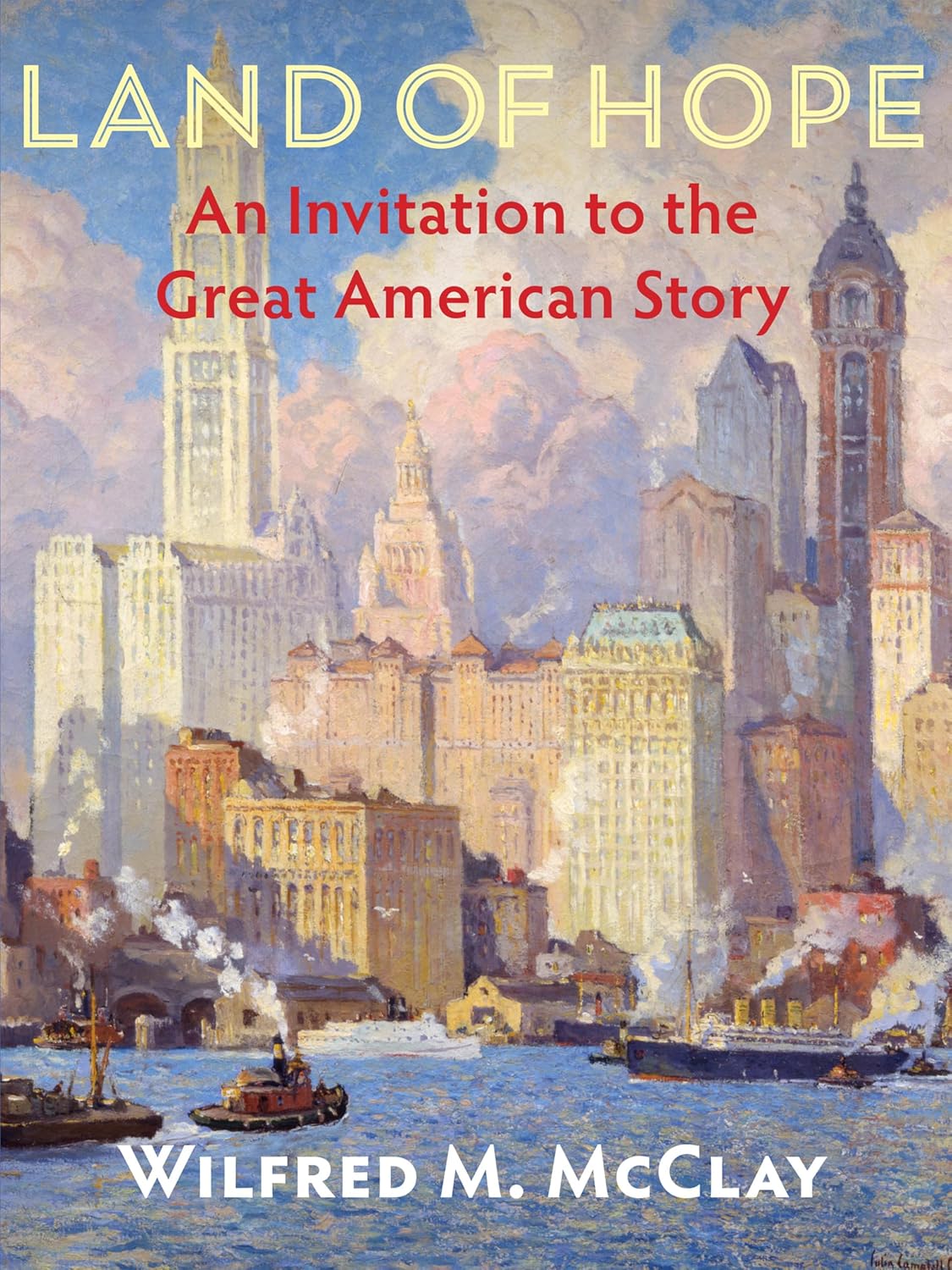
Great documents of Amerian history, coupled with beautifully written history books (e.g., Land of Hope), are one of the best ways to instill an appreciation for what made America unique and the American Dream a reality.

Text:

“In the name of God, Amen. We, whose names are underwritten, the Loyal Subjects of our dread Sovereigne Lord, King James, by the Grace of God, of Great Britaine, France and Ireland, King, Defender of the Faith, etc. Having undertaken for the Glory of God, and Advancement of the Christian Faith, and the Honour of our King and Country, a Voyage to plant the first colony in the Northerne Parts of Virginia; doe, by these Presents, solemnly and mutually in the Presence of God and one of another, covenant and combine ourselves together into a civill Body Politick, for our better Ordering and Preservation, and Furtherance of the Ends aforesaid; And by Virtue hereof to enact, constitute, and frame, such just and equall Laws, Ordinances, Acts, Constitutions and Offices, from time to time, as shall be thought most meete and convenient for the Generall Good of the Colony; unto which we promise all due Submission and Obedience. In Witness whereof we have hereunto subscribed our names at Cape Cod the eleventh of November, in the Raigne of our Sovereigne Lord, King James of England, France, and Ireland, the eighteenth, and of Scotland, the fiftie-fourth, Anno. Domini, 1620.”

Source

Filed Under: Civic Responsibility Tagged With: Mayflower Compact

Land of Hope: An Invitation to the Great American Story

July 1, 2024 by Daniel Dignan Leave a Comment

At the beginning of the modern age, Christopher Columbus sailed across the Atlantic Ocean, seeking a shorter trade route to the Eastern lands, but discovered North America instead. Although he never understood the significance of his discovery, it changed the world forever. The story of America is inspiring and fascinating, yet few today comprehend its rise, struggles, triumphs, leaders, and what made it a land of hope.

Wilfred McClay’s best-selling book tells America’s story, helping readers see the big picture and revealing invaluable, meaningful lessons. I highly recommend the book to parents of middle and high school kids. This is a great book to read as we approach America’s 250th birthday in 2026.

McClay is a master historian who believes history contains valuable lessons that support a healthy patriotism and responsible citizenship. In this book, he focuses on America’s political history from colonial times to the present. He writes engagingly, avoids partisan politics, yet is open about his belief that America was and is a land of hope. 

The author does an excellent job explaining major events and their causes and effects in ways that delight and reveal. He explains what led to European settlement, and he continues into colonial America, the Great Awakening, the founding, the Civil War, the World Wars, the Depression, and the Cold War. The Louisiana Purchase, the Monroe Doctrine, Reconstruction, modernization, the Progressive Era, the civil rights movement, and Vietnam are also covered. 

One of the book’s greatest strengths is its treatment of America’s leaders. He interposes stories of George Washington, Benjamin Franklin, Abraham Lincoln, and many other presidents. He also shares about lesser-known American leaders who played a significant role in America’s story. 

Some of the most interesting and helpful parts include chapter 3 “The Revolution of Self-Rule”, chapter 7 “The Age of Democracy” (where he describes the significance of Alexis de Tocqueville’s political and social analysis of America in his famous book Democracy in America), chapter 8 “The Old South and Slavery”, chapter 12 “A Nation Transformed” (about the Civil War’s aftermath), and chapter 14 “The Progressive Era.”

Land of Hope is suitable for teenagers who want to understand the time they find themselves in, what is happening around them, and what role they should play. 

In conclusion, here is a quote that McClay used to emphasize the importance of history:

Every generation rewrites the past. In easy times history is more or less of an ornamental art, but in times of danger we are driven to the written record by a pressing need to find answers to the riddles of today. We need to know what kind of firm ground other men, belonging to generations before us, have found to stand on. In spite of changing conditions of life they were not very different from ourselves, their thoughts were the grandfathers of our thoughts, they managed to meet situations as difficult as those we have to face, to meet them sometimes lightheartedly, and in some measure to make their hopes prevail. We need to know how they did it.

In times of change and danger when there is a quicksand of fear under men’s reasoning, a sense of continuity with generatoins gone before can stretch like a lifeline across the scary present and get us past that idiot delusion of the exceptional Now that blocks good thinking. That is why, in times like ours, when old institutions are caving in and being replaced by new institutions not necessarily in accord with most men’s preconceived hopes, political thought has to look backwards as well as forwards.

John Dos Passos “The Use of the Past,” from The Ground We Stand On: Some Examples from the History of a Political Creed (1941)

Land of Hope: An Invitation to the Great American Story

Filed Under: Civic Responsibility Tagged With: American history, American history textbook, Land of Hope, Land of Hope: An Invitation to the Great American Story, Wilfred McClay

  • « Previous Page
  • 1
  • 2
  • 3