
Fill the Stage

Daniel Dignan

Fill The Stage

Welcome to Fill The Stage. This site helps students live well. New? Click start page.

start / index / about

YouTube

high school 

middle school


terms / privacy

Subscribe via Email

State Capitol Tour

August 16, 2025 by Daniel Dignan Leave a Comment

During a quick weekend trip, I visited the Iowa State Capitol building, which dominates the view of downtown Des Moines. Completed in 1886, it is one of the most beautiful state capitol buildings in the United States.

Here’s a short video.

Visiting your state capitol building is a great way to introduce students to the importance of state government and the law-making process.

I recommend joining a tour. In my case, much more of the building was available for exploration. A tour guide could also tell you about internship or volunteer opportunities. Also, you could contact your local state legislator’s office for shadowing opportunities.

Filed Under: Civic Responsibility Tagged With: Des Moines, Iowa State Capitol

Beowulf

August 9, 2025 by Daniel Dignan Leave a Comment

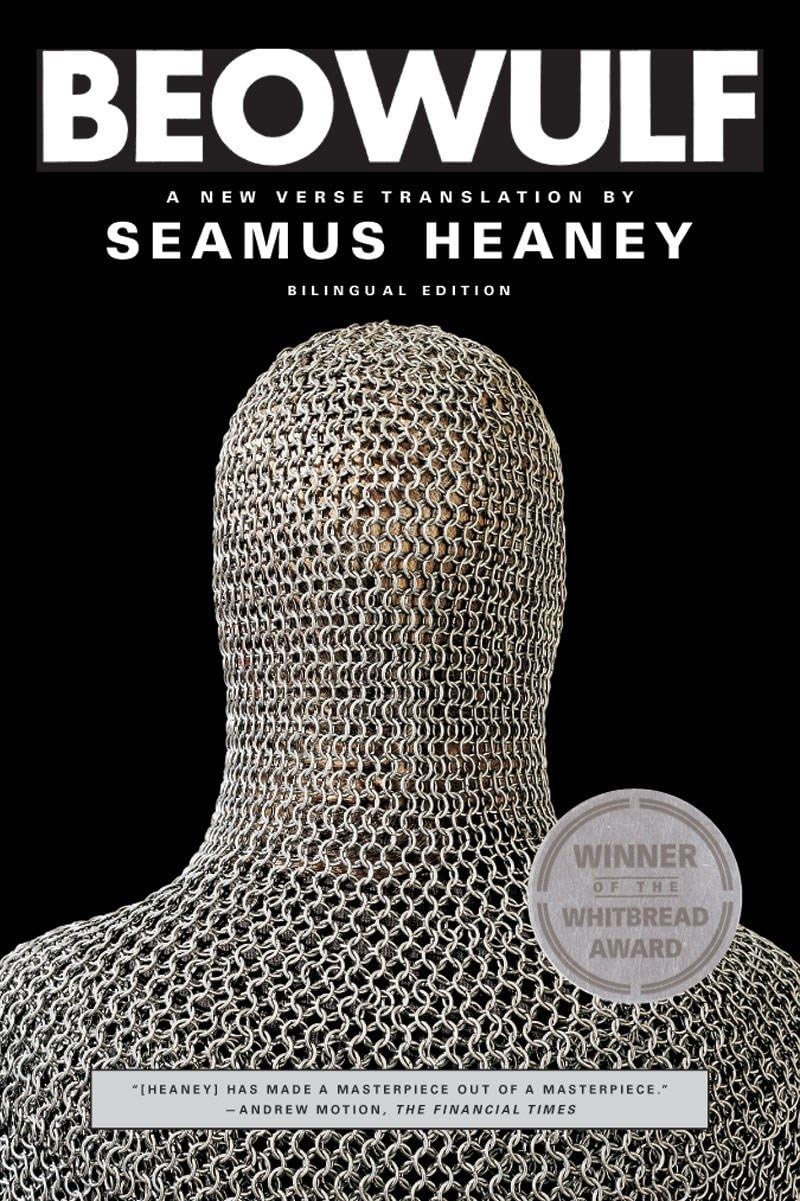
Beowulf, a Scandinavian warrior, fights a monster named Grendel, then Grendel’s mother, and finally, years later, a fire-breathing dragon. Winning great honor, he eventually became a king and a bulwark of his people.

An ancient and renowned tale, Beowulf is over 1,000 years old and was originally written in Anglo-Saxon, or Old English. This translation is regarded as one of the finest—poetic, epic, and gripping. About 100 pages; it’s a quick read and hard to put down.

The unknown author offers a glimpse into the ancient heroic age of the Germanic peoples, who migrated to England and Denmark. They lived by the warrior code and sought glory through warfare. The author also offers a glimpse of Christianity’s influence.

Some of the great literary minds studied the tale. J.R.R. Tolkien, the author of The Lord of the Rings, translated Beowulf and taught it for decades, writing a commentary. (I have not read it.) According to Joseph Loconte’s book The War for Middle Earth, it was a major influence on his writings.

Beowulf demonstrated great courage in his confrontation with pure evil. There are thrilling moments, happy seasons; however, a perceptive observer noted that the book begins and ends with a funeral, revealing that the world is not enough.

The epic tale is one I recommend to young people for its entertainment value and its clear example of a good, strong hero confronting evil characters (including a dragon). It forces the reader to think seriously about the need for courage, the importance of moral and physical preparation, and life after death.

In this translation, you can see the Old English on the left-facing pages; modern English is on the right.

Filed Under: Civic Responsibility, Personal Growth Tagged With: Beowulf, Seamus Heaney

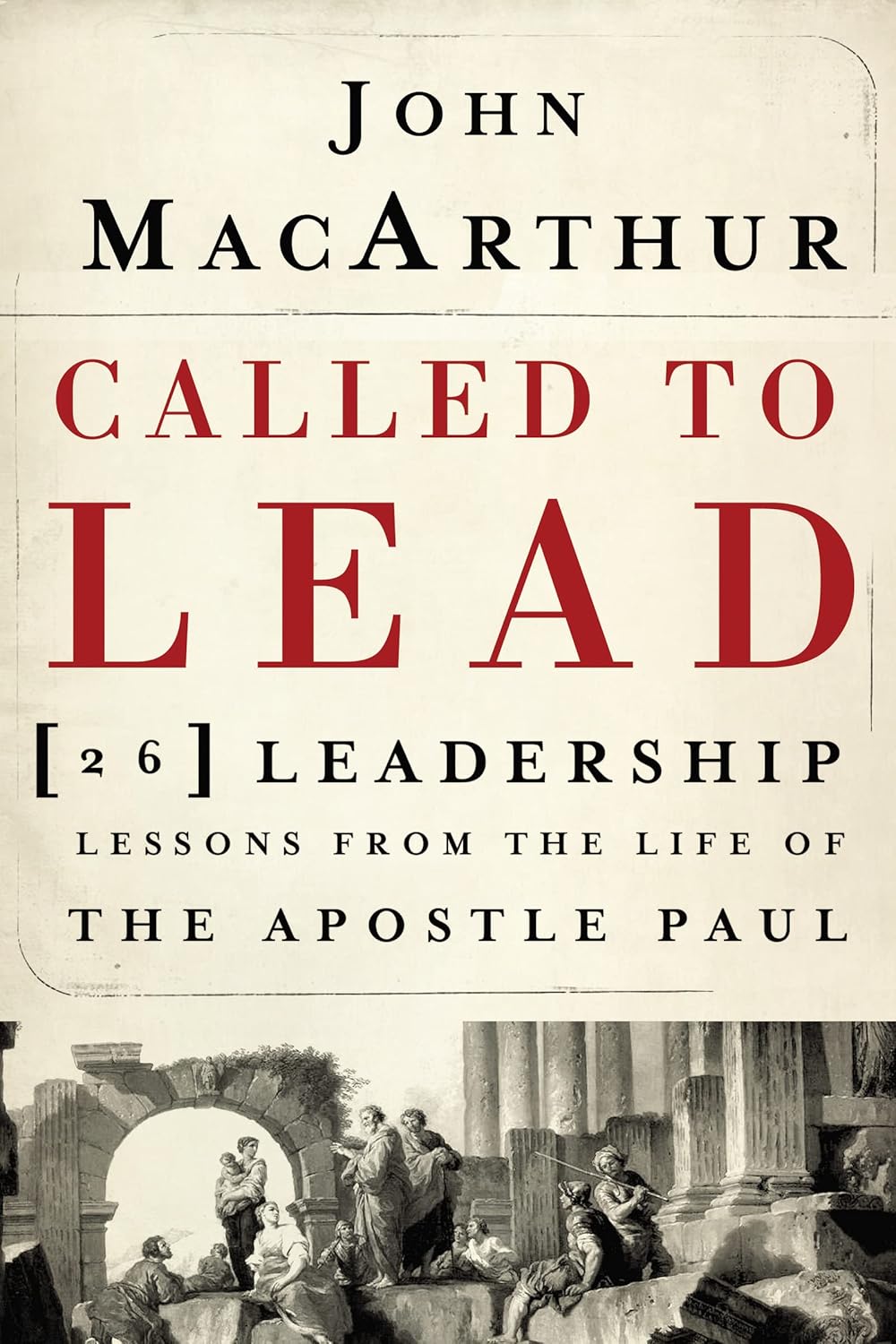
Called to Lead

July 27, 2025 by Daniel Dignan Leave a Comment

John MacArthur, the late pastor of Grace Community Church and chancellor of the Master’s University in California, wrote an excellent book on leadership principles drawn from the lives of St. Paul and Nehemiah.

Paul planted churches across the Roman Empire, wrote much of the New Testament, and is largely responsible for the rise of Christianity in the first century. Nehemiah served as King Artaxerxes’ cupbearer in the 5th century BC. He was a Jewish exile from Israel who received permission to rebuild his city, Jerusalem, which the Babylonians had destroyed in 586.

Fair Use

Called to Lead transports readers to the time and place of Paul and Nehemiah and identifies what’s implied in the Bible about their leadership. The first lesson of leadership is trustworthiness. MacArthur explains how Paul gained trust and influence.

Students will not only gain insight into leadership but also deepen their understanding of the Bible’s meaning and message.

Filed Under: Civic Responsibility, Personal Growth Tagged With: Apostle Paul, Artaxerxes, John MacArthur, Nehemiah, Saint Paul

Churchill

July 21, 2025 by Daniel Dignan Leave a Comment

The best leadership development opportunity for a student is finding ways to help others. This can be achieved through coaching, tutoring, counseling, or assisting younger children.

Along the way, an aspiring leader must observe and spend time with leaders. One way to do this is to read about them. Reading great biographies is not only enjoyable, it’s a good use of time. Biographies expand one’s knowledge, vision, and self-awareness. And they introduce one to new worlds, virtues, and opportunities.

In difficult times, one can think back on biographies read for inspiration, motivation, and wisdom.

A high school student can benefit from men, women, missionaries, business leaders, scientists, musicians, preachers, and politicians.

Some leaders, like Winston Churchill, are worth reading over the course of one’s entire life, for their lives offer numerous and profound lessons.

Winston Churchill — war correspondent, war hero, grandson of a Duke, brilliant writer and speaker, member of Parliament, Prime Minister, savior of Western Civilization, gardener, brick layer, painter, historian, husband, and father — is hard to beat.

Over one thousand books have been written about him. The late Paul Johnson’s Churchill is arguably the best short single-volume biography of his life. Superbly written, the book introduces the life and times of a great man who had rare courage.

Filed Under: Civic Responsibility, Personal Growth Tagged With: Paul Johnson, Winston Churchill

Prince Caspian

June 22, 2025 by Daniel Dignan Leave a Comment

After the events of The Lion, the Witch and the Wardrobe, the children are called to Narnia once again—a Narnia they do not recognize. They find themselves near an old, deserted castle, which seems familiar.

Narnia is ruled by an illegitimate leader who has driven the talking animals and dwarfs into hiding and silenced the old stories about the great Lion Aslan.

However, a young prince named Caspian still believes in the ancient truths. His nurse and, later, a half-dwarf named Cornelius have taught him the old stories and trained him in the ways of princes.

One day, Caspian’s life is in danger, and he flees. An exciting adventure awaits.

Prince Caspian is about the old beliefs in Aslan, those who believe in them, and those who want to destroy them forever. As the story unfolds, a war looms on the horizon. The war will test the beliefs and courage of Caspian and his friends.

Master storyteller C.S. Lewis delights readers with mythic creatures, dangerous journeys, a scary meeting, a duel, and a heroic mouse. Moreover, he gives readers a memorable image of happiness and celebration at the heart of the Bible’s story.

For its positive effect on the imagination and its encouragement to believe and act on what is true, good, and beautiful for the sake of all happiness, I recommend this book to students and parents.

Filed Under: Civic Responsibility, Personal Growth Tagged With: C.S. Lewis, Prince Caspian, The Chronicles of Narnia

America’s Field Trip

June 7, 2025 by Daniel Dignan Leave a Comment

America 250 is hosting a contest for students in grades 3 through 12. This is a fantastic opportunity. Visit America250.org for information.

One of the leaders of the associated U.S. Semiquincentennial Commission is Wilfred M. McClay, a historian recommended previously.

Filed Under: Civic Responsibility, Personal Growth Tagged With: America 250, U.S. Semiquincentennial Commission

“…a day full of memories.”

May 26, 2025 by Daniel Dignan Leave a Comment

Transcript

Memorial Day

Filed Under: Civic Responsibility Tagged With: 1986, Memorial Day, Ronald Reagan

Jesus The Great Philosopher

January 17, 2025 by Daniel Dignan Leave a Comment

Jesus The Great Philosopher provides a helpful introduction to Socrates, Plato, and Aristotle, and the big philosophical domains they explored. The domains are metaphysics (reality), epistemology (human knowledge), ethics (what is just and good), and politics (how to order society for justice and happiness).

Jonathan T. Pennington contends that while Christianity should be viewed as a religion (in that it addresses man’s relationship with God), it’s also “a philosophy of happiness” (205), in that it deals with the ultimate questions.

The author shows that the Bible provides thick answers and intentionally so. Moreover, ancient art and the Bible reveal that Jesus was not only considered to be the Messiah, the Son of God, the Lord, and the Savior, but also a philosopher. Pennington cites texts like John 10:10 and the Sermon on the Mount (Matthew 5-7) as evidence that Jesus was a philosopher of happiness.

Furthermore, the book explains the importance of emotions and relationships, examines ancient philosophical views that continue to affect Western civilization today, and discusses how Christianity provides emotional renewal and relational restoration between God and man, and between people. The author also helpfully discusses biblical disciplines like reflection and prayer.

The author believes that a lapse in serious reflection on ultimate philosophical questions and on the philosophy of Christianity has led to confusion about how to live well.

The book is a page-turner and suitable for high school students. It’s a valuable introduction to Socrates, Plato, and Aristotle, as well as the primary philosophical questions.

Here are a few short videos from the author about the book.

Filed Under: Civic Responsibility, Personal Growth Tagged With: Aristotle, Bible, Greek philosophy, Jesus, Jesus the great philosopher, Jonathan Pennington, Plato, Socrates, the bible

Constitution of the United States

November 17, 2024 by Daniel Dignan Leave a Comment

Scene at the Signing of the Constitution of the United States on September 17, 1787 by Howard Chandler Christy

The brief period between election day and the inauguration of a United States president is a grand opportunity to familiarize kids with the US Constitution. America’s supreme law is brief, beautifully written, and (as written constitutions go) unrivaled in longevity and wisdom.

In 1787, American founders like George Washington and Benjamin Franklin met in Philadelphia’s Independence Hall to improve America’s government, which the unsuccessful Articles of Confederation had established. The result was a constitution and, eventually, a Bill of Rights that harmonized the dual need for effective government and the protection of pre-political rights.

The triumph of the Constitution is its limitation on concentrated power through checks and balances and its support of the energies of the people in ways that protect natural rights, including:

  1. Separation of Powers: Legislative, Executive, and Judicial
  2. Division of national and state governments: Federalism
  3. Election of representatives to Congress: Republicanism
  4. Protection of minorities from majorities: Electoral College
  5. Safeguarding of smaller states from larger ones: Senate

These are a few of the methods used to make the energies and self-interests of the American people promote the flourishing of all. Just as important, the American system prescribed by the Constitution makes public virtue a necessity and provides room for its cultivation by distributing power and government.

One enormous benefit of acquainting kids with the US Constitution is that they will gain insight into the thinking that made America a land of hope. To help the study, I recommend the introductory essays on the Constitution’s meaning and formation in The Heritage Guide to the Constitution–they are short and enlightening.

Filed Under: Civic Responsibility Tagged With: Constitution of the United States, The Heritage Guide to the Constitution, US Constitution

Give me liberty or give me death!

November 3, 2024 by Daniel Dignan Leave a Comment

Patrick Henry, one of America’s leading founding fathers, had humble beginnings but rose through determination, diligence, and grit. As a young man, he tried farming and store-keeping but failed. Deciding to become a lawyer, he taught himself law and public speaking. Well-argued cases, his friendliness, integrity, and a growing network of friends won him a seat in the Virginia legislature.

About ten years later, in 1775, because of Great Britain’s war preparations, Patrick Henry delivered a speech that persuaded the Virginia colony to fight for independence. “Give me liberty or give me death!” is America’s most famous and consequential speech. Eyewitnesses recall a slow beginning, a moving rise, and a conclusion that changed world history.

Patrick Henry became Virginia’s first governor. American founders, including George Washington, revered him. His prudence and wisdom led to the passage of the Bill of Rights.

I recommend reading the speech to your children and discussing it with them. Note how Henry defines reality and fires the imagination with allusions to the Odyssey and biblical texts.

Finally, I recommend this short biography.

Filed Under: Civic Responsibility Tagged With: Give me liberty or give me death, Patrick Henry

  • « Previous Page
  • 1
  • 2
  • 3
  • Next Page »