
Fill the Stage

Daniel Dignan

Fill The Stage

“Character is Destiny”

start / index / about

YouTube

high school 

middle school


terms / privacy

Subscribe via Email

A Well-Ordered Life

February 11, 2025 by Daniel Dignan Leave a Comment

As a Christian, I enjoy hearing preachers explain Bible texts. The Bible contains 66 books that form a unified whole. Each book has a purpose and a unique message, but the Bible can and should be read as a single story.

Charles Spurgeon was one of the greatest preachers and leaders in modern history. His sermons were read worldwide and are still widely read today. For decades, he preached to thousands in London every week.
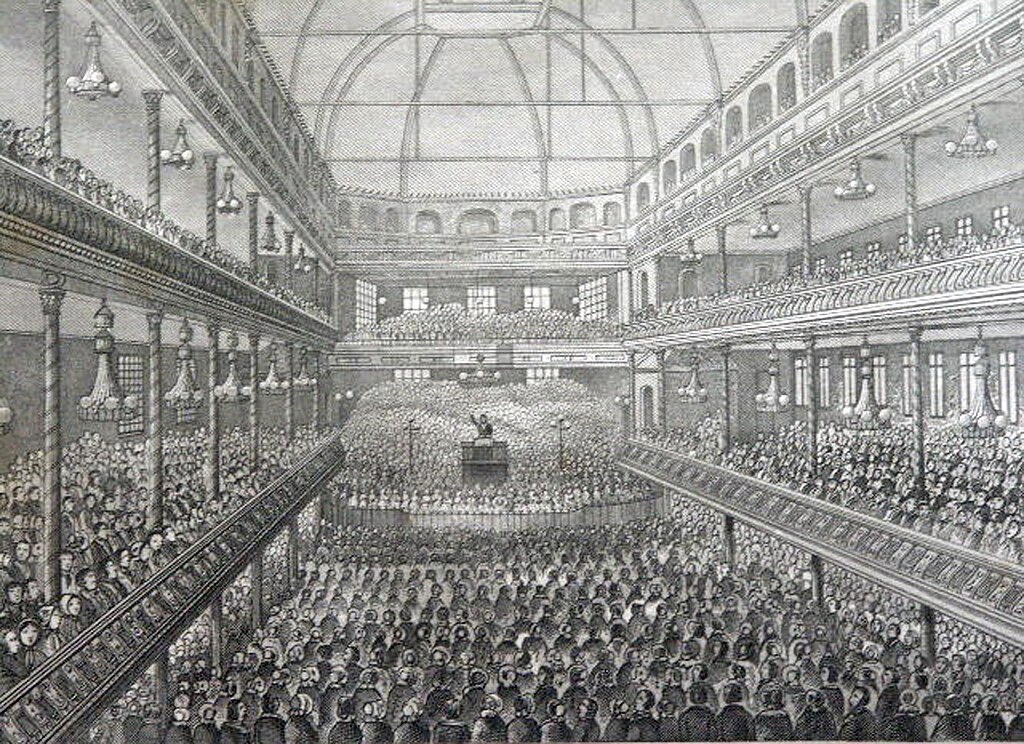
I recommend that you read Spurgeon’s sermons to your kids. They are an excellent tool for helping young people understand the Bible’s message about God, man, Christ, and his future kingdom. While his language is a product of Victorian England, it can be understood with a little effort. A parent can help a kid make sense of more challenging words.

The following sermon is about living a well-ordered life, a life that leads to happiness. I have read it twice, and it is worth reading more than that. It is full of wisdom.

Filed Under: Personal Growth

Becoming C.S. Lewis

February 1, 2025 by Daniel Dignan Leave a Comment

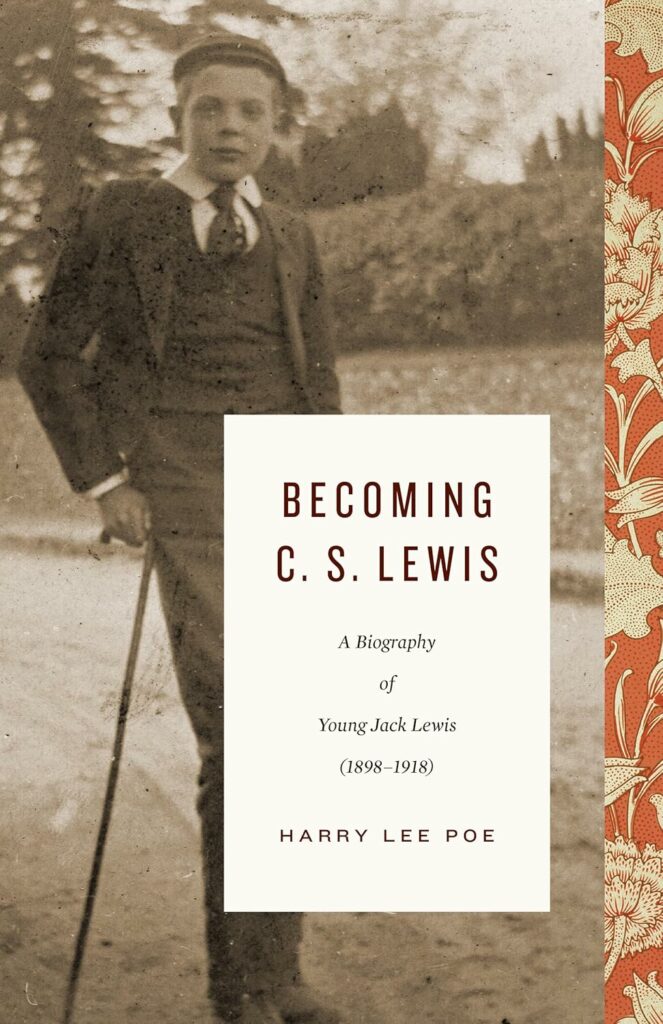
Although C.S. Lewis’s writings and adult life are well-known, his childhood, adolescence, and the influences that shaped him are less so. Harry Lee Poe’s Becoming C.S. Lewis, the first of a three-volume biography, reveals Lewis’s thinking and education as a boy and his transition to adulthood.

As a boy, C.S. Lewis became deeply interested in stories about journeys or quests–the pursuit of something valuable. Stories like the Odyssey, the Arthurian legends, and The Faerie Queen shaped his thinking and imagination and eventually helped him understand what he was searching for. His childhood was marked by his mother’s death, books, music, long walks, difficult school experiences, and W.T. Kirkpatrick’s tutelage in Surrey, England.

The book does an excellent job of tracing his thinking (through his correspondence), intellectual and spiritual development, and his likes and dislikes. The author, deeply versed in the great books, helps the reader understand the great stories of Western Civilization and why they mattered to him.

I recommend this book for high school students and parents alike. It enables readers to think about and experience what made Lewis one of the greatest minds of Western Civilization.

Filed Under: Personal Growth

Inklings Fellowship Events

January 25, 2025 by Daniel Dignan Leave a Comment

The Inklings Fellowship is hosting two Narnia-related events in 2025. One will be in North Carolina in April and the other at Oxford University in July. The host is Harry Lee Poe, retired Union University professor and C.S. Lewis biographer.

At Oxford, C.S. Lewis became a renowned literature professor and established a lifelong friendship with J.R.R. Tolkien. For years, they and other writers met at the Eagle and Child across the street from the University to discuss their writings (including The Lion, the Witch and the Wardrobe) and enjoy each other’s company.

The trip includes free time to explore Oxford and its surroundings. Oxford is a beautiful town known for its University, culture, bookstores, restaurants, and shops. It is worth a visit.

Filed Under: Personal Growth

Narnia on Stage

January 25, 2025 by Daniel Dignan Leave a Comment

The Lion, the Witch and the Wardrobe will soon be performed at the Bible Museum’s theater in Washington, D.C.

I went to The Horse and His Boy a couple of years ago. It was very well done. The theater is large and world-class. I recommend it!

Filed Under: Personal Growth

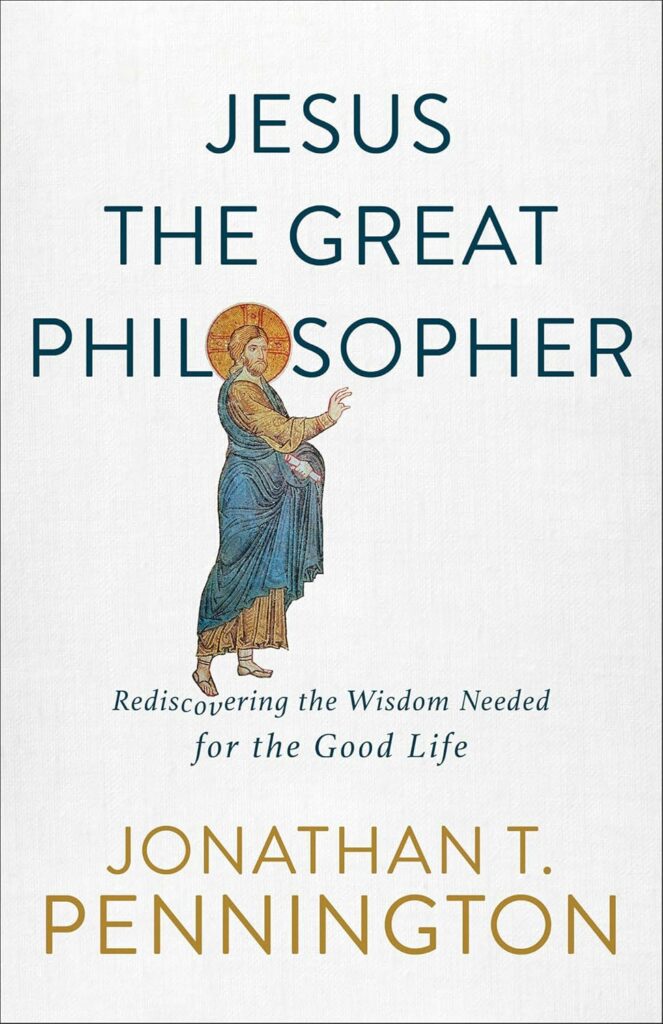
Jesus The Great Philosopher

January 17, 2025 by Daniel Dignan Leave a Comment

Jesus The Great Philosopher provides a helpful introduction to ancient Greek philosophers such as Socrates, Plato, and Aristotle, and the big philosophical domains they explored. The domains are what reality is (metaphysics), how we know what we know (epistemology), what is good (ethics), and how to order society for happiness (politics).

They sought to identify and show how to think and live to become happy and flourish.

Jonathan T. Pennington contends that while Christianity should certainly be viewed as a religion in that it deals with man’s relationship with God, it is also “a philosophy of happiness” (205).

The author shows that the Bible provides thick answers to metaphysical, epistemological, ethical, and political questions, and intentionally so.

Moreover, ancient art and the Bible reveal that Jesus was not only considered to be the Messiah, the Son of God, the LORD, and the Savior, but also a philosopher. Pennington cites texts like John 10:10 and the Sermon on the Mount (Matthew 5-7) as evidence that Jesus was a philosopher of happiness.

The book explains the importance of emotions and relationships, examines ancient philosophical views that continue to affect Western civilization today, and discusses how Christianity provides emotional renewal and relational restoration between God and man, and between people. The author also helpfully discusses biblical disciplines like reflection and prayer.

The author believes that a lapse in serious reflection on ultimate philosophical questions and on the philosophy of Christianity has led to confusion about what’s necessary to think and live well.

The book is a page-turner and suitable for high school students, even if they are unfamiliar with Greek philosophy. Also, it’s a great introduction to Socrates, Plato, and Aristotle, the primary philosophical questions, and the philosophy of the Bible.

Here are a few short videos from the author about the book.

Filed Under: Civic Responsibility, Personal Growth Tagged With: Aristotle, Bible, Greek philosophy, Jesus, Jesus the great philosopher, Jonathan Pennington, Plato, Socrates, the bible

May 2025 Armenia Tour

January 10, 2025 by Daniel Dignan Leave a Comment

I am co-leading a tour with Chuck Holton to Armenia this spring. Armenia is a conservative, first-world country landlocked between Turkey to the west and Azerbaijan to the east. The capital, Yerevan, dates back 2,700 years. During the Greco-Roman age, Armenia fought to maintain independence from Persia and Rome, not always succeeding but building elite militaries and cultures. Xenophon, the great Greek General and philosopher, student of Socrates, and peer of Plato, led an army through the country and recorded his experiences.

Today, Armenia is a prosperous society with a thick culture. However, it needs friends and has turned to the West for support. Like the United States, Armenia has a Christian history. In A.D. 301, the king converted to Christianity. Armenia became the first nation to officially adopt Christianity due to the influence of Gregory the Illuminator, who spent many years in an Armenian dungeon. The dungeon remains under a monastery called Khor Virap near Mount Ararat.

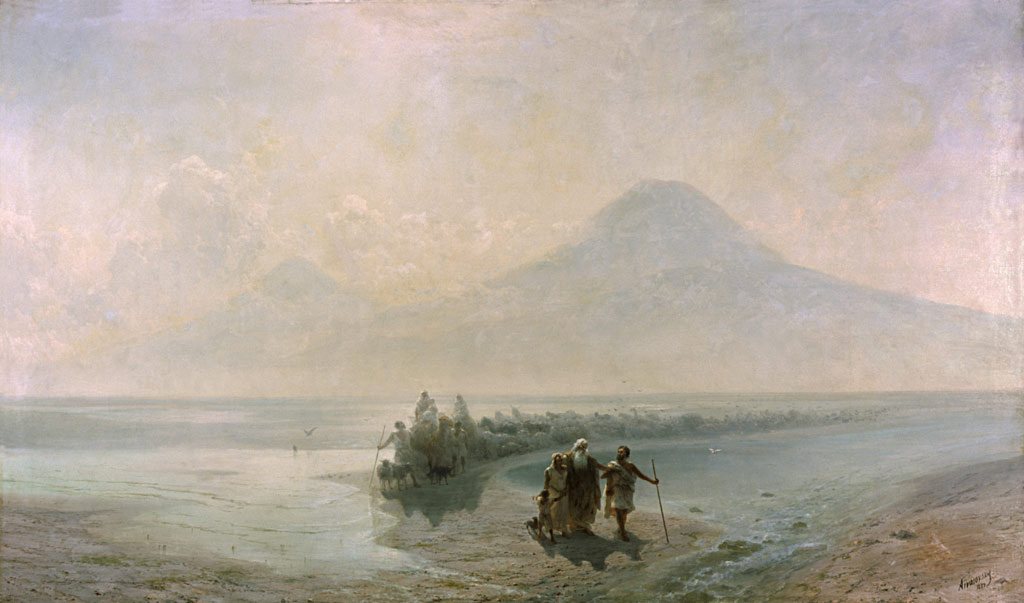
The land surrounding the mountain served as the cradle of post-diluvian civilization, where Noah and his family lived and re-instituted society.

Descent of Noah from Ararat by Ivan Aivazovsky

In the 20th century, Armenia became a Soviet satellite country; this reality enormously influenced its culture, economics, and architecture. After the fall of the Soviet Union, Armenia gained independence.

Armenia is a window into the old world of Asia and Europe. The Silk Road crisscrosses the countryside and features ancient stone hotels. Other ancient landmarks, such as the Armenian Stonehenge, a massive mountain cave city, and old churches and fortresses, can be found on mountains and hills across the country.

Yerevan, the largest city, is an uncommonly safe, calm, and quiet modern metropolis. Near the central plaza, the Vernissage market offers Armenian handicrafts, like rugs, dolls, paintings, embroidery, chess boards, and old coins. It is worth a visit.

Armenia is an excellent place to vacation and explore: affordable, safe, first-world, calm, conservative, and enjoyable. The land is ancient and romantic and provides a window into ancient history and modern geopolitical challenges. The land of Armenia could have inspired the great C.S. Lewis’ The Chronicles of Narnia story world, and its beautiful land has inspired much virtue, art, and culture.

We will travel by bus through Yerevan, up the lush and picturesque north, and down to the mountainous southern tip. We will explore ancient places and enjoy Armenian food with Chuck Holton, a former Army Ranger, war correspondent, and world traveler.

Please let me know by the end of this month (January) if you want to join us. I look forward to meeting you there!

Filed Under: Personal Growth

Top 10 Colleges Ranked for Opportunities

January 8, 2025 by Daniel Dignan Leave a Comment

Top-ranked The Master’s University aerial view from Wikipedia. License CC BY 3.0. Unaltered image.

The Wall Street Journal (WSJ), from a survey of college students, found that several smaller private colleges and universities rank exceptionally well regarding career and learning opportunities. Rose Hulman Institute of Technology, The Master’s University, California Baptist University, Florida Institute of Technology, and Samford University are among the top ten ranked schools. Students rate them high for learning facilities and career-related opportunities that lead to jobs and other academic opportunities. Overall, students were impressed with the cross-department learning opportunities, career-focused learning, and return on investment.

Part of the reason for their high marks is their smaller class sizes and focused attention on each student. They also focus on student career outcomes and customer service.

Recommendation:

I recommend a liberal arts education (a.k.a, a mastery of the great books), but this must be gained over a lifetime. I also recommend writing a life plan and ensuring college is necessary for achieving one’s goals. Goals could include personal growth, and college can be a spiritually, intellectually, and socially enriching experience. So, if a family decides that a college education is best, it pays to find one with a track record of equipping students with marketable skills, career opportunities, and character.

The WSJ highly rates The Master’s University in California for character development. That is not something to take lightly. Winston Churchill famously said, “Character is destiny.”

You can learn more by clicking the following links.

https://www.jmacarthurtrust.org/people/wsj
https://www.masters.edu

Filed Under: Earning a Living, Personal Growth Tagged With: College, University

A Christmas Carol

December 21, 2024 by Daniel Dignan Leave a Comment

A Christmas Carol by Charles Dickens is a short and memorable book. The main character, Ebeneezer Scrooge, is a miser, dislikes people, and hates Christmas. The story begins in earnest, in the most haunting scene, when his old and dead business partner, Jacob Marley, appears on Christmas Eve and warns him of a “ponderous chain” awaiting him.

Subsequently, Scrooge is visited by three spirits: the Ghosts of Christmas Past, Present, and Future. His future is in grave danger.

The most significant scenes are Jacob Marley’s ghostly appearance and warning and the Spirit of Christmas Past, who reveals events and lessons from Scrooge’s early life that went unheeded. In this episode, Scrooge is confronted with a great man, his old boss, who kept Christmas well.

Dickens, one of the greatest storytellers, is known for his character development. His brief sketch of Fezziwig, Scrooge’s former boss, is insightful and makes one consider the importance of gracefully serving people.

Christmas is a great time to read this story, and it is an easy introduction to Dickens.

Film versions abound. The 1970 musical Scrooge, starring Albert Finney and Alec Guinness, is entertaining. However, the most famous and probably the best movie features Alastair Sim.

Finally, whether or not you decide to read the book or encourage your kid to do so, I recommend the article Dining with Scrooge. It highlights crucial lessons about service and celebrating Christmas.

Filed Under: Personal Growth Tagged With: A Christmas Carol, Charles Dickens, Dickens, Scrooge

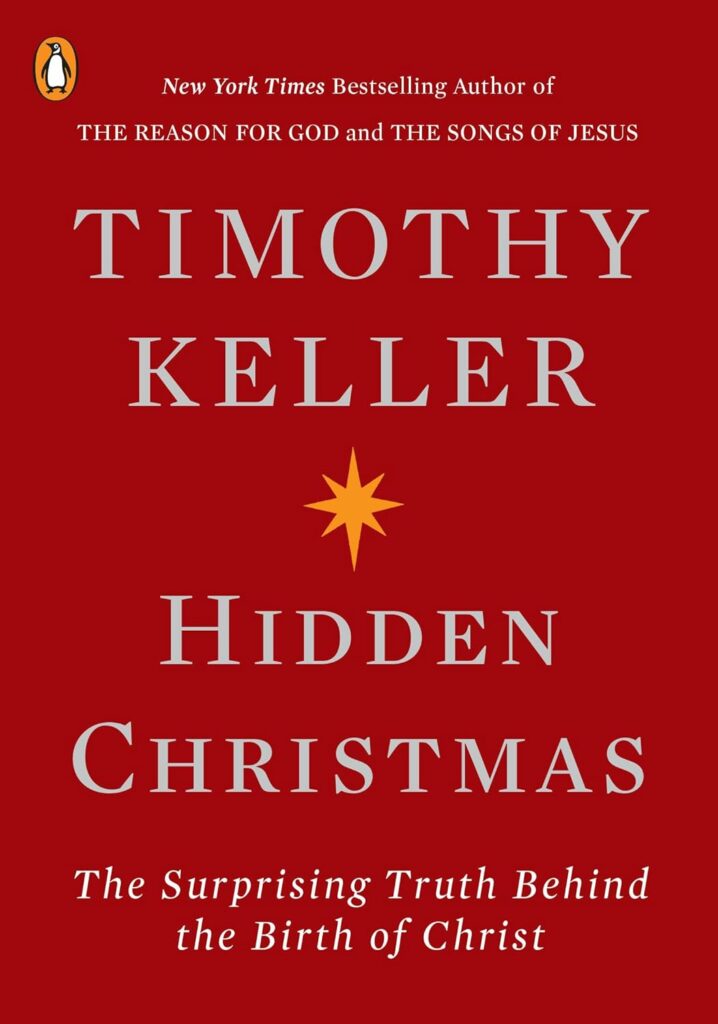
Hidden Christmas

December 14, 2024 by Daniel Dignan Leave a Comment

A Charlie Brown Christmas is one of my yearly favorites. In the story, Charlie Brown is down and unsure why. He can’t seem to get in the Christmas spirit. Eventually, Linus shares the meaning of Christmas by reciting the familiar passage about the angels appearing to shepherds and announcing the birth of Christ, the incarnation of the God-man.

Christmas is a time of gift-giving and family, yet many miss the surprising truth behind the holiday. Timothy Keller, the late New York Times bestselling author and pastor, carefully explains the meaning of the classic biblical texts that are part of American Christmas lore.

As a pastor in Virginia, Pennsylvania, and New York City, he spent decades studying the meaning of the Christmas story, distilling it into a short book.

I recommend the book to high school students. Understanding the Christmas story is crucial for comprehending the Bible, and even history and Western Civilization.

Keller reveals why the stories of Mary (the mother of Jesus), Joseph, the shepherds, King Herod, and Simeon matter today. The Christmas story reveals that hostility and fear have been overcome and that lasting peace and joy can be received and enjoyed.

Hidden Christmas is a short book and a meaningful Christmas gift.

Filed Under: Personal Growth Tagged With: Christmas story, Hidden Christmas, the christmas story, Timothy Keller

Observing a Funeral and Taking Stock of Life

December 6, 2024 by Daniel Dignan Leave a Comment

A colleague of mine died the day before Thanksgiving. I am grateful that my last conversation was friendly and meaningful, but I wish I could have had one more talk. The funeral was sad and hopeful.

He lived a full life: a pilot during the Vietnam War, a Navy officer, an industry man, a pastor, a husband, a father, a grandfather, and a great-grandfather. He studied the Bible extensively and worked to help others understand it.

The officiant read from a Bible text that has given millions of people hope for thousands of years and is often read at military funerals.

I wouldn’t say I like going to funerals, but they are hidden opportunities.

  1. A funeral is an opportunity for the family and friends of the deceased to learn how their loved one impacted others
  2. A funeral is an opportunity to take stock of one’s own life.

James Hagerty, an obituary writer for the Wall Street Journal, described the questions he sought to answer when writing a death notice. He would investigate what the deceased tried to do, why, and how it worked out. These questions are worth thinking about before one dies.

High school kids should write a life plan using the obituary questions above. A plan includes some idea of what one is trying to do. For this, a good place to start is your funeral. What do you want others to say about you when you die? What do you want to be known for?

These questions help one live a useful and productive life.

Finally, I recommend allowing a funeral to catalyze inquiry into religious matters, such as finding lasting order, peace, beauty, and happiness. (For serious thoughts about this, read a chapter a day of the Gospel of John, the fourth book in the New Testament.)

Attending a funeral can be instrumental for a high school kid, helping him or her think seriously about what to do.

Filed Under: Personal Growth Tagged With: funeral

  • « Previous Page
  • 1
  • …
  • 6
  • 7
  • 8
  • 9
  • 10
  • 11
  • Next Page »