

Tales of the Greek Heroes
For a young person to gain courage and to lead well, it is helpful to learn the wisdom of the past. Edmund Burke, the great conservative British statesman, said, “People will not look forward to posterity who never look backward to their ancestors.” Reading the West’s history and ancient stories provides great benefits.
Every civilization has ancient stories, some of which are historical and others mythic. Many of the West’s ancient stories come from Greece and Rome. The Greco-Roman stories include tales of gods and heroes, such as Prometheus’ gift of fire to humanity, Theseus and the Minotaur, and Hercules’ labors and battles against the giants. They are enjoyable to read.
The Greeks regarded physical strength, heroism in war, and hospitality as moral virtues. They also recognized the sacredness of one’s word, work, marriage, family, and city. They believed in a supernatural world, sin, and the need for atonement.
Many lessons can be learned: curiosity does not always lead to a good end (Pandora’s box); a happy marriage requires more than physical attraction and emotional attachment (Jason and Medea); individual human dignity matters (Procrustes’ bed); feelings and desires are not always legitimate and often lead to bad ends (Siren’s call); and the road to greatness requires enormous self-sacrifice (Hercules’ labors).
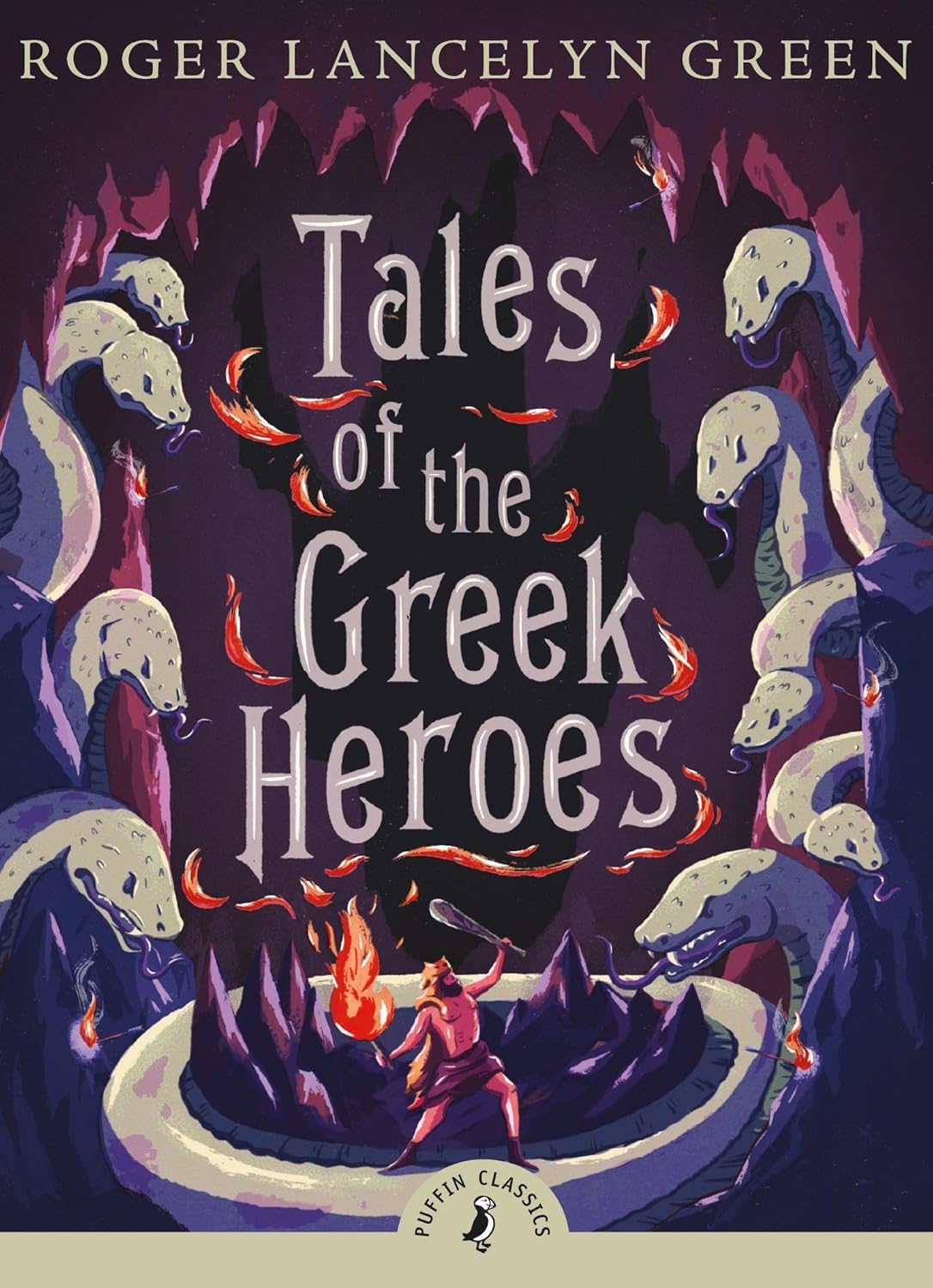
Roger Lancelyn Green’s Tales of the Greek Heroes is a valuable resource for young people. By his admission, it is a simple retelling of the ancient stories. He weaves them into a unified narrative, remaining faithful to the originals, except for minor additions, which he notes.
Lastly, these stories provide the context for two of the most famous Greek tales about the Trojan War and the return of one of its heroes: Homer’s Iliad and Odyssey.
The Tale of Troy
An actor, teacher, and friend of C.S. Lewis, Roger Lancelyn Green was a gifted storyteller who wrote several short stories for children. (He encouraged Lewis to publish The Lion, the Witch, and the Wardrobe.) The Tale of Troy is about the Trojan War and the heroes’ return home.
If your son or daughter is not quite ready to read Homer’s Iliad and Odyssey, this story is a good place to start. While staying true to the ancient stories, he shortened them, enabling a retelling of the whole. His enjoyable version includes the background, main events, what happened to the heroes, and Odysseus’s journey home to his wife, son, and kingdom.
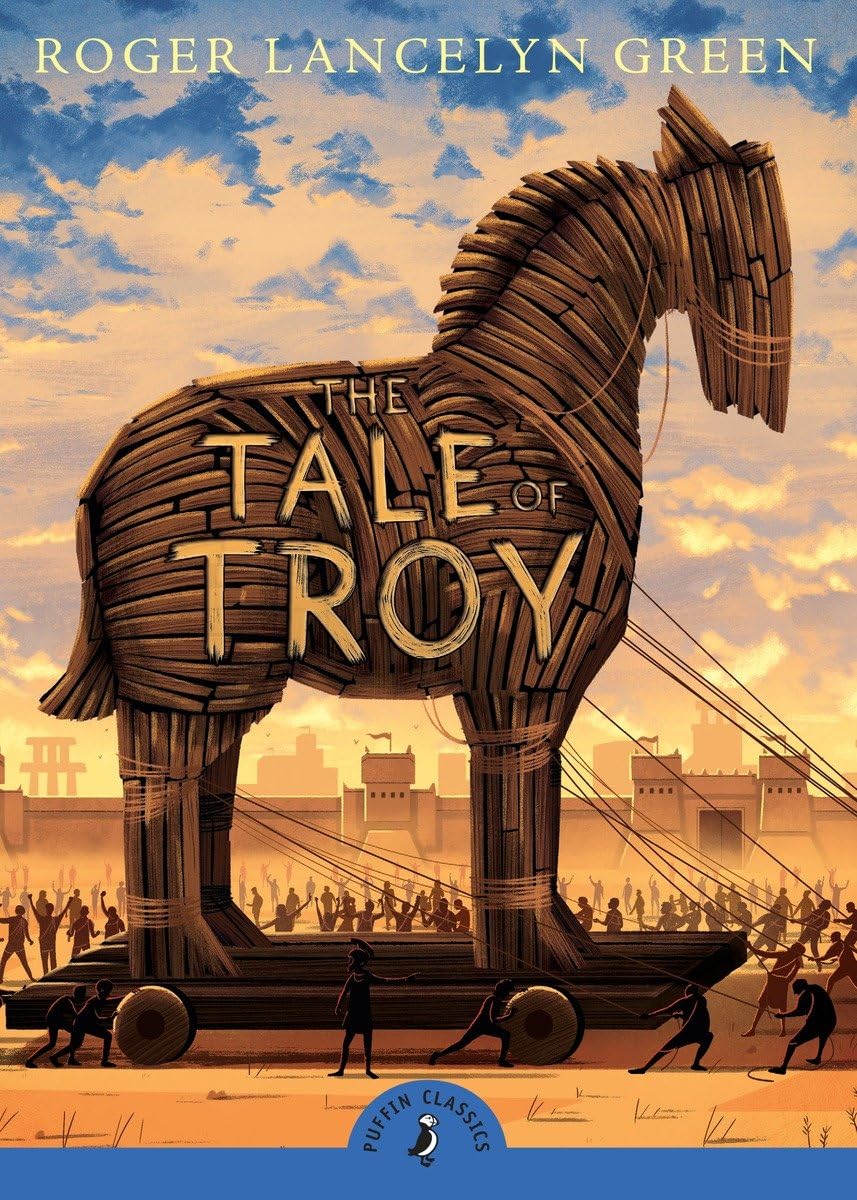
The tales of the central characters — Agamemnon, Menelaus, Paris, Helen, Achilles, Hector, Ajax, Aeneas, Odysseus, Telemachus, Penelope — are told.
Green’s book offers students a solid foundation in the West’s literature; it’s hard to think of a better choice. The book is well-written, action-packed, and moves quickly. I recommend reading it to your student(s).
Finally, the illustrations are by Pauline Baynes, the original illustrator of The Chronicles of Narnia.
Rules of Civility & Decent Behavior
I reread George Washington’s Rules of Civility & Decent Behavior, which a young Washington copied for personal use. According to Wikipedia, the instructions date back to the 16th century. Most of the maxims, except for two or three, apply today.
Some are quite clearly true: “In the presence of others sing not to yourself with a humming noise, nor drum with your fingers or feet.”
Some are humorous: “Do not laugh too much or too loud in public.”
Others are consequential, and for those who desire to lead. “Let your countenance be pleasant, but in serious matters somewhat grave.” “Let thy carriage be such as becomes a man: grave, settled, and attentive to that which is spoken. Contradict not at every turn what others say.” And “Think before you speak; pronounce not imperfectly nor bring out your words too hastily, but orderly & distinctly.”
Toward the end, the maxims help make others comfortable in your presence. This has the added benefit of giving one confidence in social settings. “Be not forward but friendly and courteous; be the first to salute, hear, and answer; & be not pensive when it’s time to converse.”
The most critical maxims deal with justice toward others. “Detract not from others; neither be excessive in commanding.” “Strive not with superiors in argument, but always submit your judgment to others with modesty.”
While behavior like this has become a lost art, it is of timeless importance. The behavior requires acting with kindness and grace. I recommend the book to high school students. The maxims can be read in a single sitting. Their brevity and proverb-like construction make them memorable and enjoyable.
Teaching the Virtues
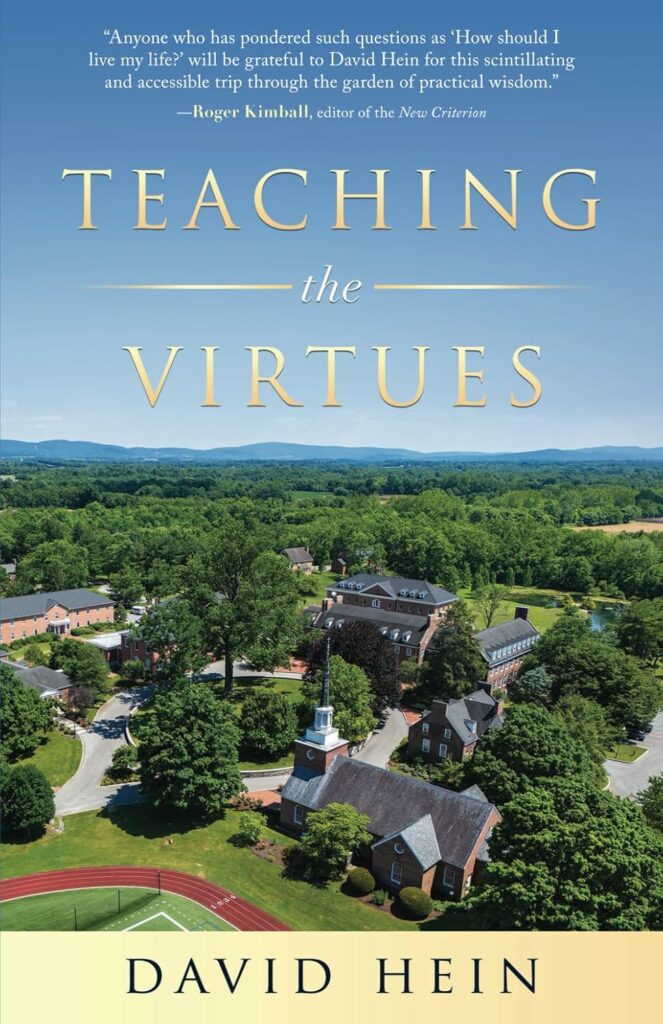
Have you ever wondered whether virtues can be taught and how to do so? David Hein’s book Teaching the Virtues is a good place to start. Hein defines essential virtues, such as faith, love, honor, and gratitude, and explains how to help students acquire them. He believes virtues are necessary for happiness, writing: “The virtues are what enable human beings to achieve their good ends….” (24)
Fair Use
Hein begins by focusing on schools and learning communities. To improve, schools need to self-assess, learn from better schools, and determine if their students are becoming more virtuous. Schools cannot rely solely on passive learning methods; they must find ways to help students actively acquire virtues.
Next, Hein turns to writing. He believes it’s an active method for students to develop virtue. He argues that to become a good writer, one must build virtue. It requires diligence and patience. (Hein shares the writing advice he gives to college students (e.g., importance of rewriting.)
Honor is the topic of the next chapter. He describes two types of honor: the type motivated by personal glory and the type that comes from self-denial. While a student at the University of Virginia, he was struck by the meaning and significance of the honor code. He shares how it helped him develop integrity.
Descriptions of the theological and natural virtues, beginning with faith, are the core of the book. According to Hein, one’s values influence one’s decisions and behaviors. For example, one who values the God of the Bible tends to respect human dignity. On the other hand, a person who values personal autonomy over all would tend to regard personal desire and will.)
To see virtue in concrete human experience, Hein encourages the study of biographies. The book features short character sketches of George Washington, Hannah More, and Booker T. Washington. He underlines ways one might use them to discuss virtue.
In closing, Hein, a Christian, believes in the importance of piety—enjoying God and gratitude for His work (Genesis 1:1; John 1:1-5; John 3:16). Hein points out that many people demonstrate virtues like courage in the service of evil. The truth and piety orient virtue toward what is good.
Teaching the Virtues sharpens the reader’s understanding of virtues and methods for helping students acquire them. For continued study, Hein shares additional resources.
Easter Book
During the rise of Christianity, a pagan spring festival became a Christian celebration of Christ’s resurrection from the dead. The four gospels–Matthew, Mark, Luke, and John–contain the story of the event that changed the world.
Did Christ, a Jewish carpenter in first century Rome, really rise again from the dead three days after he was crucified? Or is this story a fairy tale? If a fairy tale, Christianity is a lie and not worth bothering about. If the resurrection happened, there is hope beyond the grave.
In Did the Resurrection Really Happen? theologian and seminary professor Timothy Paul Jones, argues briefly that the first-century Christian leaders believed the resurrection happened, not against all evidence, but because of the evidence.
The author shares his own youthful doubts, the quality of the eye-witness testimonies, and the hope Christ’s resurrection offers. This is a short book suitable for high school students and readable in one sitting.
Jones counters major claims that Christ’s resurrection is a mere spin-off of ancient myths of dying and rising gods, that the Jews expected Christ to rise from the dead, that Christ’s followers hallucinated, and more. He shows how the New Testament record, eye-witness accounts, the empty tomb, and the martyrdom of Christian leaders makes claims against the resurrection challenging to believe.
Lastly, the author provides recommended books for those interested in learning more.

Fair Use
National Naval Aviation Museum
A few months ago I visited the National Naval Aviation Museum in Pensacola, Florida. On the level of Washington D.C.’s National Air and Space Museum, it does not disappoint. Aviation collections span the history of air and military flight operations. Artifacts include World War I era planes, helicopters, spacecraft, Marine One, and jet aircraft.
The museum is overwhelming. Plan on at least 2-3 hours to walk through the entire museum. To make the experience more focused and educational, study the exhibit page beforehand. The purpose and missions of particular aircraft can help high school students appreciate the history and technology.
The museum offers several opportunities:
- Located within Naval Air Station Pensacola–home of the Blue Angels–visitors have opportunities to watch practices.
- The museum has flight simulators.
- Homeschool and STEM opportunities are offered, though I have not personally experienced these events.
It helps to go with someone who knows military aircraft. A couple staff members were knowledgeable about the exhibits. Military personnel were also stationed their supporting museum operations.
One book in the gift shop caught my attention: An Autobiography by Gen. James H. “Jimmy” Doolittle, I Could Never Bo So Lucky Again.


A Marine helicopter

Museum at a glance:
The Aeneid
According to Mortimer Adler, a great American educator, the Iliad, Odyssey, Aeneid, the Divine Comedy, Paradise Lost (the epics), and the Bible constitute the most serious reading program. Great thinkers and writers read them carefully and repeatedly.
Serious readers have to focus on the great books of their field or related fields. They should try to select the best books as time is limited. Adler recognized that reading well is more about quality than quantity. He argued that reading one great book well is better than reading many great books poorly. Reading a great book well can seriously increase one’s understanding of the human condition, life’s big questions, and the good life.
The Aeneid is one of the great books (or poems). Written during the reign of Caesar Augustus at the beginning of the Roman Empire, it seeks to convey something important. Virgil, the author, extended the Iliad and the Odyssey, the great Greek epic poems, casting Aeneas, a Trojan hero who fights to save his city as the Roman Empire’s father and symbol.
The book begins with heartbreak as Aeneas is forced to flee his burning city, his father on his shoulders. Leading his people and journeying to North Africa, the land of Carthage, he falls in love with a queen, but this ends in tragedy as he’s confronted with his calling to found a new civilization.
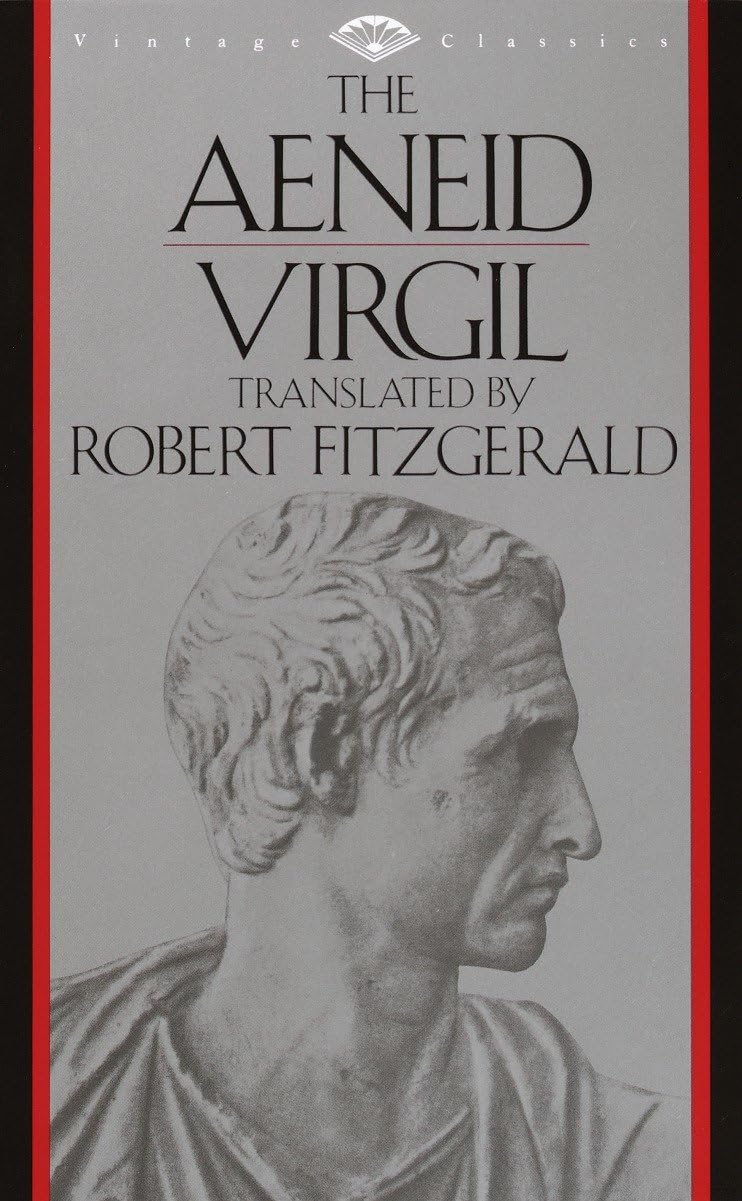
Robert Fitzgerald, the translator, provides a really good reading experience. He makes the reader experience Troy’s destruction, Aeneas’ journey, danger, love, regret, sacrifice, an epic battle, and Aeneas’ passion. At the end, he provides a helpful synopsis of Rome’s early history and the themes of the Aeneid.
During my teenage years, I was assigned chapters 1, 2, 4, 5, and 12 for a classics camp. Those chapters should not be skipped. The most memorable is chapter two, which is about Troy’s fall: an unforgettable reading experience. The imagery and verse offer the reader a movie-like experience, making him feel like he is there, seeing the walls fall and the city burn.
The description of hell and judgment in Chapter 6 is terrifying. Chapter 9 is the story of a secret military mission. Knowing the danger involved, one young man asks:
“This urge to action, do the gods instill it, Or is each man’s desire a god to him, Euryalus? For all these hours I’ve longed To engage in battle, or to try some great Adventure.”
If you want a helpful podcast conversation about what is happening in the Aeneid, I recommend First Things episode What Virgil Teaches America.
Teen Leadership Camps
Last week, I attended the 25th anniversary celebration of Patrick Henry College, a top liberal arts college located in Purcellville, Virginia. Started by Mike Farris, constitutional attorney and Homeschool Legal Defense founder, it champions Christian, conservative, and classical education.

Patrick Henry College
While I did not attend the college, as a teenager, I participated in their Teen Leadership Camps, in particular, the spy and literature camps. They combined rigorous learning and instruction opportunities with evening games.
I am a believer in summer camps like these for teenagers. They help kids get out of their comfort zones, open new horizons, and help kids develop socially, spiritually, and intellectually.

Drama and Theater Camps for Kids
I recently attended my second production of Logos Theater at Washington, D.C.’s Museum of the Bible. The production, costuming, and staging of The Lion, the Witch and the Wardrobe were well done. I especially enjoyed seeing the props change quickly between scenes and the actors move from room to room as the setting changed.
Logos Theater does more than provide first-class theater. They give elementary, middle, and high school students immersive opportunities to learn acting, filmmaking, drama, and theater production in summer camps, co-ops, and traveling drama seminars. Moreover, they offer college-level acting classes and credit.
Acting was never my forte, but in college, I enrolled in several public speaking courses, including an acting course, to get out of my comfort zone. I have never forgotten my acting professor telling the class that we had better get our heads examined if we thought we could make it as professional actors. I think he said it in love, and all of us got the point. Nonetheless, we enjoyed the experience and became braver in public.
Even if your kid doesn’t want to become a professional actor, I recommend the experience. Theater can help kids develop self-awareness and friendships and open their artistic horizons. It’s also a lot of fun—no business is like show business!
Another benefit to Logos Theater is that it introduces students to classic and best-selling books like Narnia and Pilgrim’s Progress.
- « Previous Page
- 1
- …
- 5
- 6
- 7
- 8
- 9
- …
- 12
- Next Page »