
Fill the Stage

Daniel Dignan

Fill The Stage

Helping students live well.

blog / index / about

YouTube


terms / privacy

Subscribe via Email

A Christmas Carol

December 21, 2024 by Daniel Dignan Leave a Comment

A Christmas Carol by Charles Dickens is a short and memorable book. The main character, Ebeneezer Scrooge, is a miser, dislikes people, and hates Christmas. The story begins in earnest, in the most haunting scene, when his old and dead business partner, Jacob Marley, appears on Christmas Eve and warns him of a “ponderous chain” awaiting him.

Subsequently, Scrooge is visited by three spirits: the Ghosts of Christmas Past, Present, and Future. His future is in grave danger.

The most significant scenes are Jacob Marley’s ghostly appearance and warning and the Spirit of Christmas Past, who reveals events and lessons from Scrooge’s early life that went unheeded. In this episode, Scrooge is confronted with a great man, his old boss, who kept Christmas well.

Dickens, one of the greatest storytellers, is known for his character development. His brief sketch of Fezziwig, Scrooge’s former boss, is insightful and makes one consider the importance of gracefully serving people.

Christmas is a great time to read this story, and it is an easy introduction to Dickens.

Film versions abound. The 1970 musical Scrooge, starring Albert Finney and Alec Guinness, is entertaining. However, the most famous and probably the best movie features Alastair Sim.

Finally, whether or not you decide to read the book or encourage your kid to do so, I recommend the article Dining with Scrooge. It highlights crucial lessons about service and celebrating Christmas.
Filed Under: Personal Growth Tagged With: A Christmas Carol, Charles Dickens, Dickens, Scrooge

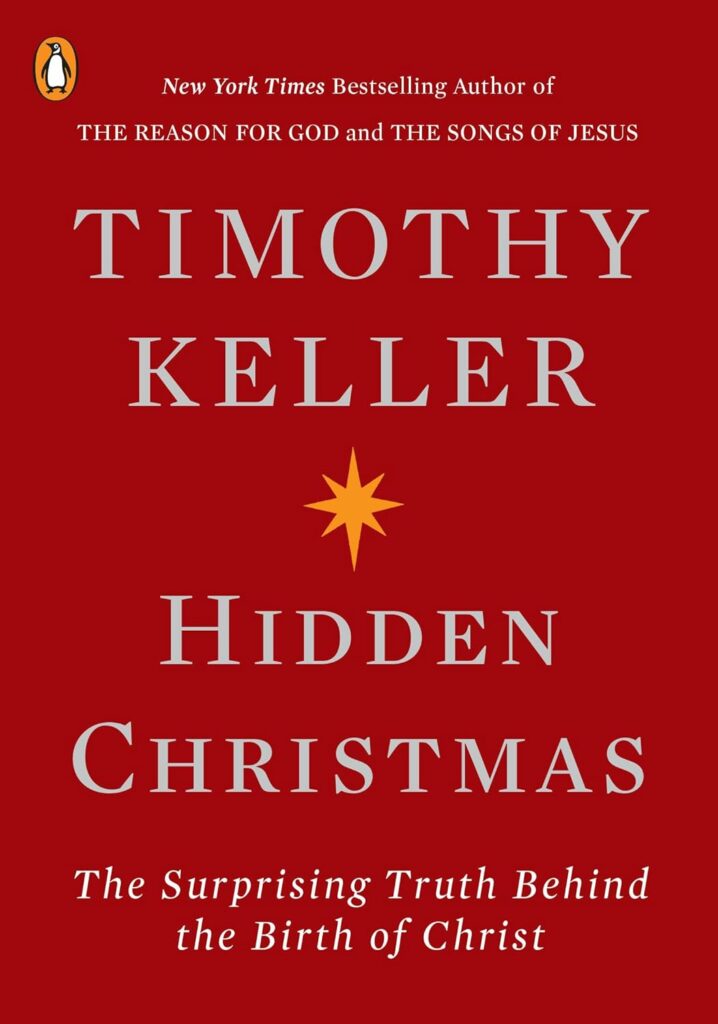
Hidden Christmas

December 14, 2024 by Daniel Dignan Leave a Comment

A Charlie Brown Christmas is one of my yearly favorites. In the story, Charlie Brown is down and unsure why. He can’t seem to get in the Christmas spirit. Eventually, Linus shares the meaning of Christmas by reciting the familiar passage about the angels appearing to shepherds and announcing the birth of Christ, the incarnation of the God-man.

Christmas is a time of gift-giving and family, yet many miss the surprising truth behind the holiday. Timothy Keller, the late New York Times bestselling author and pastor, carefully explains the meaning of the classic biblical texts that are part of American Christmas lore.

As a pastor in Virginia, Pennsylvania, and New York City, he spent decades studying the meaning of the Christmas story, distilling it into a short book.

I recommend the book to high school students. Understanding the Christmas story is crucial for comprehending the Bible, and even history and Western Civilization.

Keller reveals why the stories of Mary (the mother of Jesus), Joseph, the shepherds, King Herod, and Simeon matter today. The Christmas story reveals that hostility and fear have been overcome and that lasting peace and joy can be received and enjoyed.

Hidden Christmas is a short book and a meaningful Christmas gift.

Filed Under: Personal Growth Tagged With: Christmas story, Hidden Christmas, the christmas story, Timothy Keller

Observing a Funeral and Taking Stock of Life

December 6, 2024 by Daniel Dignan Leave a Comment

A colleague of mine died the day before Thanksgiving. I am grateful that my last conversation was friendly and meaningful, but I wish I could have had one more talk. The funeral was sad and hopeful.

He lived a full life: a pilot during the Vietnam War, a Navy officer, an industry man, a pastor, a husband, a father, a grandfather, and a great-grandfather. He studied the Bible extensively and worked to help others understand it.

The officiant read from a Bible text that has given millions of people hope for thousands of years and is often read at military funerals.

I wouldn’t say I like going to funerals, but they are hidden opportunities.

  1. A funeral is an opportunity for the family and friends of the deceased to learn how their loved one impacted others
  2. A funeral is an opportunity to take stock of one’s own life.

James Hagerty, an obituary writer for the Wall Street Journal, described the questions he sought to answer when writing a death notice. He would investigate what the deceased tried to do, why, and how it worked out. These questions are worth thinking about before one dies.

High school kids should write a life plan using the obituary questions above. A plan includes some idea of what one is trying to do. For this, a good place to start is your funeral. What do you want others to say about you when you die? What do you want to be known for?

These questions help one live a useful and productive life.

Finally, I recommend allowing a funeral to catalyze inquiry into religious matters, such as finding lasting order, peace, beauty, and happiness. (For serious thoughts about this, read a chapter a day of the Gospel of John, the fourth book in the New Testament.)

Attending a funeral can be instrumental for a high school kid, helping him or her think seriously about what to do.

Filed Under: Personal Growth Tagged With: funeral

Handel’s Messiah

November 30, 2024 by Daniel Dignan Leave a Comment

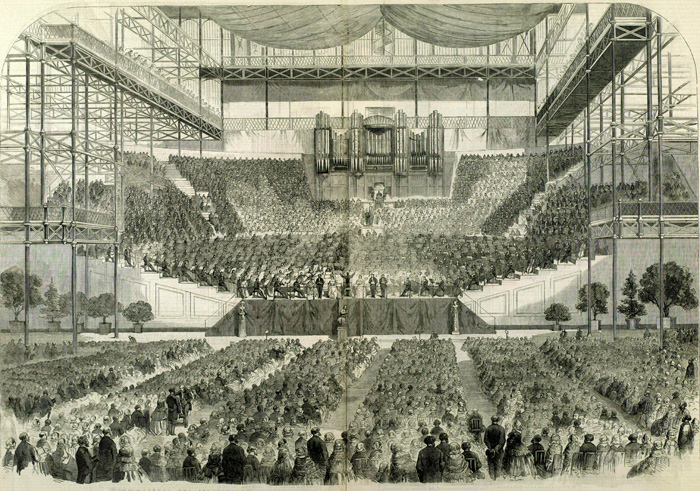
Thousands attend the Washington National Cathedral and the Kennedy Center’s performances of Handel’s Messiah every December in Washington, DC. First performed in Dublin, Ireland, in 1741, the Messiah is one of the world’s most excellent and recognized musical performances. Technically an oratorio, it was written by Charles Jennens and set to music by George Frideric Handel, a compositional genius.

Most known for the Hallelujah Chorus and the beautiful Scripture texts of the Old and New Testaments, the theme is the Messiah’s (Anointed One, or Christ) life, death, and resurrection. I have listened about a dozen times and always walk away profoundly moved.

Handel’s Messiah allows young listeners to become more familiar with one of the Bible’s primary themes and the Bible’s story. While attending an in-person performance is a good idea, you can watch the Washington National Cathedral’s December 8th live stream performance for free. You can also purchase a recording; I recommend the 1985 performance by the Chicago Symphony Orchestra and Chorus.

If you attend or listen to a performance, let me know on my Facebook page or at info@movingship.com.

Filed Under: Personal Growth Tagged With: George Frideric Handel, Handel's Messiah, Messiah

The Iliad

November 23, 2024 by Daniel Dignan Leave a Comment

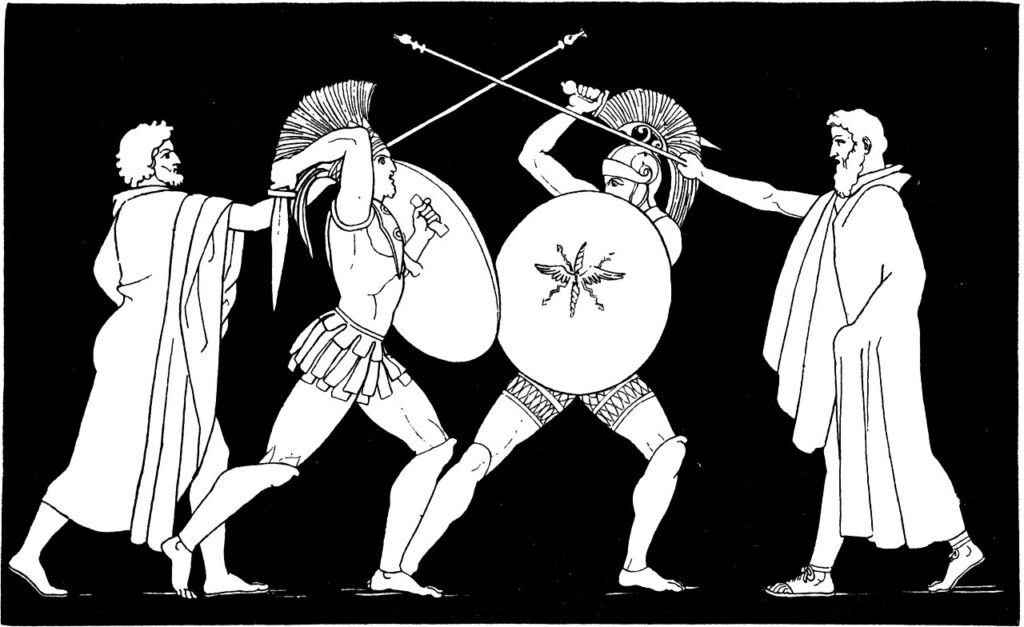
A second reading of the Iliad in six months, this time in poetic form, deepened my appreciation of its majesty, significance, and point. The Iliad is Homer’s sweeping epic about the Trojan War, particularly the wrath of Achilles, the Greek hero and greatest warrior.

Many heroes play a role, the foremost of whom are Achilles and Hector, heroes of the Greek and Trojan armies. They are supported by the mighty Diomedes, Ajax, Odysseus, and Trojan Aeneas. Many fight for glory, each other, and, in Hector’s case, his city and family.

The war unfolds on a plain between the Greek ships and the city of Troy in modern-day Turkey. The heroes are fearsome. Diomedes is so mighty that he is surrounded by a “crowd of champions” (126), and he leads from the front (185), putting his life on the line. Ajax is a towering warrior general; he fights with a mighty shield and spear. In one scene, he protects the ships and fights against seemingly impossible odds, knowing all might be lost. One is made to feel the difficulty and his overwhelming bravery and leadership:

“…a blast of weapons pounded Ajax, so he could not stand firm. He was forced back by Trojan fighters and the will of Zeus. His shining helmet, pummeled by the blows, clanged horribly around his battered skull. The blades kept hammering the ornate plates. His left arm wearied of the constant effort of holding up his flashing shield. But still the Trojans could not knock down his defense, hard though they pressed him with their constant strikes. His breath was labored and a flood of sweat drenched his whole body, and he could not rest. Danger was everywhere, pain piled on pain.” (382-383)

While thrilling, the fighting scenes are not the epic’s most critical parts. The scenes surrounding the war display the consequences of vice and virtue. The Greek King of kings, Agamemnon, wronged Achilles, leading to the loss of many lives. Achilles’ pride and wrath are partly to blame. The entire war began with adultery and the theft of the king of Sparta’s wife. One sees the importance of diplomacy, friendship, experience, skill, competence, communication, charisma, and exercising one’s talents amid need and in the fray.

Lastly, as I reread the Iliad, I grew concerned that I was missing the point—the forest for the trees. Is Homer trying to tell us something applicable and essential for all time, vital for living the good life?

I was thrilled to hear about this First Things podcast. The speaker’s interpretation fits the story and its conclusion. He says the poem is a love epic and that Homer wants us to ponder the necessity of forgiveness and loving one’s enemies. That is a vital point.

A student who reads 15 pages a day will finish the epic quickly.

Filed Under: Personal Growth Tagged With: Achilles, Hector, Homer, Iliad, The Iliad

Constitution of the United States

November 17, 2024 by Daniel Dignan Leave a Comment

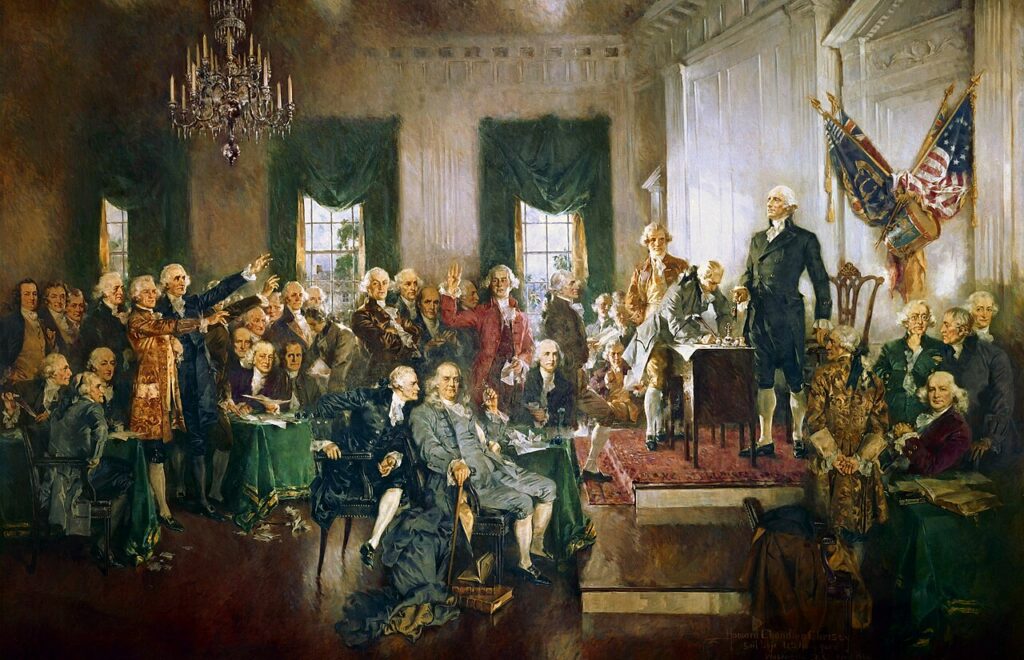
Scene at the Signing of the Constitution of the United States on September 17, 1787 by Howard Chandler Christy

The brief period between election day and the inauguration of a United States president is a grand opportunity to familiarize kids with the US Constitution. America’s supreme law is brief, beautifully written, and (as written constitutions go) unrivaled in longevity and wisdom.

In 1787, American founders like George Washington and Benjamin Franklin met in Philadelphia’s Independence Hall to improve America’s government, which the unsuccessful Articles of Confederation had established. The result was a constitution and, eventually, a Bill of Rights that harmonized the dual need for effective government and the protection of pre-political rights.

The triumph of the Constitution is its limitation on concentrated power through checks and balances and its support of the energies of the people in ways that protect natural rights, including:

  1. Separation of Powers: Legislative, Executive, and Judicial
  2. Division of national and state governments: Federalism
  3. Election of representatives to Congress: Republicanism
  4. Protection of minorities from majorities: Electoral College
  5. Safeguarding of smaller states from larger ones: Senate

These are a few of the methods used to make the energies and self-interests of the American people promote the flourishing of all. Just as important, the American system prescribed by the Constitution makes public virtue a necessity and provides room for its cultivation by distributing power and government.

One enormous benefit of acquainting kids with the US Constitution is that they will gain insight into the thinking that made America a land of hope. To help the study, I recommend the introductory essays on the Constitution’s meaning and formation in The Heritage Guide to the Constitution–they are short and enlightening.

Filed Under: Civic Responsibility Tagged With: Constitution of the United States, The Heritage Guide to the Constitution, US Constitution

US Special Operations – Interview

November 9, 2024 by Daniel Dignan Leave a Comment

Chuck Holton is a war correspondent and Army Ranger. He shares what an Army Ranger is, what training is like, and how to prepare for training and combat.

He also shares how military service benefited his career and character. Toward the end of the interview, he shares advice to young men considering special operations.

Please let me know what you think and subscribe!

Filed Under: Personal Growth Tagged With: Army Rangers, Chuck Holton, Special Operations

Give me liberty or give me death!

November 3, 2024 by Daniel Dignan Leave a Comment

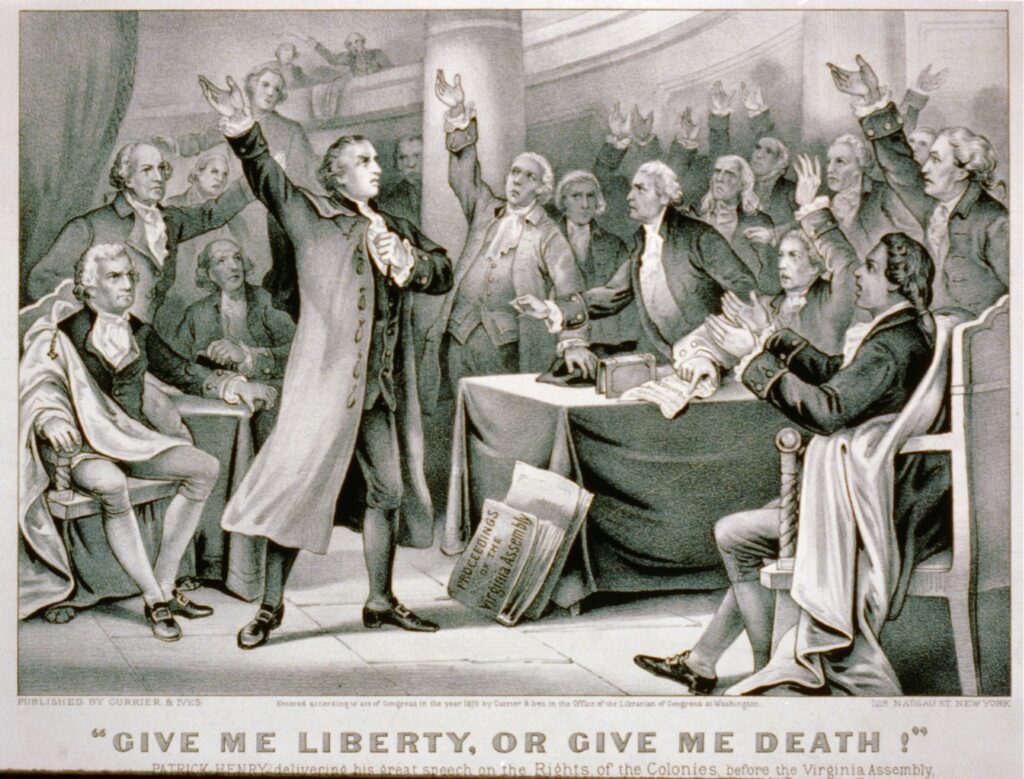
Patrick Henry, one of America’s leading founding fathers, had humble beginnings but rose through determination, diligence, and grit. As a young man, he tried farming and store-keeping but failed. Deciding to become a lawyer, he taught himself law and public speaking. Well-argued cases, his friendliness, integrity, and a growing network of friends won him a seat in the Virginia legislature.

About ten years later, in 1775, because of Great Britain’s war preparations, Patrick Henry delivered a speech that persuaded the Virginia colony to fight for independence. “Give me liberty or give me death!” is America’s most famous and consequential speech. Eyewitnesses recall a slow beginning, a moving rise, and a conclusion that changed world history.

Patrick Henry became Virginia’s first governor. American founders, including George Washington, revered him. His prudence and wisdom led to the passage of the Bill of Rights.

I recommend reading the speech to your children and discussing it with them. Note how Henry defines reality and fires the imagination with allusions to the Odyssey and biblical texts.

Finally, I recommend this short biography.

Filed Under: Civic Responsibility Tagged With: Give me liberty or give me death, Patrick Henry

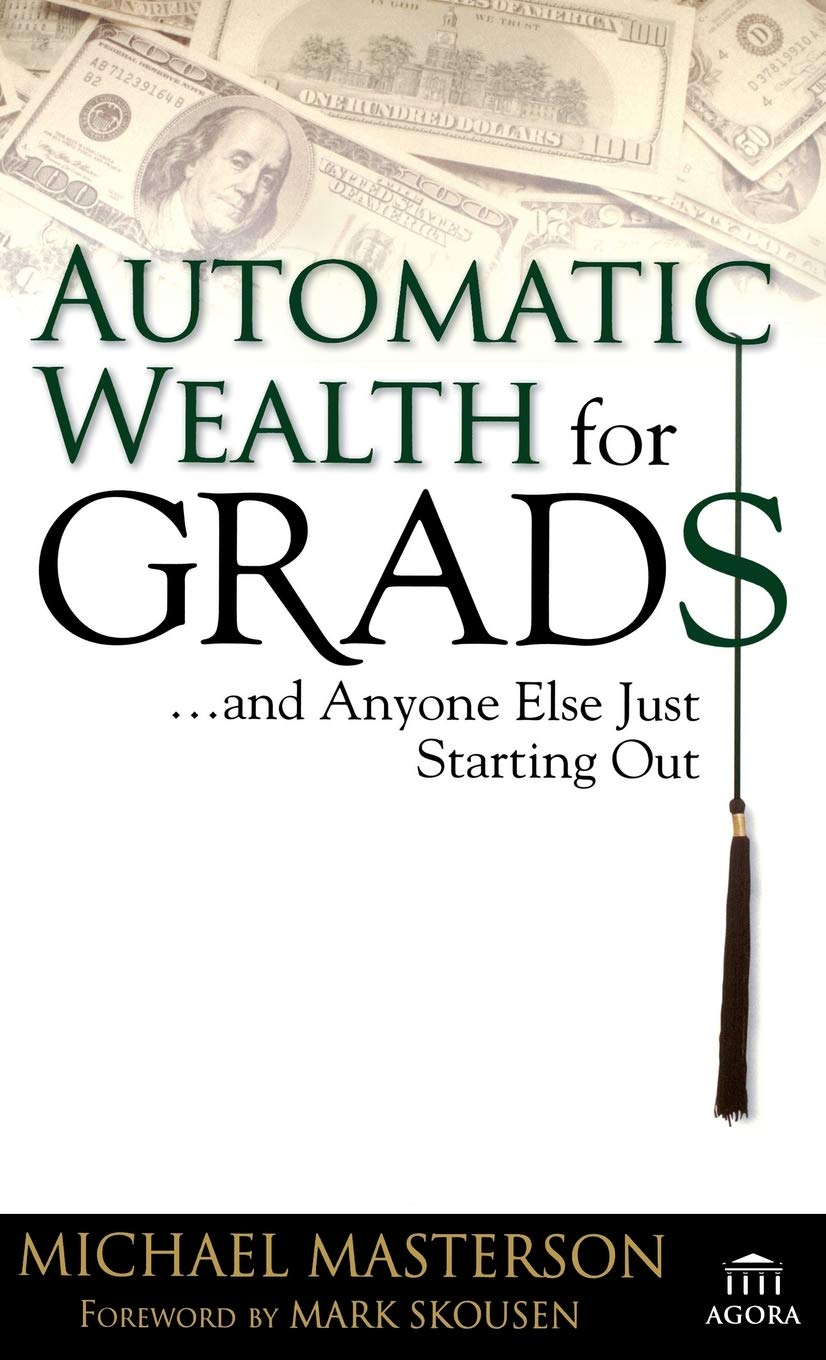
Automatic Wealth for Grads…and Anyone Else Just Starting Out

October 27, 2024 by Daniel Dignan Leave a Comment

Fair Use

This book is a practical guide for earning a living, perfect for getting started in life. It is filled with wisdom from an experienced and successful businessman and author on topics ranging from investing to selecting a career path, securing a job, earning a high income, and starting a business.

I have read the book multiple times and always find it beneficial. It can assist high school students in learning how to earn a high income and progress in their careers.

The author, Michael Masterson, helps young people develop a future perspective, determining how much money they need to afford their goals and to retire. He encourages investing in the stock market to maximize the compounding effect of interest.

Masterson summarizes primary career path categories, such as retail and wholesale, helping students understand what to expect, and recommends learning marketing, a skill that can be applied to any endeavor. The most valuable parts of the book are the chapters on how to get a job and earn a high income. He explains a step-by-step method based on direct marketing practices—an approach that offers significant benefits to those who employ it.

The chapter on earning a high income is based on the habits and behaviors that a successful person employs, such as paying attention to problems and solutions, and learning a valuable skill that the business highly values.

Nothing about this book is get-rich-quick. It’s a steady approach from a man who became an indispensable employee and went on to start numerous profitable businesses.

Toward the end of the book, Masterson offers real estate investing advice and tips on living like a billionaire. A lot is possible with a modest income.

I highly recommend the book. It offers a career advancement strategy that many young people never encounter; overall, it serves as a blueprint for wealth, a primer for starting a business, and a guide for managing resources wisely.

Filed Under: Earning a Living Tagged With: Automatic Wealth for Grads, Michael Masterson

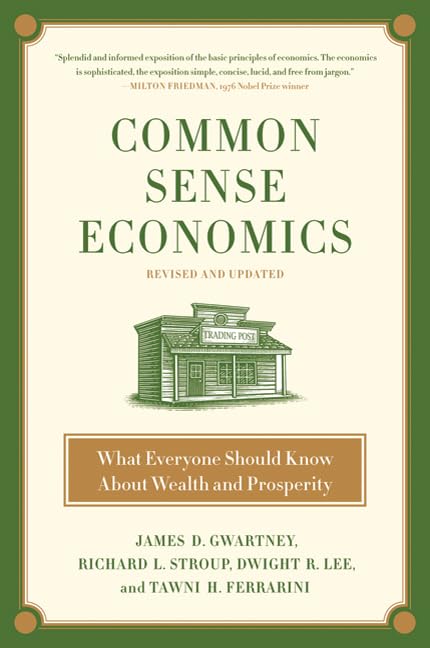
Common Sense Economics

October 20, 2024 by Daniel Dignan Leave a Comment

A short primer on economics for teenagers who want to learn the ingredients of strong economies. The reader will learn what makes nations prosper. The book will also help your teen learn how to become prosperous. (The economists share principles of personal finance.)

The book emphasizes key economic concepts such as “incentives matter,” “trade promotes economic progress,” and “the invisible hand” of market prices directs buyers and sellers toward activities that promote the general welfare.” The explanations are engaging and accessible to young people.

Significantly, the book explains the architecture of an economy, including its essential building blocks: the legal system, markets, and government regulations. The reader begins to understand why private property, contracts, and just (and limited) governments are critical to the wealth of nations and people.

Lastly, the book will help your child think more intelligently about economics and identify good versus bad economic policy. It’s also an opportunity for parents to help their children absorb personal wealth-building practices, which are explained at the end of the book.

“Profit is a reward for transforming resources into something of greater value.” (18)

“Trade depends on property rights, and a legal system must protect property rights if an economy is to prosper.” (38)

“Exchange is productive; it helps us get more from the available resources. Regulatory policies that force traders to pass through various political roadblocks are almost always counterproductive. A country cannot realize its full potential unless restrictions that limit trade and increase the cost of doing business are kept to a minimum. The market is the best regulator.” (51)

“The deficits are a natural outgrowth of unrestrained democratic politics. If unconstrained by constitutional rules or strong convictions, politicians will use deficits to partially conceal the cost of their programs from voters.” (93)

“Finding the occupational or business activity in which you have a comparative advantage and specializing in it will help you earn more money than otherwise….” (127)

Filed Under: Earning a Living Tagged With: Common Sense Economics

  • « Previous Page
  • 1
  • …
  • 10
  • 11
  • 12
  • 13
  • 14
  • 15
  • Next Page »